Tejashwi Yadav Questions Legitimacy of ECI-Backed Wins

Synopsis
RJD leader Tejashwi Yadav accused ruling-coalition MPs of being 'selected' by the Election Commission rather than elected by the public, arguing their powerlessness inside government proves the point. The attack revisits a long-running RJD grievance over Bihar's electoral credibility.
Key Takeaways
Tejashwi Yadav alleged on 29 September 2026 that ruling-coalition wins in Bihar were engineered by the Election Commission , not earned from voters.
He framed the internal powerlessness of coalition ministers — ignored by PM, CM, and bureaucrats — as evidence of their illegitimate mandate.
The RJD has maintained a consistent critique of the Election Commission's role in Bihar since at least the 2020 assembly elections .
In 2020 , RJD emerged as the single largest party yet sat in opposition while Nitish Kumar's NDA formed the government.
No response from the Election Commission of India or the Bihar government had been issued at the time of publication.
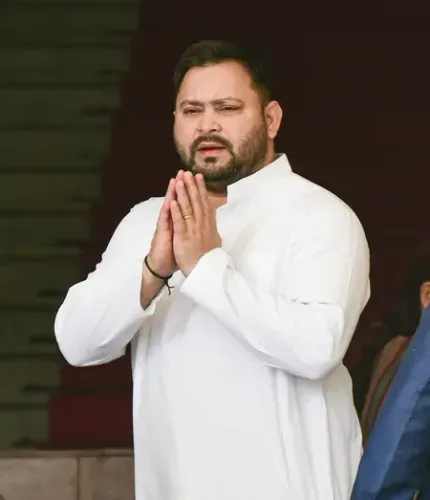
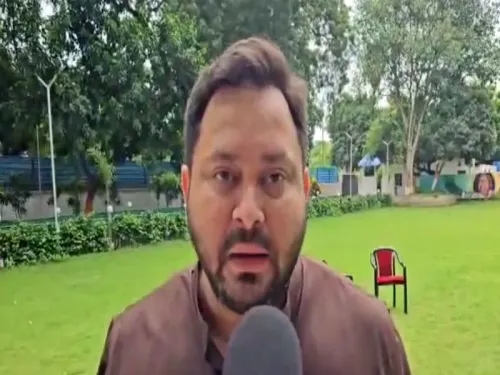
A government minister who cannot get a hearing from the Prime Minister or Chief Minister — what is the point of the seat? That is the sharp question RJD leader and Leader of the Opposition Tejashwi Yadav put to the ruling alliance on Tuesday, 29 September 2026, in a pointed attack on the quality of political representation inside Bihar's governing coalition.
In a Hindi post on X, Yadav wrote: 'चुनाव तो चोरी से जीत लिया लेकिन जनता का दिल कैसे जीतेंगे?' — 'You may have stolen the election, but how will you win the people's hearts?' He argued that the public had already rejected these figures, and that their entry into parliament and cabinet was engineered not by voters but by the Election Commission of India. The charge lands hardest in its final logic: senior leaders — Prime Minister, Chief Minister, bureaucrats — do not listen to these ministers, Yadav says, precisely because everyone in the room knows the selection was institutional, not popular.
The Marginality Argument at the Heart of the Attack
Yadav's critique follows a well-worn opposition script in Bihar, but the internal-powerlessness framing is the fresh edge here. Rather than simply alleging fraud, he is pointing to a downstream consequence: ministers who arrive via 'Selection' rather than election carry no political weight even within their own governments. It is an argument about legitimacy translating into daily dysfunction — phone calls not returned, files not moved, constituencies not served.
The RJD has challenged election outcomes and the role of the Election Commission in Bihar since at least the 2020 assembly polls, when the party emerged as the single largest in the legislature yet found itself in opposition as Nitish Kumar's NDA coalition formed the government. That grievance has calcified into a standing narrative: that institutional machinery, not public will, decides Bihar's political outcomes.
Opposition's Long War Over Electoral Credibility in Bihar
Indian opposition parties — and the RJD with particular consistency — have repeatedly alleged that ruling alliances benefit from institutional support during elections, and that junior coalition partners end up as decorative entries in cabinet. These accusations sharpen during periods of political marginalisation, when the gap between seats won and influence held feels widest.
Yadav's post does not name specific ministers or a specific election, keeping the charge broad enough to cover the entire formation. That breadth is itself a political choice — it implicates the system, not just an individual, and places the Election Commission at the centre of the accountability question rather than any single candidate.
As of now, neither the Election Commission nor the Bihar government has responded to the allegations. The silence, in Bihar's current political climate, will be read as loudly as any rebuttal.
Point of View
He is attempting to peel away NDA's junior partners by exposing the ceiling on their political careers. The framing is strategically timed: it keeps electoral credibility as a live issue ahead of any future state or national cycle, and forces the ECI and Bihar government either to respond — and thereby validate the charge — or to stay silent and let it settle into accepted political lore.
NationPress
29 Sept 2026
Frequently Asked Questions
What did Tejashwi Yadav say about the Election Commission on 29 September 2026?
Tejashwi Yadav alleged that ruling-coalition MPs and ministers were not elected by the people but 'selected' with the help of the Election Commission, and that this explains why even Prime Ministers and Chief Ministers do not listen to them.
Why does RJD keep criticising the Election Commission in Bihar?
The RJD has questioned the Election Commission's role in Bihar since the 2020 assembly polls, when the party won the most seats of any single party yet ended up in opposition while the NDA coalition, led by Nitish Kumar, formed the government.
What is Tejashwi Yadav's current political position?
Tejashwi Yadav is the Leader of the Opposition in the Bihar Legislative Assembly and a senior leader of the Rashtriya Janata Dal. He previously served as Deputy Chief Minister of Bihar.
Has the Election Commission responded to Tejashwi Yadav's allegations?
As of 29 September 2026, neither the Election Commission of India nor the Bihar government had issued a public response to Tejashwi Yadav's allegations.
What does 'selected not elected' mean in Indian political context?
The phrase implies that a candidate's victory was engineered through institutional manipulation rather than genuine popular support — a common opposition charge that questions both electoral fairness and the democratic legitimacy of those who win such contests.