Giriraj Singh backs hemp fibre as sustainable textile alternative
Synopsis
Union Textiles Minister Giriraj Singh has publicly backed hemp fibre as a viable, eco-friendly alternative to cotton, citing its antifungal properties, low water requirement, and potential to convert agricultural residues into textile raw material — signalling a policy tilt toward natural fibre diversification.
Key Takeaways
Union Textiles Minister Giriraj Singh on 29 September 2026 endorsed hemp fibre as a sustainable textile input on X.
Hemp's natural antifungal and antibacterial properties reduce the need for chemical processing in textile manufacturing.
Hemp requires significantly less water to produce than cotton — a critical advantage given India's recurring water-stress challenges.
The fibre can be derived from agricultural residues, offering farmers an economic alternative to stubble burning.
No specific central scheme on hemp fibre has been announced; the post signals ministerial intent and sets a regulatory watch-point around industrial hemp cultivation rules.
The pitch aligns with India's broader policy push to diversify natural fibres and improve the sustainability profile of textiles exports.
A fibre grown from agricultural residue, requiring a fraction of cotton's water footprint, and naturally resistant to fungi and bacteria — Union Textiles Minister Giriraj Singh on Tuesday, 29 September 2026, made a pointed case for hemp as the next frontier of India's sustainable textiles push.
In a post on X, the Minister wrote: 'हेम्प फाइबर अपनी प्राकृतिक एंटीफंगल और एंटीबैक्टीरियल विशेषताओं के साथ टिकाऊ टेक्सटाइल के लिए एक उपयोगी विकल्प बन रहा है' — 'Hemp fibre, with its natural antifungal and antibacterial properties, is emerging as a viable option for sustainable textiles.' He added that it demands significantly less water than cotton in production, and that being derived from agricultural residues, it simultaneously serves environmental conservation and opens new opportunities in the textiles sector.
Why hemp's low-water argument lands hard in India
India is the world's second-largest cotton producer, and conventional cotton cultivation is notoriously water-intensive — a pressure point in a country where water stress is a recurring seasonal and structural crisis. Hemp's comparative efficiency on this metric has drawn growing attention from policymakers and agronomists alike. The Minister's framing positions hemp not as a niche crop but as a credible mainstream input for an industry under pressure to green its supply chain.
The antifungal and antibacterial properties he highlights are commercially significant: they reduce the need for chemical treatments in processing, which cuts both cost and the textile industry's chemical load. For export-oriented manufacturers watching European Union sustainability compliance rules tighten, a fibre that arrives pre-equipped with these properties is more than an environmental talking point — it is a market opportunity.
Agricultural residues, second lives, and the circular economy angle
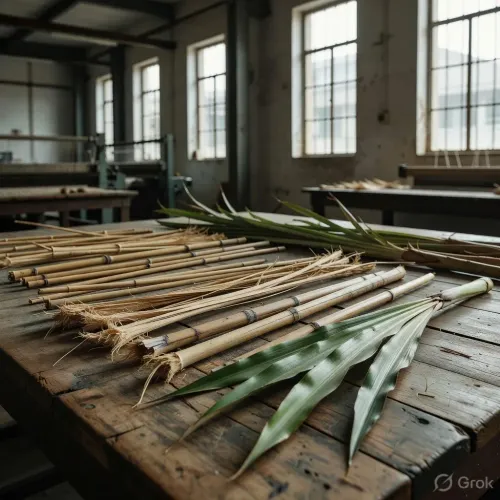
The Minister's reference to hemp being 'prepared from agricultural residues' points to a specific and increasingly important policy goal: converting farm waste into value. Stubble burning across Punjab, Haryana, and parts of Uttar Pradesh remains one of India's most stubborn air-quality crises each post-harvest season. Residue-based fibre pathways offer farmers an economic incentive to convert waste into raw material rather than burn it — a dual dividend of income and pollution reduction.
India's textiles policy in recent years has emphasised diversification beyond cotton, with natural and technical fibres gaining ground in official promotion frameworks. Hemp fits squarely into that direction. The key regulatory watch-point remains industrial hemp cultivation permissions — current rules around hemp are complex given its botanical relationship to cannabis, and any easing of those norms would be the signal that moves this from ministerial messaging to ground-level production at scale.
What textile producers and farmers are watching
For textile producers, especially those in the mid-size and export-oriented segment, a policy push toward hemp means potential inclusion in existing fibre-promotion schemes and sourcing incentives. For farmers, particularly in states with residue-surplus post-harvest, it represents a potential new cash stream — provided processing infrastructure and guaranteed offtake mechanisms are developed alongside cultivation approvals. The Minister's post does not announce a specific scheme, but it signals intent at the highest level of the textiles ministry.
India's ability to build a competitive hemp-to-textile value chain will depend on how quickly the regulatory, agronomic, and industrial pieces align. The Minister has put the idea firmly on the table. The clock is ticking on the follow-through.
Point of View
Making the case far broader than a textile-sector niche. The unresolved tension is the regulatory one — industrial hemp cultivation sits in a legal grey zone, and until cultivation norms are meaningfully liberalised, the value chain cannot scale regardless of ministerial enthusiasm. Watched against India's export-competitiveness drive and tightening global sustainability standards, this messaging suggests the ministry is laying groundwork for a more concrete move in the months ahead.
NationPress
29 Sept 2026
Frequently Asked Questions
What did Union Textiles Minister Giriraj Singh say about hemp fibre?
On 29 September 2026, Minister Giriraj Singh said hemp fibre is emerging as a viable sustainable textile alternative due to its natural antifungal and antibacterial properties, lower water requirement compared to cotton, and its ability to be produced from agricultural residues.
Why is hemp fibre considered better than cotton for sustainability?
Hemp requires significantly less water to grow than conventional cotton and can be produced from agricultural residues. It also has natural antifungal and antibacterial properties that reduce the need for chemical treatments in textile processing.
Is industrial hemp cultivation legal in India?
Industrial hemp cultivation in India exists in a complex regulatory environment given hemp's botanical relationship to cannabis. Specific state-level permissions apply, and any broad liberalisation of cultivation norms would be a key policy development to watch.
How does hemp fibre help farmers in India?
Hemp can be produced from agricultural residues, giving farmers an economic incentive to convert post-harvest waste into raw material instead of burning it — addressing both income and stubble-burning pollution challenges.
Has the Indian government launched a specific scheme for hemp textiles?
No specific central government scheme exclusively for hemp fibre in textiles has been announced as of September 2026. Minister Singh's post signals ministerial support and intent, but concrete policy measures are yet to be detailed.