Telangana's New Initiative: Nodal Agency for Flood Plain Zoning
Synopsis
Telangana's irrigation minister announces a new nodal agency for Flood Plain Zoning aimed at mitigating flood risks and ensuring sustainable development in the state. This initiative comes in response to devastating floods that have impacted numerous districts.
Key Takeaways
Establishment of a nodal agency for Flood Plain Zoning in Telangana.
Focus on demarcating vulnerable river reaches before monsoon.
Comprehensive strategy to tackle recurring flood issues.
Impact of September 2024 floods highlighted the need for immediate action.
Climate change intensifies flood risks and challenges traditional rainfall patterns.
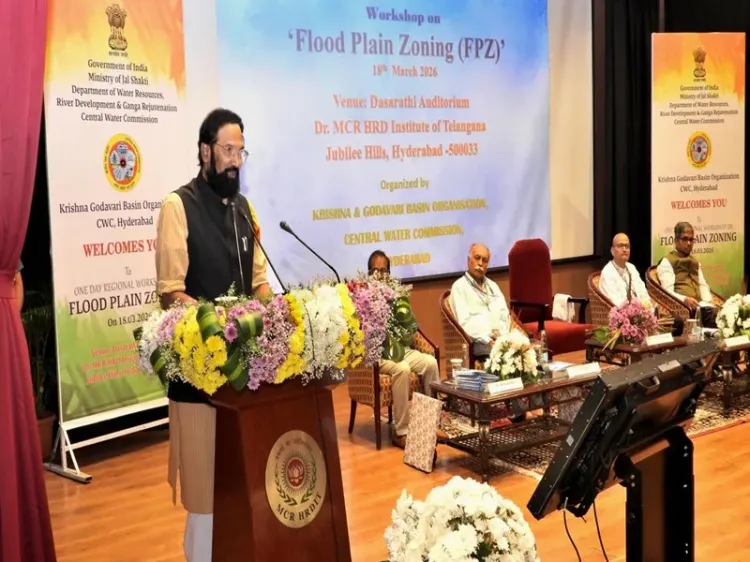
Hyderabad, March 18 (NationPress) The irrigation minister of Telangana, N. Uttam Kumar Reddy, revealed on Wednesday the plans to establish a specialized nodal agency dedicated to 'Flood Plain Zoning' within the state.
He assured that the initial river reaches would be pinpointed for demarcation, along with mapping of susceptible areas prior to the forthcoming monsoon season.
This announcement was made during a workshop on Flood Plain Zoning for Telangana and Andhra Pradesh, hosted by the Krishna and Godavari Basin Organisation under the Ministry of Jal Shakti in Hyderabad.
Reddy laid out a comprehensive strategy to tackle the persistent issues of flooding and the extensive damage caused by it across the state. He emphasized the focus on the recurring flooding challenges faced by the Godavari River at Bhadrachalam and the Munneru River in Khammam, in addition to other river sub-basins.
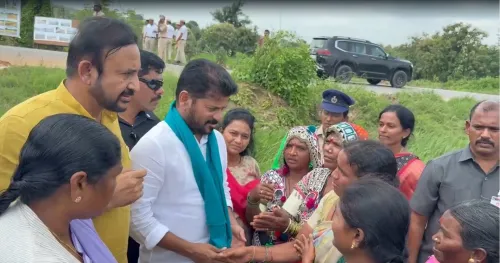
He recalled the catastrophic floods of September 2024 in Khammam, where the Munneru River peaked at an unprecedented 36 feet—the highest level since 1984—resulting in the submersion of numerous colonies and inundating over 110 villages, leaving residents stranded on hilltops and rooftops.
The floods impacted 29 of Telangana’s 33 districts, causing damage to 1,023 km of roads, breaching 257 streams and ponds, resulting in the loss of 26,592 livestock, destroying over 20 lakh acres of farmland, and incurring an initial estimated loss of ₹5,438 crore, with 29 fatalities.
He described the event as unparalleled in the last three decades, with each statistic reflecting human hardship. Reddy elaborated on the Godavari flood challenges, noting that in Bhadrachalam, the Godavari frequently surpasses the danger level during severe monsoons, severing the critical Bhadrachalam-Nelipaka road and isolating local communities.
He discussed the Central Water Commission’s three-zone framework—Protected Zone, Regulatory Zone, and Warning Zone—and emphasized that Flood Plain Zoning is not against development but rather a commitment to intelligent and sustainable growth. "Telangana is fortunate to have two of India’s most significant river systems—Krishna and Godavari. These rivers serve as the lifeblood of our agriculture, provide essential drinking water, and form the very foundation of our state’s economic progress,” he stated.
While acknowledging these natural blessings, he noted the serious responsibility that accompanies them. Climate change is exacerbating both droughts and floods, with rainfall patterns that were once stable over decades now becoming erratic within a single monsoon. Areas that had remained flood-free for 10 to 15 years are now suddenly facing inundation. The devastating floods of September 2024 were, for many regions, unprecedented in living memory, he remarked.
“However, the core issue extends beyond mere rainfall,” he asserted. Over the years, we have encroached upon the territories rightfully belonging to the rivers. Construction on floodplains, filling wetlands, narrowing river channels, and obstructing natural drainage systems have all contributed to our current predicament. When the rivers reclaimed their territory in September 2024, they were merely reacting to the injustices we had inflicted upon them,” he added.
Among those in attendance were senior officials from the Central Water Commission, GRMB, KRMB, as well as the Irrigation Departments of Telangana and Andhra Pradesh, along with academicians from leading institutions and industry representatives.
Point of View
The establishment of a nodal agency for Flood Plain Zoning in Telangana represents a proactive step towards addressing the increasing frequency and intensity of floods. With climate change posing significant challenges, this initiative not only aims to mitigate future flood risks but also emphasizes sustainable development in flood-prone areas. It reflects a growing awareness of the need for effective water management strategies across the country.
NationPress
4 Sept 2026
Frequently Asked Questions
What is Flood Plain Zoning?
Flood Plain Zoning is a land use planning tool designed to manage the use of flood-prone areas. It helps in identifying vulnerable zones and implementing regulations to prevent development that could exacerbate flooding.
Why is a nodal agency being established?
The nodal agency will focus on effective flood management by demarcating flood-prone areas and implementing strategies to mitigate the impacts of flooding, especially in light of recent catastrophic floods.
What areas are most affected by flooding in Telangana?
The Godavari River at Bhadrachalam and the Munneru River in Khammam are among the most affected areas, with recurring flooding causing significant damage and disruption.
How will this initiative affect local communities?
The initiative aims to enhance safety and reduce flood risk for local communities, potentially preventing future disasters and protecting livelihoods.
What lessons were learned from the September 2024 floods?
The September 2024 floods highlighted the urgent need for sustainable land use and effective flood management practices to avoid similar future disasters.