Telangana CM Revanth Reddy launches India's gig workers welfare law
Synopsis
Telangana CM A. Revanth Reddy and Rahul Gandhi launched the state's gig and platform workers welfare law on Nehru Jayanti, offering Rs 5 lakh life insurance, Rs 10 lakh Aarogyasri health cover, identity cards, and a new welfare board — with online registration starting immediately.
Key Takeaways
Telangana's gig workers welfare law was formally launched on 14 November 2026 at Jaybheri Grounds, HITEC City, Hyderabad.
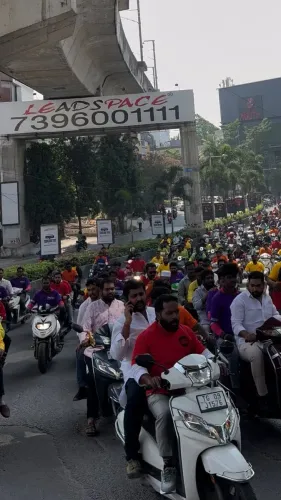
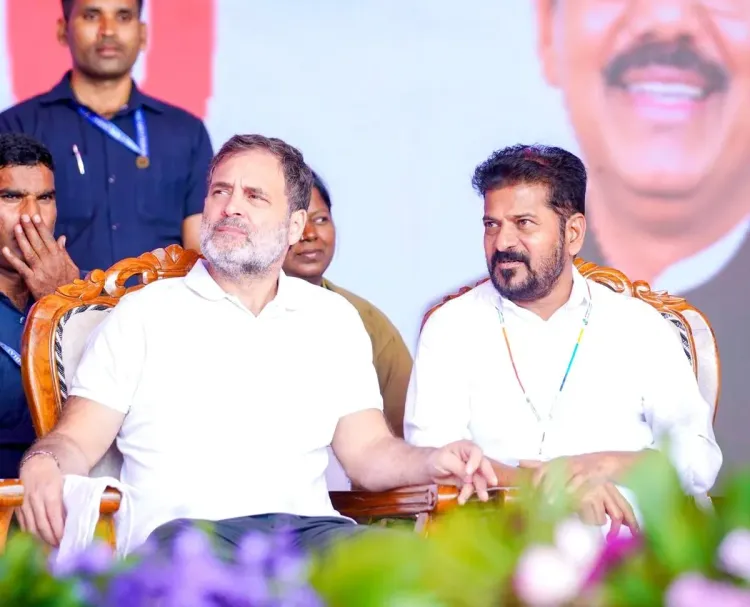
Revanth Reddy and LoP Rahul Gandhi co-launched the policy and participated in a bike rally with gig workers before the event.
Every registered gig worker receives Rs 5 lakh life insurance and Rs 10 lakh health coverage under Rajiv Aarogyasri .
A dedicated Gig Workers Welfare Board and individual identity cards for workers were announced.
An online registration portal for gig and platform workers went live at the same event.
Families of two gig workers who died on duty each received Rs 5 lakh in immediate assistance.
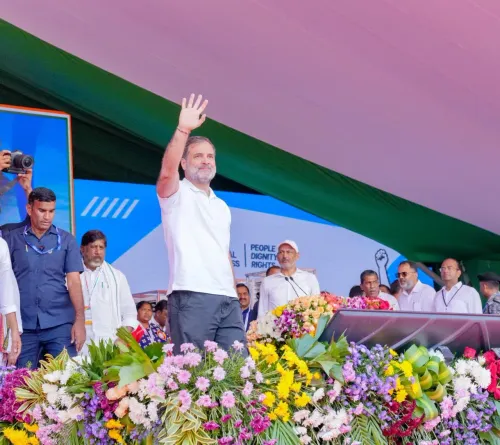
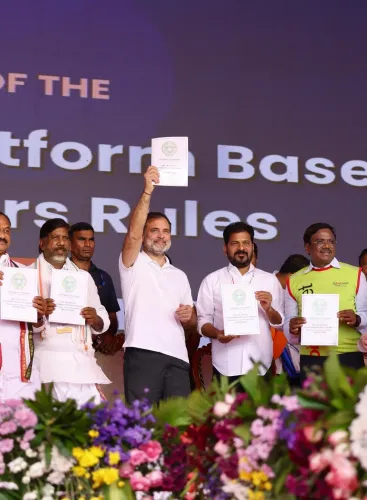
On Jawaharlal Nehru's birth anniversary, 14 November 2026, Telangana delivered something India's gig economy has long waited for: a state law with real teeth, real rupees, and a registration system that went live the same day it was unveiled. The Chief Minister's Office of Telangana announced that Chief Minister A. Revanth Reddy, alongside Lok Sabha Leader of the Opposition Rahul Gandhi, formally launched the Telangana Platform-Based Gig Workers Welfare Policy at Jaybheri Grounds, near Hyderabad's HITEC City.
The launch was itself a spectacle of political symbolism. Before the event, Revanth Reddy and Rahul Gandhi rode pillion on gig workers' bikes in a large rally from Shilparamam to Jaybheri Grounds — ministers and workers riding together, the kind of image the Congress party has carefully curated on workers' rights. At the venue, both leaders paid floral tributes to a portrait of Jawaharlal Nehru, anchoring the welfare law firmly within the party's founding legacy.
What the law actually gives gig workers
The numbers are specific, and specificity matters here. Every registered gig worker will receive Rs 5 lakh life insurance coverage. For health, the government will extend Rajiv Aarogyasri — Telangana's existing state health insurance scheme — providing up to Rs 10 lakh in medical coverage. Workers will also receive a dedicated identity card, a formal recognition that has eluded this workforce for years.
A dedicated Gig Workers Welfare Board will be constituted to oversee implementation. The online registration portal for gig and platform workers was inaugurated at the same event, meaning the law did not just pass — it began operating. In a gesture that underscored the human cost of the unregulated status quo, CM Revanth Reddy handed over Rs 5 lakh each to the families of two gig workers who died on duty, a preview of the compensation mechanism the law now formalises.
From Rajasthan's template to Telangana's rollout
Telangana is not starting from a blank page. Rajasthan enacted the Platform Based Gig Workers (Registration and Welfare) Act in 2023, becoming the first Indian state with dedicated legislation for this workforce. At the national level, the Code on Social Security, 2020, extended first-ever statutory recognition to gig and platform workers — but left implementation largely to states. Telangana's law operationalises that central framework at the sub-national level, adding state-funded insurance coverage layered on top.
The drafting process, CM Revanth Reddy noted, involved institutions including IITs, gig worker leaders, and independent experts. He singled out social activist Nikhil from the Mazdoor Kisan Shakti Sangathan (MKSS) — referred to in the official communication as 'ఏమీ ఆశించకుండా' (without expecting anything in return) — for contributing to the drafting without compensation. The acknowledgment of MKSS's role roots this legislation in India's grassroots labour-rights tradition.
Who was in the room — and why it matters politically
The guest list at Jaybheri Grounds was a statement in itself. Deputy Chief Minister Mallu Bhatti Vikramarka was present alongside ministers Damodar Rajanarsimha, Komatireddy Venkat Reddy, Ponnam Prabhakar, Pongulethi Srinivas Reddy, and Vivek Venkataswamy, as well as multiple MPs, MLCs, and MLAs. The presence of Rahul Gandhi — Leader of the Opposition in the Lok Sabha — elevated what might have been a state-level policy event into a national political signal: the Congress, in both Telangana and at the Centre, is claiming the gig economy as its constituency.
India's gig workforce — delivery riders, cab drivers, freelance platform workers — numbers in the tens of millions and has grown explosively with minimal social protection. The question now is whether the welfare board gets constituted swiftly, registrations scale, and insurance payouts reach workers before the next election cycle resets the agenda.
Telangana has drawn the blueprint. The real test is whether the board, the rupees, and the ID cards find their way to the worker on the road.
Point of View
2020. The deliberate staging of the launch on Nehru Jayanti, with Rahul Gandhi riding alongside gig workers, signals that the Congress is consciously building a new labour-welfare identity ahead of future electoral cycles. By anchoring material benefits — specific insurance rupee amounts, an identity card, a welfare board — to a live registration portal, Telangana raises the stakes for other states to respond in kind or risk losing the narrative with a rapidly growing workforce. Whether the board's constitution and insurance disbursal keep pace with the political promise will determine whether this is landmark policy or landmark optics.
NationPress
14 Nov 2026
Frequently Asked Questions
What benefits do gig workers get under Telangana's new law?
Under the Telangana gig workers welfare policy launched on 14 November 2026, every registered gig or platform worker receives Rs 5 lakh life insurance, up to Rs 10 lakh health coverage through Rajiv Aarogyasri, and a dedicated identity card.
Who launched Telangana's gig workers welfare policy?
Chief Minister A. Revanth Reddy and Lok Sabha Leader of the Opposition Rahul Gandhi jointly launched the policy at Jaybheri Grounds near HITEC City, Hyderabad.
Is Telangana the first state to pass a gig workers welfare law in India?
No. Rajasthan enacted the Platform Based Gig Workers (Registration and Welfare) Act in 2023, making it the first Indian state with dedicated gig worker legislation. Telangana's law is among the early follow-up state-level legislations building on the central Code on Social Security, 2020.
How can gig workers register under Telangana's new welfare scheme?
An online registration portal for gig and platform workers was inaugurated at the same 14 November 2026 event, allowing workers to register digitally from the day the law came into effect.
What is the Telangana Gig Workers Welfare Board?
A dedicated Gig Workers Welfare Board is to be constituted by the Telangana government to oversee implementation of the welfare policy, including insurance disbursals and identity card issuance for registered gig and platform workers.