Have Thackeray cousins finally reconciled after 20 years?
Synopsis
In a historic turn of events, Uddhav and Raj Thackeray have set aside their longstanding rivalry to unite for the upcoming 2026 Mumbai civic polls. This significant alliance aims to challenge the ruling BJP-led coalition. Will this reunion reshape the political landscape of Maharashtra? Read on to uncover the implications of this historic moment.
Key Takeaways
Uddhav and Raj Thackeray have reunited after 20 years.
Their alliance aims to consolidate votes against the BJP.
Challenges in seat-sharing and coordination ahead of elections.
This could reshape Mumbai’s political dynamics.
Historical significance in the context of Marathi politics.
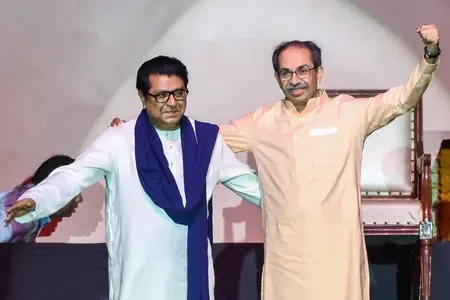
Mumbai, Dec 24 (NationPress) The Thackeray cousins, Uddhav and Raj Thackeray, have officially reconciled for the 2026 Mumbai civic elections after a 20-year rivalry, signaling a significant shift in Marathi politics, as they strive to unify against the Bharatiya Janata Party (BJP)-led Mahayuti (Grand Alliance).
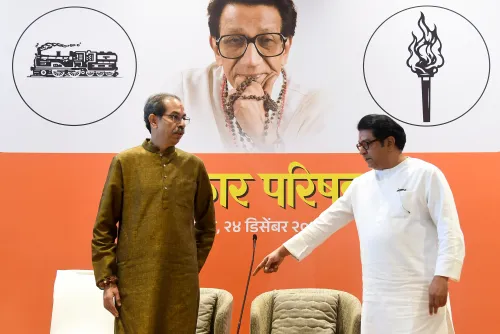
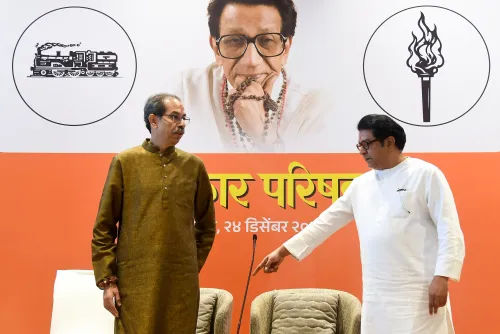
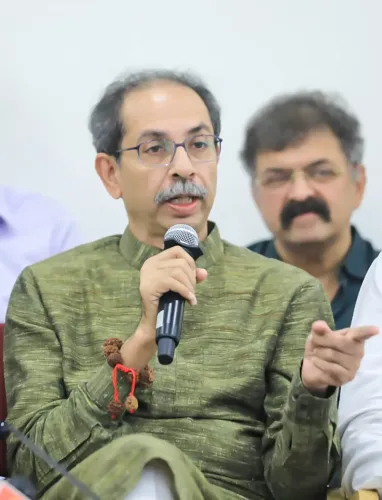
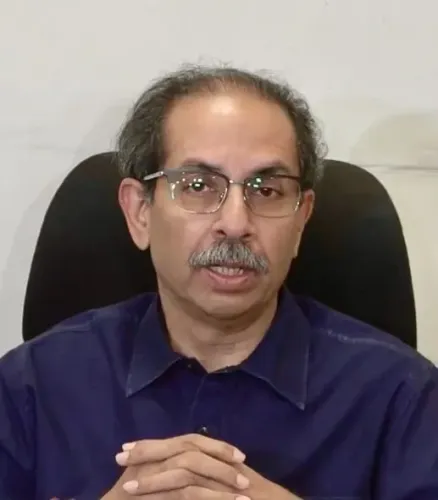
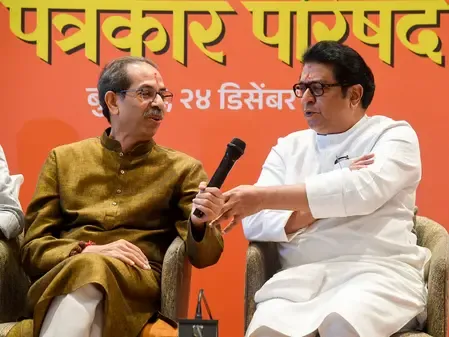
In a joint press conference held on Wednesday, the Thackeray cousins declared an electoral partnership between the Uddhav Thackeray-led Shiv Sena-UBT and the Raj Thackeray-led Maharashtra Navnirman Sena (MNS) for the upcoming Brihanmumbai Municipal Corporation (BMC) elections and other local polls.
The duo was first seen publicly together in July 2025, sharing a platform at a rally against the "imposition of Hindi".
During the press conference, the Thackeray cousins arrived together after paying their respects to Shiv Sena founder Balasaheb Thackeray at Chhatrapati Shivaji Park, a powerful gesture symbolizing their reconciliation and familial ties.
Accompanied by their families, they honored Balasaheb Thackeray at the Smriti Sthal memorial in Shivaji Park.
Prior to announcing their alliance, the cousins expressed their commitment to work collaboratively for the "Marathi manoos".
The public appearance of the Thackeray cousins traveling and speaking together emphasized the political importance of their alliance and its timing before the January 15 civic polls.
The announcement triggered immediate reactions across the political landscape.
Supporters of Deputy Chief Minister Eknath Shinde's Shiv Sena criticized the alliance, labeling it an "ideological betrayal" of Balasaheb Thackeray's legacy.
BJP leader and Maharashtra Chief Minister Devendra Fadnavis dismissed the reunion, asserting it would not influence the Maharashtra civic elections.
He remarked, "A hype is being built up like it's the coming together of Russia and Ukraine; as if it's Zelensky and Putin talking to each other," in response to reporters' inquiries.
Deputy Chief Minister Eknath Shinde told the media, "They have come together only for selfish interests; the people of Maharashtra will show them their place."
Some local leaders and party workers have also voiced concerns regarding seat allocation and grassroots coordination.
The BJP's Mumbai unit has targeted the Thackeray cousins by sharing an old video of Raj Thackeray criticizing the Shiv Sena in 2005 after his departure.
Additionally, reports indicate that a majority of the 84 former Corporators from the undivided Shiv Sena have joined the Eknath Shinde-led faction.
The Thackeray cousins are expected to encounter operational challenges, such as integrating party workers, reconciling local rivalries, and transforming a high-profile national narrative into effective ward-level campaigning to achieve electoral success.
If managed efficiently, this reunion could reshape Mumbai's electoral math by consolidating Marathi voters and minimizing vote-splitting that previously benefited the BJP and its allies.
The Thackeray partnership might alter dynamics in certain areas, as in 67 of the 227 BMC wards, the MNS received more votes than the winning margin.
This alliance underscores a broader realignment of regional politics in Maharashtra ahead of future state and national elections, potentially paving the way for negotiations with other regional entities.
However, success hinges on establishing clear seat-sharing agreements between themselves and other opposition parties such as the Congress and Nationalist Congress Party led by Sharad Pawar, among others.
Preliminary reports suggest that discussions on seat-sharing are in progress, with Shiv Sena-UBT likely to contest approximately 145–150 seats in Mumbai and the MNS around 65–70.
Negotiations are also said to be occurring with other regional stakeholders in Maharashtra.
The Shiv Sena was founded by Balasaheb Thackeray in 1966 as a Marathi-centric regional power.
His nephew, Raj Thackeray, split from the party in 2006 to establish the MNS following ideological and leadership differences.
This division created two rival Sena factions that competed for the same voter base for nearly two decades.
The December 2025 reunion thus signifies not merely an electoral agreement, but also a symbolic healing of a family and political rift that has influenced Maharashtra's political landscape since the mid-2000s.
Point of View
Breaking a long-standing rivalry. While it poses potential challenges for the BJP, it also raises questions about the sustainability of this alliance given their historical differences. As the political landscape evolves, it’s crucial to monitor how this affects voter sentiment and the upcoming elections.
NationPress
1 Oct 2026
Frequently Asked Questions
What led to the reunion of the Thackeray cousins?
After two decades of rivalry, Uddhav and Raj Thackeray have united to strengthen their political stance against the BJP-led coalition for the upcoming civic polls.
What is the significance of their alliance?
This alliance signifies a major shift in Marathi politics and aims to consolidate votes against the ruling party, potentially altering the electoral landscape in Mumbai.
How have political rivals reacted to the reunion?
Political rivals, including the BJP and Shinde-led faction of Shiv Sena, have criticized the alliance, labeling it a betrayal of Balasaheb Thackeray's legacy.
What challenges might the Thackeray cousins face moving forward?
They may encounter operational challenges such as seat distribution, grassroots coordination, and integrating party workers to ensure effective campaigning.
What are the future implications of this reunion?
The reunion may reshape the political landscape in Maharashtra, influencing future elections and prompting negotiations with other regional players.