Anurag Thakur vows to uproot paper leaks like terror, Naxalism
Synopsis
BJP MP Anurag Thakur vowed on 28 July 2026 to eliminate India's paper-leak crisis with the same zero-tolerance approach the Modi government used against terrorism and Naxalism, invoking the Public Examinations Act 2024 and signalling further action on exam integrity.
Key Takeaways
Anurag Thakur , BJP Lok Sabha MP from Hamirpur, Himachal Pradesh , pledged on 28 July 2026 to uproot paper leaks 'from the roots.' He directly equated paper-leak malpractice with terrorism and Naxalism, framing it as a structural threat requiring a security-level response.
The Public Examinations (Prevention of Unfair Means) Act, 2024 already introduced stiff penalties for exam malpractice in India.
Government data has cited a sustained decline in Naxal-related violence since 2014 under the National Policy and Action Plan.
The statement signals possible further legislative or administrative action by the Union Education Ministry on centralised exam oversight.
Millions of government-job aspirants across India are the primary stakeholders in any credible exam-integrity reform.
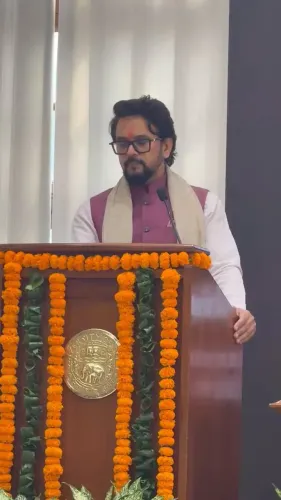
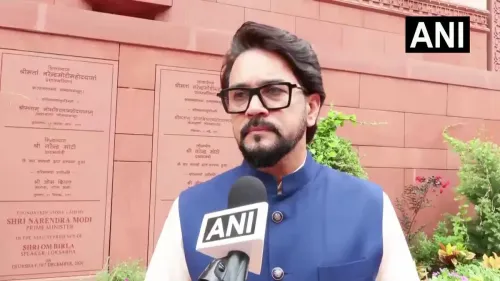
The same government that broke the back of terrorism and Naxalism in India, BJP MP Anurag Thakur declared on Tuesday, 28 July 2026, will now turn that same zero-tolerance force on the paper-leak crisis gutting the country's public examination system.
Posting in Hindi on X, Thakur drew a direct line between the Modi government's internal-security record and its ambitions for exam reform: 'जिस तरह आतंकवाद और नक्सलवाद को मिटाने का काम मोदी सरकार ने किया है, ठीक उसी तरह पेपर लीक की समस्या को जड़ से उखाड़ने का काम भी हम ही करेंगे' — 'Just as the Modi government eradicated terrorism and Naxalism, we will uproot the paper-leak problem from its roots in the same way.'
Equating paper leaks with an existential threat
The rhetorical move is deliberate and pointed. By placing paper leaks alongside terrorism and the Naxal insurgency — a left-wing armed movement that has ravaged central and eastern India for decades — Thakur signals that the BJP frames exam malpractice not as administrative slippage but as a structural assault on the republic's integrity. It is the language of a security operation, not a departmental audit.
The framing draws on a record the party is comfortable citing. Government data has pointed to a sustained decline in Naxal-related violence since 2014, attributed to coordinated security operations under the National Policy and Action Plan. Thakur is asking voters — and job aspirants — to trust that the same institutional will can be applied to exam halls.
The law already on the books — and what comes next
Parliament is not starting from scratch. The Public Examinations (Prevention of Unfair Means) Act, 2024 introduced some of the sharpest penalties India has ever imposed for paper-leak offences, including imprisonment and heavy fines for those who compromise recruitment and entrance exams. The legislation was itself a response to a wave of high-profile leaks that shook public confidence in national-level tests and left millions of aspirants in limbo.
What Thakur's statement now signals is political will to go further — possibly through tighter centralised oversight of exam agencies or fresh administrative measures by the Union Education Ministry. The specifics remain to be announced, but the direction of travel is unmistakable.
For India's vast population of government-job aspirants — students who spend years preparing for a single exam, often in small towns with limited options — the promise carries enormous weight. Every leak is not just a headline; it is a life derailed. If the BJP can make that argument land, it lands hard.
Point of View
While the fresh vow leaves room for a bigger announcement. For the opposition, the challenge is to contest the framing without appearing soft on an issue that genuinely enrages ordinary aspirants.
NationPress
27 Oct 2026
Frequently Asked Questions
What did Anurag Thakur say about paper leaks?
On 28 July 2026 , Anurag Thakur said the Modi government will uproot the paper-leak problem from its roots, just as it eradicated terrorism and Naxalism, signalling zero-tolerance action on exam malpractice.
What is the Public Examinations Prevention of Unfair Means Act 2024?
The Public Examinations (Prevention of Unfair Means) Act, 2024 is a central law that introduced strict penalties — including imprisonment and heavy fines — for those who leak or compromise public recruitment and entrance examination papers in India.
Has the Modi government reduced Naxal violence?
Government reports have cited a sustained decline in Naxal-related violence since 2014 , attributed to coordinated security operations and the National Policy and Action Plan targeting left-wing extremism in central and eastern India.
Why are paper leaks a big issue in India?
Paper leaks in national-level recruitment and entrance exams disqualify millions of aspirants who spend years preparing, forcing re-examinations and eroding public trust in government hiring processes — making it a politically charged governance failure.
What further action is expected on paper leaks in India?
Thakur's statement points toward possible additional legislative or administrative measures by the Union Education Ministry on centralised exam oversight, though specific announcements had not been made at the time of the post.