Tharoor at Colombo LitFest: Writing Life Before and After Politics
Synopsis
Congress MP Dr. Shashi Tharoor joined the Colombo Literary Festival on 26 July 2026 for an in-depth conversation with scholar Dr. Vihanga Perera, reflecting on his writing life spanning his UN career and parliamentary years. The session drew an engaged audience and underscores the India-Sri Lanka cultural connection.
Key Takeaways
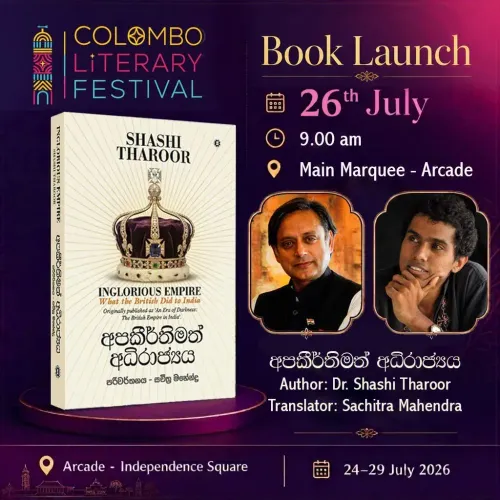
Shashi Tharoor participated in Day Two of the Colombo Literary Festival on 26 July 2026 .
The session was a moderated conversation with Sri Lankan literature scholar Dr.
Tharoor discussed his books, beliefs, and the arc of his writing life before and after entering public life.
Tharoor's literary career began in 1989 with The Great Indian Novel , written during his UN diplomatic tenure.
He entered electoral politics in 2009 from Thiruvananthapuram , after serving as UN Under-Secretary-General .
The appearance reflects a broader pattern of Indian political figures engaging Sri Lankan literary platforms to sustain bilateral cultural ties.
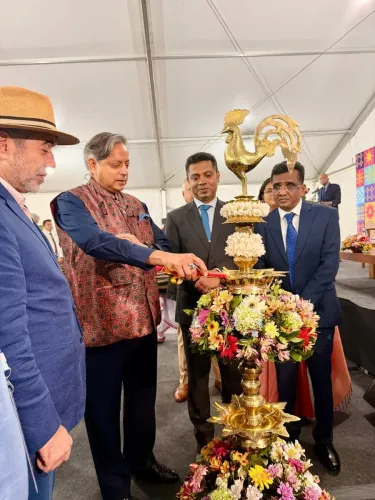
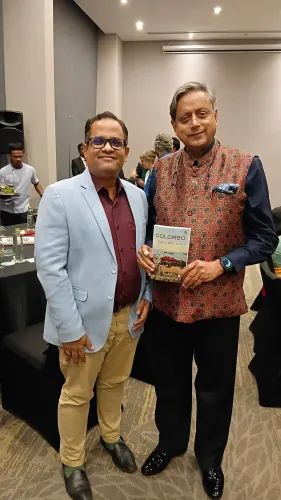
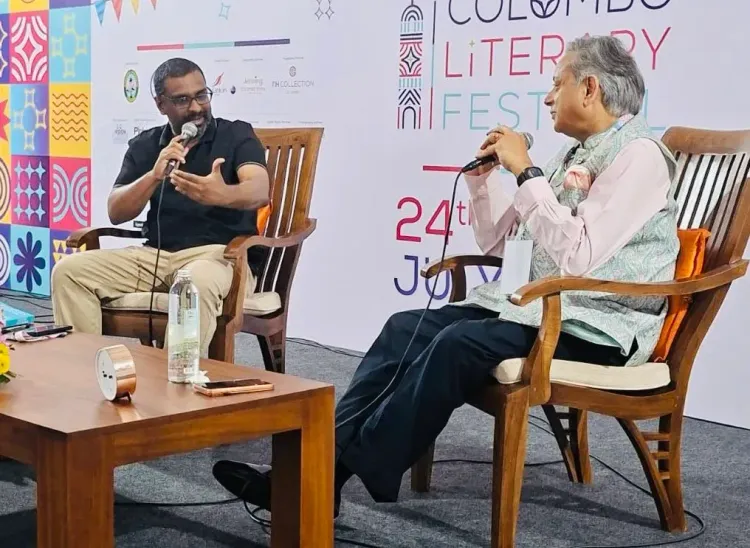
Congress MP Dr. Shashi Tharoor participated in an in-depth author conversation on Day Two of the Colombo Literary Festival on Sunday, 26 July 2026, discussing his books and beliefs with Sri Lankan literature scholar Dr. Vihanga Perera before an audience that posed probing questions.
Context
Tharoor described the session as 'stimulating,' noting the opportunity to reflect on his writing life 'before and after' his public career. The conversation, moderated by Dr. Vihanga Perera — a Sri Lankan professor known for his work on postcolonial and South Asian writing — drew an attentive crowd that engaged the parliamentarian-author with substantive questions about his literary output and worldview.
The Colombo Literary Festival is an annual Sri Lankan gathering that brings together regional and international authors, scholars, and cultural figures for panel discussions and author conversations. Tharoor's appearance on its second day placed him among the festival's featured voices for this edition.
Policy Backdrop
Tharoor's parallel careers in writing and public service stretch back decades. He published his debut novel The Great Indian Novel in 1989 while serving as a UN diplomat, establishing a literary identity that predated his entry into electoral politics by two decades. He was first elected to Parliament from Thiruvananthapuram in 2009, after retiring as UN Under-Secretary-General.
Since entering Parliament, Tharoor has continued to write prolifically across fiction, political commentary, and history, making the tension — and continuity — between his diplomatic, literary, and political lives a recurring theme at public engagements. The Sunday session at Colombo revisited that arc explicitly.
Stakeholders and Impact
Appearances by sitting Indian MPs at Sri Lankan literary platforms carry a quiet diplomatic dimension, sustaining people-to-people cultural links between the two neighbours at a time when bilateral ties involve complex strands of history, trade, and diaspora. For literary audiences in Colombo, access to a figure who straddles the worlds of the United Nations, Indian Parliament, and the literary circuit offers a distinctive vantage point.
For Tharoor's domestic constituency, participation in high-profile international literary festivals reinforces the intellectual profile he has cultivated alongside his parliamentary and party work within the Indian National Congress.
What's Next
Tharoor's reflection on his writing life 'before and after' public office signals continued engagement with literary platforms as a space for ideas beyond the parliamentary floor. Observers of both India-Sri Lanka cultural diplomacy and the Indian literary circuit will watch for any new book announcements or thematic directions that emerge from conversations such as this one at the Colombo Literary Festival.
Point of View
He reinforces a brand of statecraft-meets-literature that few sitting Indian MPs can credibly claim. The India-Sri Lanka setting is not incidental: literary diplomacy quietly fills spaces that formal bilateral channels sometimes leave open. Whether the festival appearance is followed by a new book or a fresh policy intervention, it signals that Tharoor views the written word as integral to his public role, not separate from it.
NationPress
26 Jul 2026
Frequently Asked Questions
What is the Colombo Literary Festival?
The Colombo Literary Festival is an annual Sri Lankan cultural event that hosts panel discussions and author conversations featuring regional and international literary figures.
Why was Shashi Tharoor at the Colombo Literary Festival?
Tharoor was a featured participant at the festival, engaging in an in-depth conversation about his books and beliefs with Sri Lankan literature scholar Dr. Vihanga Perera on 26 July 2026.
Who is Dr. Vihanga Perera?
Dr. Vihanga Perera is a Sri Lankan literature scholar and professor known for his work on postcolonial and South Asian writing, who moderated the conversation with Tharoor.
When did Shashi Tharoor start writing books?
Tharoor published his debut novel 'The Great Indian Novel' in 1989 while serving as a UN diplomat, well before he entered electoral politics in 2009.
What did Tharoor discuss at the Colombo Literary Festival?
Tharoor discussed his books, personal beliefs, and the experience of maintaining a writing life both before and after entering public life, and fielded probing questions from the audience.