Tharoor reflects on 1947-Brexit panel discussion
Synopsis
Congress MP Dr. Shashi Tharoor praised a panel discussion on the #1947BrexitIndia theme on June 1, 2026, calling it memorable and commending the audience. The event drew parallels between India's 1947 independence and Brexit, a framing Tharoor has championed since 2016.
Key Takeaways
Shashi Tharoor described a #1947BrexitIndia panel discussion on June 1, 2026 as 'a memorable occasion.' Fellow participants included journalist and film critic Anna M.M.
Vetticad , Sanjivan S.
Lal , and Uday Balakrishnan .
The 1947-Brexit framing draws comparisons between India's independence and the UK's exit from the EU on questions of sovereignty and economic rupture.
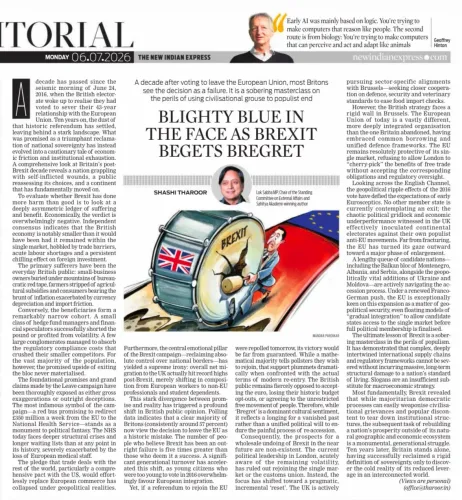
Tharoor has used this intellectual framing in writings and panels since at least 2016 , building on his 2017 book Inglorious Empire .
The discussion comes as India approaches the 80th anniversary of independence in 2027 and amid ongoing India-UK trade negotiations .
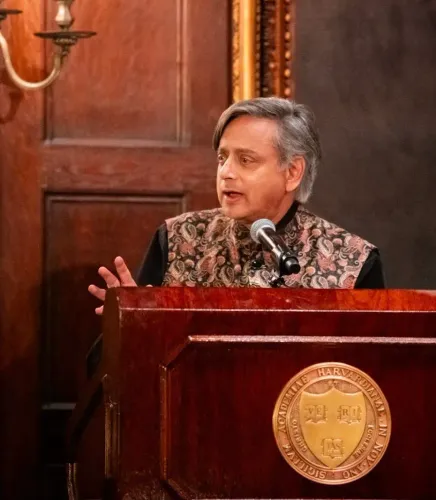
Congress MP Dr. Shashi Tharoor on Monday, June 1, 2026, shared his reflections on a panel discussion centred on the #1947BrexitIndia theme, calling it 'a memorable occasion' and praising the audience engagement that followed.
Context
Tharoor described the event as 'a lively discussion with a very engaged audience,' tagging fellow participants Sanjivan S. Lal, Uday Balakrishnan, and journalist and film critic Anna M.M. Vetticad. The hashtag #1947BrexitIndia signals the event drew explicit parallels between India's 1947 independence from British rule and the United Kingdom's departure from the European Union.
Vetticad is a prominent Indian journalist and cultural commentator known for her writing on politics and society, making her a natural interlocutor for a discussion bridging colonial history and contemporary geopolitics.
Policy Backdrop
Tharoor has long been associated with the intellectual project of re-examining British colonial rule and its long-term consequences. His widely discussed book Inglorious Empire (2017) argued that British rule systematically extracted wealth from the subcontinent and left lasting institutional scars — a thesis that gained global traction after a viral Oxford Union debate in 2015.
The 1947-Brexit framing, which Tharoor has employed in writings and panels since at least 2016, uses both events as case studies in the ruptures caused by imperial dissolution — examining questions of sovereignty, borders, economic dislocation, and identity. The comparison invites audiences to consider how abrupt political separations, whether in South Asia or Western Europe, generate consequences that outlast the immediate transfer of power.
Stakeholders and Impact
Events of this nature draw together political commentators, historians, literary figures, and engaged citizens who follow the ongoing global conversation about colonialism's legacy and its echoes in present-day policy. For India, the 1947 reference carries particular resonance as the country approaches the 80th anniversary of independence in 2027, prompting fresh assessments of what partition and decolonisation meant economically and socially.
The participation of journalists and cultural critics alongside a sitting parliamentarian also underscores how the 1947-Brexit discourse has moved beyond academia into mainstream public debate, influencing how younger Indians understand both their own history and Britain's contemporary challenges.
What's Next
With India-UK bilateral trade negotiations ongoing and commemorative events marking 80 years of Indian independence on the horizon in 2027, discussions of the kind Tharoor participated in are likely to multiply in frequency and visibility. The intellectual framing connecting 1947 and Brexit may increasingly inform how Indian policymakers and commentators articulate the terms of a modern, post-colonial relationship with Britain.
Point of View
He amplifies the conversation beyond Parliament, shaping how educated urban Indians frame India's relationship with Britain. With India-UK trade talks active and the independence centenary approaching in 2027, this framing carries real policy resonance — positioning historical grievance as a live variable in bilateral negotiations. The event is a reminder that for India's public intellectuals, history is rarely just history.
NationPress
15 Oct 2026
Frequently Asked Questions
What is the #1947BrexitIndia discussion about?
The #1947BrexitIndia theme draws parallels between India's independence from British rule in 1947 and the UK's exit from the European Union, examining shared questions of sovereignty, borders, and economic disruption.
Who is Shashi Tharoor?
Dr. Shashi Tharoor is a Congress MP from Thiruvananthapuram, a former Union Minister, former UN Under-Secretary-General, and the author of 'Inglorious Empire,' a widely read critique of British colonial rule in India.
Who is Anna M.M. Vetticad?
Anna M.M. Vetticad is a prominent Indian journalist and film critic known for her commentary on politics, society, and culture, and was tagged by Tharoor as a fellow participant in the panel.
What is Tharoor's book Inglorious Empire about?
Published in 2017, 'Inglorious Empire' argues that British colonial rule systematically extracted wealth from India and left deep institutional and economic damage, a thesis that gained global attention after a viral Oxford Union debate in 2015.
Why does the 1947-Brexit comparison matter for India today?
With India approaching the 80th anniversary of independence in 2027 and ongoing India-UK trade negotiations, the comparison is increasingly relevant to how Indian policymakers and commentators frame the modern bilateral relationship with Britain.