Tharoor Hails Education Minister Resignation as Win for Democracy
Synopsis
Congress MP Dr. Shashi Tharoor welcomed the Education Minister's resignation on July 25, 2026, calling it proof that democratic accountability cannot be evaded indefinitely. He credited weeks of peaceful protests by students, parents, and citizens for compelling the outcome.
Key Takeaways
Shashi Tharoor publicly welcomed the Education Minister's resignation on July 25, 2026 .
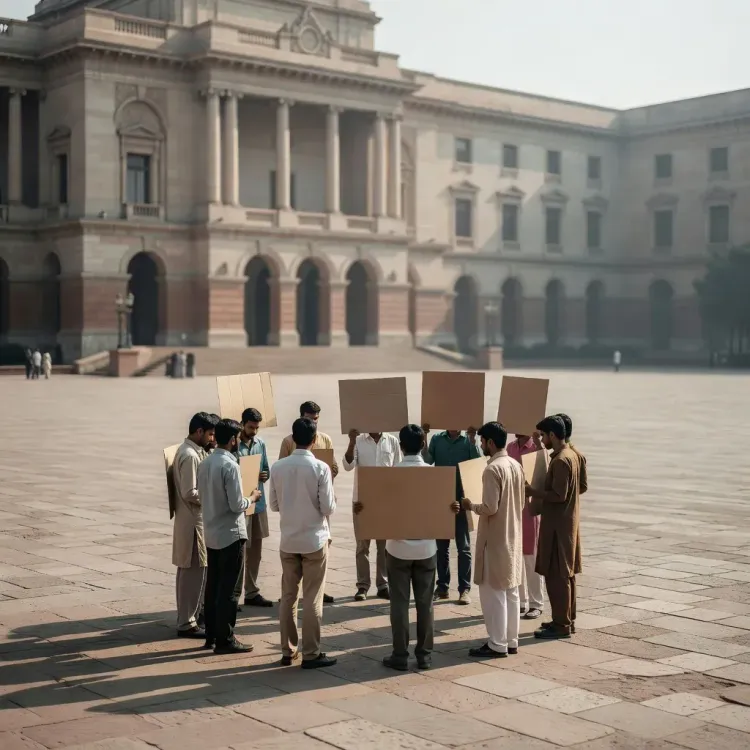
Tharoor described the resignation as an acknowledgment that 'accountability in a democracy cannot be indefinitely evaded.' He credited weeks of determined, peaceful protests by students, parents, and citizens across India for forcing the outcome.
The statement positions citizen mobilisation — not government initiative — as the primary driver of the ministerial change.
Focus now turns to the appointment of a successor to the Education Ministry and related parliamentary discussions.
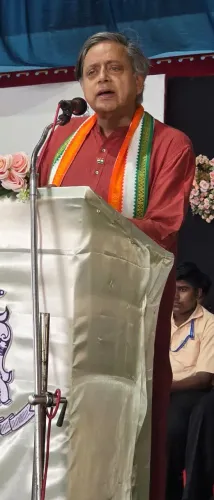
Congress MP Dr. Shashi Tharoor on Saturday, July 25, 2026, welcomed the resignation of the Education Minister, calling it an acknowledgment that accountability in a democracy 'cannot be indefinitely evaded.' The Thiruvananthapuram MP credited weeks of peaceful protests by students, parents, and citizens across the country for forcing the outcome.
Context
In his post on X, Dr. Tharoor wrote that the resignation 'comes after weeks of determined, peaceful voices raised by students, parents and citizens across the country who refused to be ignored.' The statement frames the development as a direct consequence of sustained civic pressure rather than a voluntary act of political will by the ruling establishment.
Public mobilisation around education governance has a long history in India. Agitations over examination irregularities, syllabus disputes, and institutional mismanagement have periodically compelled governments at both the state and central levels to respond — sometimes through policy reversals, and at other times through changes in personnel.
Policy Backdrop
The Education Ministry oversees one of the largest school and higher education systems in the world, with decisions affecting hundreds of millions of students and families. Ministerial accountability in this sector carries outsized political weight, as any perceived failure — whether in examination administration, institutional funding, or curriculum policy — tends to generate broad-based public reaction.
India has seen recurring episodes where citizen-led campaigns, often anchored by student unions and parent groups, have placed pressure on education administrators. These movements have demonstrated that sustained, peaceful mobilisation can translate into tangible governmental response, reinforcing the constitutional principle of executive accountability to the public.
Stakeholders and Impact
Students and parents are the primary stakeholders Dr. Tharoor identifies as having driven this outcome. His framing positions their sustained, peaceful agitation as the operative force behind the resignation — a narrative that elevates citizen agency over institutional inertia.
Opposition parties are likely to use the resignation as evidence of policy failure by the ruling government. For the Indian National Congress, Dr. Tharoor's statement serves both as validation of protest politics and as a pointed critique of the administration's initial resistance to accountability.
What's Next
Attention now shifts to who will be appointed as the successor to the Education Ministry, and whether any substantive policy changes will accompany the personnel change. Parliamentary discussions on the specific grievances that triggered the protests are also expected to follow.
Dr. Tharoor's intervention signals that the Congress will continue to press for deeper accountability measures rather than treating the resignation as a full resolution. The broader question of institutional reform in education governance is likely to remain a live political issue in the weeks ahead.
Point of View
Framing the resignation as a democratic victory won from below rather than a concession from above. By centring students and parents as the agents of change, he reinforces a narrative of civic power that the Congress can deploy ahead of any electoral cycle. The broader pattern — sustained public pressure translating into ministerial accountability — has precedent in Indian political history, and Tharoor is consciously invoking that tradition. Whether the resignation leads to substantive policy reform or merely a change of face at the ministry will determine whether this moment becomes a lasting reference point or a footnote.
NationPress
25 Jul 2026
Frequently Asked Questions
Why did India's Education Minister resign?
The specific reasons cited by the government have not been detailed in this report, but Congress MP Dr. Shashi Tharoor has attributed the resignation to weeks of sustained, peaceful protests by students, parents, and citizens demanding accountability in education governance.
What did Shashi Tharoor say about the Education Minister's resignation?
Dr. Tharoor called the resignation an acknowledgment that 'accountability in a democracy cannot be indefinitely evaded,' and credited the determined, peaceful voices of students, parents, and citizens across the country for bringing it about.
Who is Shashi Tharoor?
Dr. Shashi Tharoor is the Congress MP from Thiruvananthapuram, Kerala. He is a former Union Minister of State and a former UN Under-Secretary-General, and is known as a prominent voice on governance and democratic accountability.
What happens after the Education Minister resigns in India?
After a ministerial resignation, the Prime Minister's Office typically oversees the appointment of a successor. Parliamentary committees may also take up related policy discussions, and the specific grievances that triggered protests are expected to receive fresh scrutiny.
Have student protests in India led to ministerial changes before?
Yes. Public agitations over education policy, examination irregularities, and institutional governance have periodically pressured governments in India into policy reviews and personnel changes, illustrating a recurring pattern of citizen mobilisation driving executive accountability.