Tharoor Hails Kerala Composer's Sanskrit-Western Orchestra Fusion
Synopsis
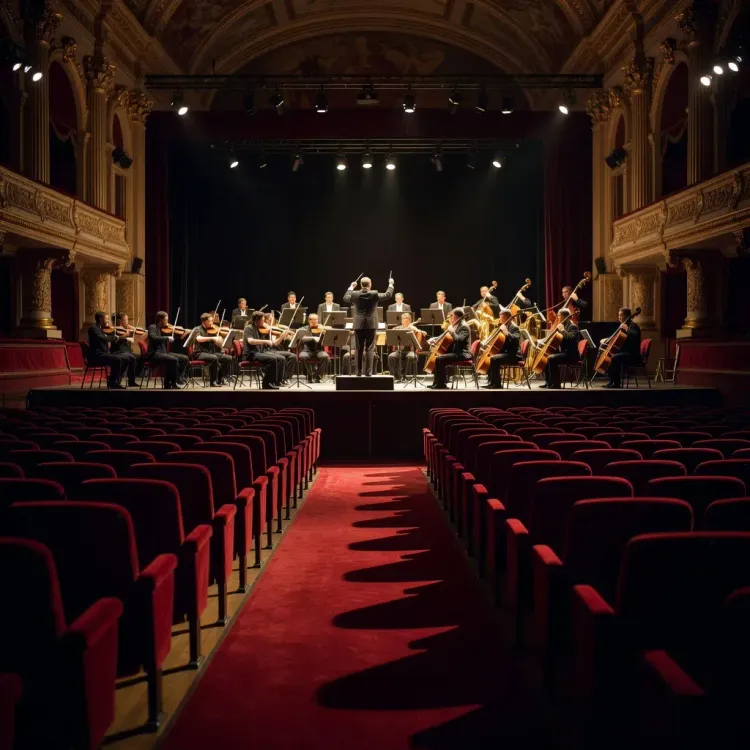
Congress MP Dr. Shashi Tharoor on June 22, 2026 spotlighted Kerala composer Stephen Devassy's remarkable fusion: a Western orchestra performing a piece sung entirely in Sanskrit, which Tharoor called the finest possible definition of 'World Music.'
Key Takeaways
Shashi Tharoor , Congress MP from Thiruvananthapuram, praised composer Stephen Devassy on June 22, 2026 .
Stephen Devassy is a Kerala -based composer and conductor known for blending Western orchestral and Indian musical traditions.
The composition features a Western symphony orchestra performing a piece with vocals sung entirely in Sanskrit .
Tharoor described the work as a compelling definition of 'World Music,' amplifying its reach to his large social media following.
Kerala has a long tradition of producing cross-cultural musical innovators, drawing on both Carnatic and Western influences.
The work fits a broader global trend of world-music fusion that has grown as a recognised genre since the 1980s .
Congress MP Dr. Shashi Tharoor on Monday, June 22, 2026, praised Kerala-based composer and conductor Stephen Devassy for creating an orchestral work that blends a Western symphony orchestra with vocals sung entirely in Sanskrit, calling it a compelling example of world music.
Context
Tharoor shared a link to the performance on X, expressing admiration with the words: 'Amazing: Stephen Devassy from Kerala composes and conducts a Western orchestra playing a piece sung entirely in Sanskrit! Can there be a better definition of 'World Music'?' The post drew immediate attention from cultural audiences and music enthusiasts who follow the MP's frequent commentary on Indian arts.
Stephen Devassy is a Kerala-based composer and conductor recognised for orchestral fusion works that bring together Western and Indian musical traditions. His work sits at the intersection of two vastly different musical vocabularies — the harmonic structures of European orchestration and the phonetic richness of Sanskrit verse.
Policy Backdrop
India's cultural diplomacy has long leaned on classical traditions, including Sanskrit literature and Carnatic music, as soft-power assets. The rise of 'world music' as a recognised genre since the 1980s created a global framework that celebrates exactly this kind of cross-cultural synthesis, giving Indian fusion artists new platforms at international festivals and cultural events.
Kerala, a state with deep roots in classical music, dance and the performing arts, has produced a disproportionate number of innovators in cross-cultural composition. The state's exposure to both Carnatic and Western musical traditions — partly a legacy of its history of trade and missionary-era music education — makes it a natural incubator for such experiments.
Stakeholders and Impact
For the Indian fusion-music community, high-profile endorsements from public figures like Dr. Tharoor — a former UN Under-Secretary-General with a global following — can meaningfully amplify an artist's reach beyond domestic audiences. Stephen Devassy's work, by setting Sanskrit texts to Western orchestral arrangements, also speaks to a growing audience interested in the preservation and recontextualisation of classical Indian languages through contemporary art forms.
Sanskrit, which holds constitutional status as one of India's scheduled languages and serves as the liturgical foundation of Hindu, Buddhist and Jain traditions, has seen renewed interest among younger musicians and scholars. Compositions that present Sanskrit in accessible, contemporary formats are increasingly seen as a bridge between heritage and modern cultural consumption.
What's Next
Performances of this nature are attracting growing interest at international world-music festivals and Indian cultural showcases abroad, where cross-genre works that carry a distinctly Indian identity have found receptive audiences. Whether Stephen Devassy's Sanskrit-orchestra composition reaches major international stages or inspires similar collaborative projects will be worth watching as India's cultural export ambitions grow alongside its global profile.
Point of View
He taps into an internationally understood genre category that lends the composition credibility beyond Indian audiences. The endorsement also reflects a quiet but consistent Congress cultural strategy: countering majoritarian narratives around Sanskrit by presenting the language as a living, cosmopolitan vehicle rather than a sectarian symbol. For Devassy, the visibility from a politician of Tharoor's global stature could open doors at international festivals and diplomatic cultural events.
NationPress
20 Sept 2026
Frequently Asked Questions
Who is Stephen Devassy?
Stephen Devassy is a Kerala -based composer and conductor recognised for creating orchestral fusion works that combine Western symphonic traditions with Indian musical elements.
What did Shashi Tharoor say about Stephen Devassy?
Dr. Shashi Tharoor called Devassy's work 'Amazing' and asked whether a Western orchestra performing a piece sung entirely in Sanskrit could be a better definition of 'World Music.'
What is the significance of Sanskrit in orchestral music?
Sanskrit is one of India's oldest classical languages and the liturgical foundation of several traditions. Using it in Western orchestral compositions bridges ancient heritage with contemporary global music forms.
What is world music?
World music is a genre recognised since the 1980s that celebrates cross-cultural musical synthesis, often blending instruments, scales and vocal traditions from different parts of the world.
Why does Kerala produce so many cross-cultural musicians?
Kerala 's deep roots in Carnatic classical music, combined with historical exposure to Western music through trade and missionary-era education, make it a natural hub for fusion and cross-cultural composition.