Tharoor launches Sinhala editions of 'Riot' and 'Inglorious Empire' at ColomboLitFest
Synopsis
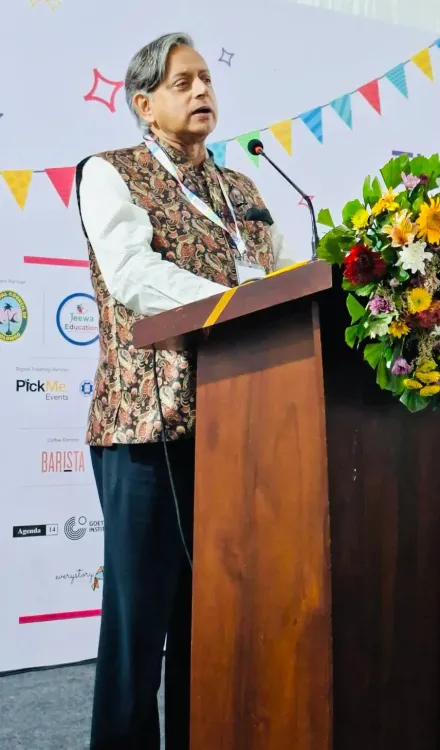
Congress MP Dr. Shashi Tharoor released Sinhala translations of his books 'Riot' (2001) and 'Inglorious Empire' (2016) at the Colombo Literary Festival on 27 July 2026, in an event that highlights growing India-Sri Lanka cultural and literary ties.
Key Takeaways
Shashi Tharoor participated in the ColomboLitFest on 27 July 2026 in Colombo, Sri Lanka .
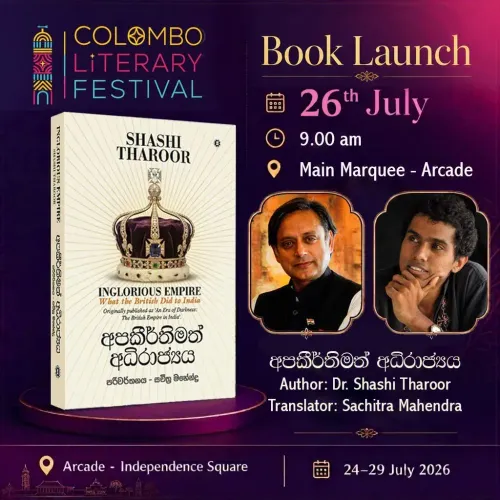
Sinhala translations of 'Riot' (2001) and 'Inglorious Empire' (2016) were officially released at the event.
Two scholars addressed the gathering in Sinhala and English before Tharoor responded and signed copies.
Inglorious Empire is a landmark critique of British colonial rule in India , while Riot explores communal violence through literary fiction.
The event reflects a broader pattern of India-Sri Lanka people-to-people cultural diplomacy through literature.
The translations extend Tharoor's readership to Sinhala-speaking communities who previously could only access the works in English.
Congress MP Dr. Shashi Tharoor concluded his participation at the Colombo Literary Festival (ColomboLitFest) on Sunday, 27 July 2026, with the release of Sinhala translations of two of his books — Riot (2001) and Inglorious Empire (2016) — marking a significant moment in India-Sri Lanka people-to-people cultural exchange.
Context
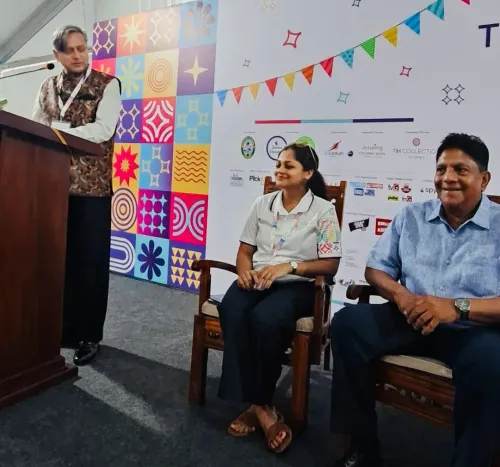
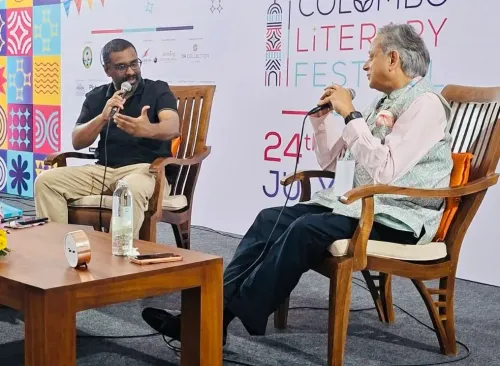
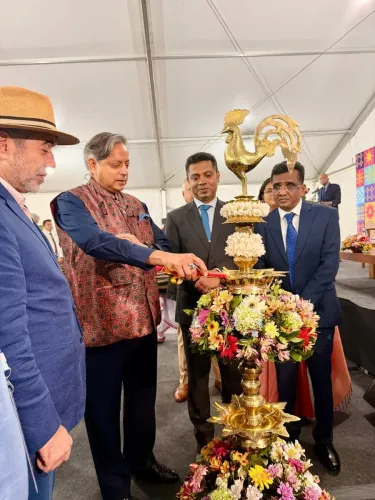
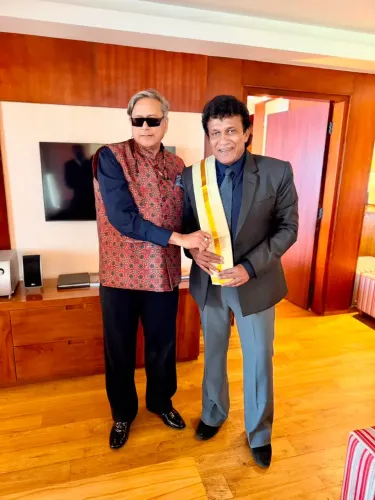
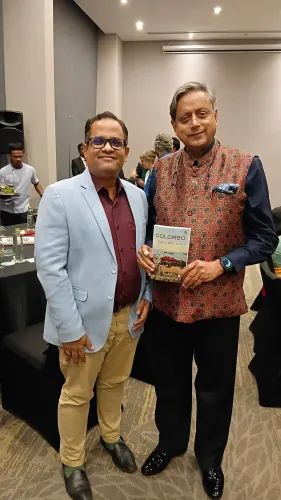
Tharoor, sharing the event on social media, described the occasion as his 'final engagement' at the festival. Two learned scholars addressed the gathering in both Sinhala and English, speaking about both books, after which Tharoor responded and held a book signing session. The event was accompanied by four photographs from the release ceremony.
Riot, first published in 2001, is a work of literary fiction exploring the fault lines of communal violence in India. Inglorious Empire, published in 2016, is a widely read non-fiction critique of British colonial rule in India, drawing on economic data and historical record to argue the case for colonial reparations.
Policy Backdrop
The translation of Indian literary and non-fiction works into Sinhala — the primary language of Sri Lanka — reflects a growing pattern of cultural diplomacy between the two neighbours. India and Sri Lanka share a colonial history under British rule that lasted until 1948, and themes of decolonisation resonate strongly among Sri Lankan scholars and readers.
Inglorious Empire in particular has found wide resonance across South and Southeast Asia, where colonial-era economic extraction and its legacies remain live subjects of academic and public debate. Its translation into Sinhala extends that conversation to a new linguistic community in the region.
Stakeholders and Impact
Sri Lankan readers and literary scholars stand to gain direct access to two significant works of Indian writing that were previously available only in English. For Sinhala-speaking audiences, the translations open up Tharoor's arguments on communal identity and colonial history without the barrier of a second language.
The ColomboLitFest has established itself as an annual platform that brings together international authors and local academics, and events such as this book launch deepen the festival's role as a bridge between South Asian literary traditions. Tharoor's participation — combining scholarship, public address, and a book signing — exemplifies the soft-power dimension of such cultural engagements.
What's Next
The release of these Sinhala editions may encourage further translations of Indian non-fiction and literary fiction into Sri Lanka's national languages, strengthening the literary corridor between the two countries. Observers of India-Sri Lanka cultural relations will watch whether other prominent Indian authors follow with similar engagements at future editions of ColomboLitFest.
For Tharoor, whose bibliography spans fiction, history, and political commentary, the Sinhala translations represent a meaningful expansion of his readership across a shared post-colonial neighbourhood — one where the debates his books provoke carry particular historical weight.
Point of View
Not just diplomatic or economic. The choice of 'Inglorious Empire' is particularly pointed: a book that indicts British colonialism finds natural resonance in Sri Lanka, which shares that colonial history and its unresolved legacies. For an MP who straddles the worlds of Parliament, public intellectualism, and international literary circuits, such engagements reinforce a model of soft power built around ideas rather than institutions. The event also signals appetite in Sri Lanka for Indian non-fiction in translation, a space that remains largely underdeveloped despite the two countries' proximity.
NationPress
27 Jul 2026
Frequently Asked Questions
What books did Shashi Tharoor launch in Sinhala at ColomboLitFest?
Shashi Tharoor launched Sinhala translations of 'Riot' (originally published in 2001) and 'Inglorious Empire' (originally published in 2016) at the Colombo Literary Festival on 27 July 2026.
What is 'Inglorious Empire' by Shashi Tharoor about?
'Inglorious Empire' is a non-fiction book by Dr. Shashi Tharoor, published in 2016, that critiques British colonial rule in India and argues that colonialism caused lasting economic and cultural damage to the subcontinent.
What is ColomboLitFest?
ColomboLitFest is an annual literary festival held in Colombo, Sri Lanka, that brings together international and local authors for book launches, panel discussions, and literary conversations in English and local languages.
Why is Shashi Tharoor's 'Riot' significant?
'Riot', published in 2001, is a work of literary fiction by Tharoor that examines communal violence and identity in India, and is considered one of his notable contributions to Indian English literature.
How do these book launches relate to India-Sri Lanka relations?
The translation and launch of Indian literary works in Sinhala is part of a broader pattern of people-to-people cultural diplomacy between India and Sri Lanka, complementing official bilateral ties through shared literary and intellectual engagement.