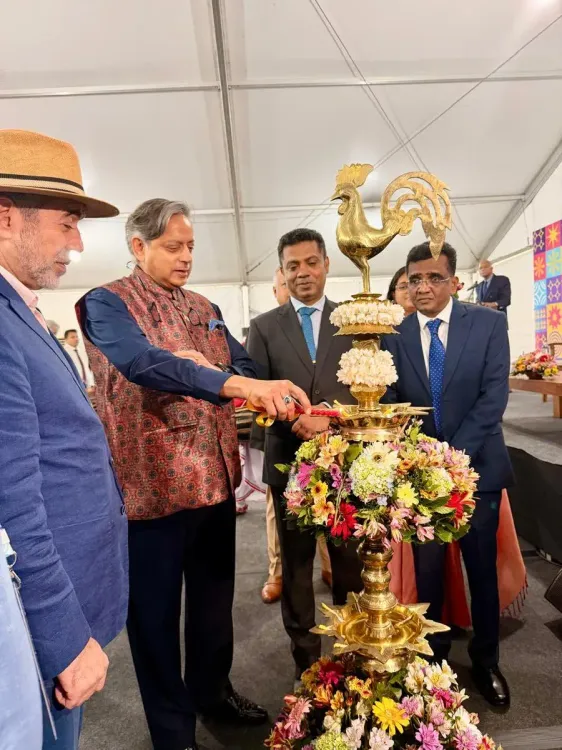
Tharoor lights ceremonial lamp at Colombo literary event
Synopsis
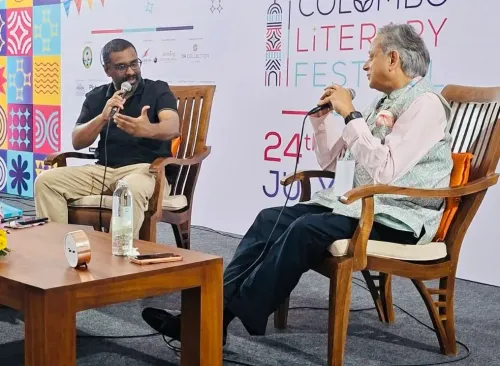
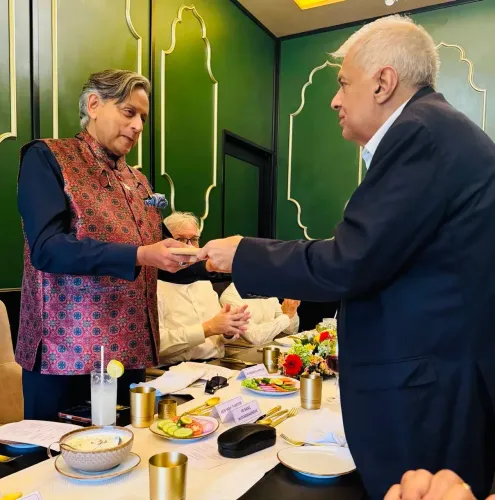
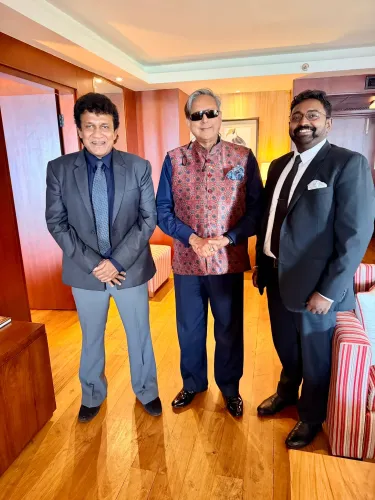
Congress MP Dr. Shashi Tharoor lit the ceremonial lamp at a Colombo literary gathering on 26 July 2026, seated beside Sri Lanka's Minister for Health and Media and the Mayor of Colombo. He argued that literature and ideas cross borders more effectively than politics or formal diplomacy.
Key Takeaways
Shashi Tharoor lit the first wick of the ceremonial lamp at a literary event in Colombo, Sri Lanka on 26 July 2026 .
Tharoor was seated between Sri Lanka's Minister for Health and Media on his right and the Mayor of Colombo on his left.
He stated that 'literature, books and ideas cross borders more effectively than politics and diplomacy can.' The event reflects ongoing India-Sri Lanka cultural engagement supplementing formal bilateral diplomacy.
Tharoor's dual background as a parliamentarian and author — including his 2012 book Pax Indica on soft power — underpins his role at such platforms.
The Indian Council for Cultural Relations (ICCR) , founded in 1950 , has long institutionalised such cross-border literary exchanges.
Congress MP Dr. Shashi Tharoor lit the first wick of a ceremonial lamp at a literary gathering in Colombo, Sri Lanka, on 26 July 2026, and used the occasion to argue that literature, books, and ideas travel across borders more effectively than politics or diplomacy. Tharoor, who represents Thiruvananthapuram in the Lok Sabha and is himself a prolific author, was seated between Sri Lanka's Minister for Health and Media on his right and the Mayor of Colombo on his left.
Context
The lamp-lighting ceremony is a traditional inaugural ritual at South Asian literary and cultural events, symbolising the beginning of intellectual exchange. Tharoor's presence at a Colombo literary platform underscores the continuing people-to-people ties between India and Sri Lanka, two neighbours linked by centuries of shared culture, religion, and language. His seating alongside senior Sri Lankan officials signals the event's cross-sectoral significance, bridging cultural programming with government participation.
In his remarks, Tharoor articulated a view he has long championed: that the movement of ideas through literature is a more organic and enduring form of international connection than formal diplomatic channels. 'Literature, books and ideas cross borders more effectively than politics and diplomacy can,' he said at the event.
Policy Backdrop
India's engagement with Sri Lanka through cultural diplomacy has deep institutional roots. The Indian Council for Cultural Relations (ICCR), established in 1950, has long facilitated literary and artistic exchanges between India and its neighbours, including Sri Lanka. Colombo regularly hosts regional literary gatherings that draw writers, scholars, and public figures from across South Asia.
Tharoor's own intellectual output has shaped his standing in these spaces. His 2012 book Pax Indica examined the role of soft power and ideas in Indian foreign policy, arguing that cultural influence is a strategic asset. His participation in Colombo-based literary forums is consistent with that thesis, translating a theoretical argument into practice.
Stakeholders and Impact
The event brings together the literary community and diplomatic circles at a moment when India-Sri Lanka relations are navigating a complex mix of economic cooperation, historical grievances, and regional competition. Literary platforms offer a relatively neutral space where such sensitivities can be set aside in favour of shared intellectual heritage.
For the Sri Lankan side, the presence of a prominent Indian parliamentarian and author at a civic cultural event — with the Mayor of Colombo in attendance — lends the gathering national-level visibility. For India, it reinforces the value of non-state, people-to-people channels as complements to formal bilateral mechanisms.
What's Next
Tharoor's appearance in Colombo may foreshadow broader India-Sri Lanka cultural programming in the months ahead. Observers of the bilateral relationship will watch for any joint literary festivals, book translation initiatives, or ICCR-backed exchange programmes announced out of this engagement. His remarks on the primacy of ideas over politics also add to a growing regional conversation about the role of soft power in South Asian neighbourhood diplomacy.
Point of View
Where authors and intellectuals do the work that envoys sometimes cannot. By publicly articulating the superiority of ideas over politics as a border-crossing tool, he is making a normative argument that fits squarely within the soft-power doctrine he has long advocated. The optics of sitting between a cabinet minister and a mayor at a literary dais also suggest the Sri Lankan establishment is happy to grant such exchanges political weight. If this signals a broader season of India-Sri Lanka cultural programming, it could quietly shore up bilateral goodwill at a moment when the relationship has more formal pressure points than either side cares to advertise.
NationPress
26 Jul 2026
Frequently Asked Questions
Why did Shashi Tharoor visit Colombo in July 2026?
Tharoor attended a literary and cultural event in Colombo, Sri Lanka, on 26 July 2026, where he lit the ceremonial lamp and spoke about the power of books and ideas to connect people across borders.
What did Shashi Tharoor say at the Colombo literary event?
He said that 'literature, books and ideas cross borders more effectively than politics and diplomacy can,' emphasising the role of cultural exchange in international relations.
Who was seated with Tharoor at the Colombo event?
Tharoor was seated between Sri Lanka's Minister for Health and Media on his right and the Mayor of Colombo on his left.
What is India's role in Sri Lanka's literary and cultural events?
India has engaged with Sri Lanka through cultural diplomacy for decades, with the Indian Council for Cultural Relations (ICCR), founded in 1950, facilitating literary and artistic exchanges across the region.
What is Shashi Tharoor's book Pax Indica about?
Published in 2012, Pax Indica examines India's foreign policy through the lens of soft power, arguing that cultural influence and the movement of ideas are strategic assets in international affairs.