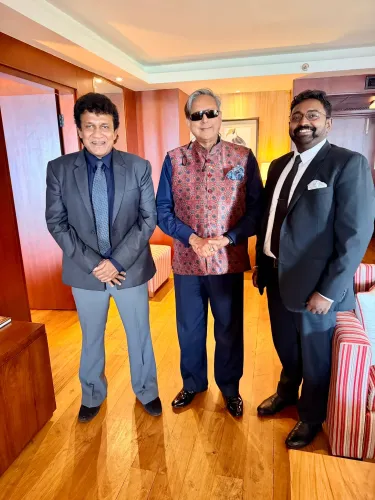
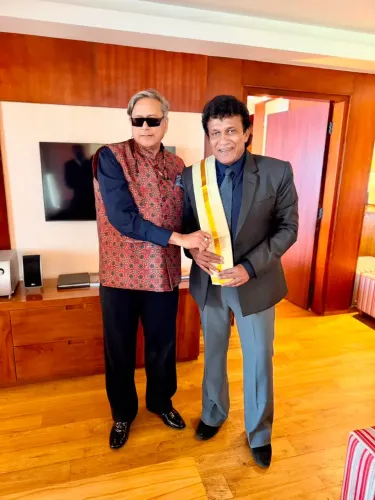
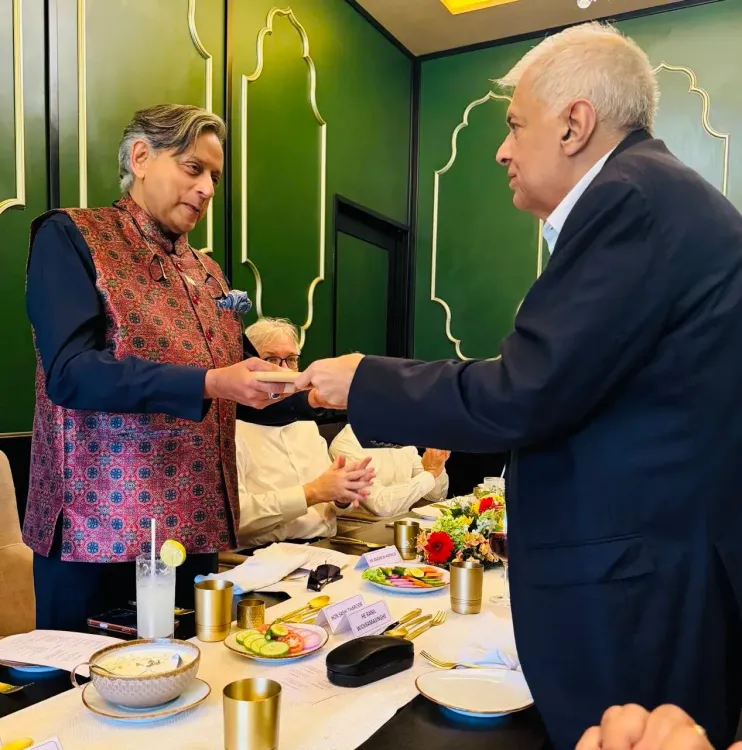
Tharoor meets ex-Sri Lanka President Wickramasinghe in Colombo
Synopsis
Congress MP Dr. Shashi Tharoor opened his Sri Lanka visit on July 26 with a luncheon meeting with former President Ranil Wickramasinghe, publicly defending the veteran leader's legacy and affirming a two-decade personal friendship amid the island nation's ongoing political transformation.
Key Takeaways
Shashi Tharoor began a visit to Sri Lanka on July 26, 2026 , with a luncheon meeting with former President Ranil Wickramasinghe in Colombo .
Tharoor publicly defended Wickramasinghe's record, saying 'history is bound to be kinder to him than contemporary political judgements might be.' Tharoor noted the two have maintained a personal friendship for nearly two decades .
Wickramasinghe assumed the Sri Lankan presidency in 2022 during a severe economic and political crisis, overseeing a stabilisation period backed in part by Indian credit lines.
The visit reflects India's practice of sustaining broad-based engagement with Sri Lanka's political class across electoral cycles, consistent with its neighbourhood-first policy.
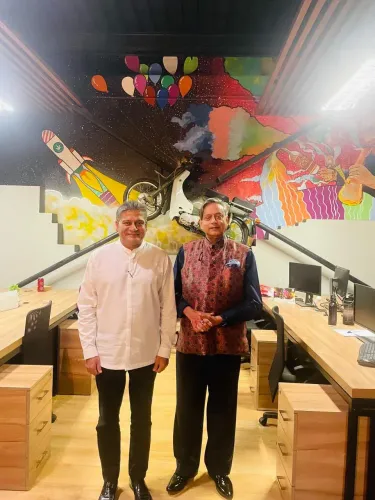
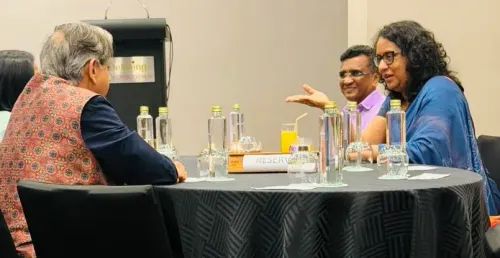
Congress MP Dr. Shashi Tharoor began his visit to Sri Lanka on Sunday, July 26, 2026, with a luncheon meeting with former Sri Lankan President Ranil Wickramasinghe, describing the discussion as illuminating and offering a warm public defence of the former leader's legacy.
Context
Posting on X, Tharoor wrote that the luncheon discussion with Wickramasinghe 'illuminated my first day in Sri Lanka,' adding that the two have shared a friendship 'for nearly two decades.' He acknowledged that Wickramasinghe's 'sacrifices for and services to his nation in recent years have been overtaken in the heady rush of political transformation,' but expressed confidence that 'history is bound to be kinder to him than contemporary political judgements might be.'
Tharoor, a former UN Under-Secretary-General with extensive experience in South Asian diplomacy, also said he believes Wickramasinghe 'has the best interests of his country and the broader region genuinely at heart' — a pointed endorsement given the contested nature of the former president's political standing at home.
Policy Backdrop
Ranil Wickramasinghe was elected President of Sri Lanka in 2022 by parliament after his predecessor Gotabaya Rajapaksa resigned amid mass public protests triggered by a severe economic crisis. Wickramasinghe, a veteran politician who had served multiple terms as Prime Minister, took charge of a country grappling with acute foreign exchange shortages, fuel scarcity and a collapsed economy.
India played a pivotal role during that crisis period, extending multiple lines of credit and economic support to Colombo in 2022–2023 to help stabilise the island nation. The bilateral relationship between New Delhi and Colombo — built on deep historical, cultural and trade ties — was a central pillar of India's neighbourhood-first policy during those turbulent years. Wickramasinghe's tenure oversaw much of the stabilisation period, a chapter that now sits uncomfortably with the political transformation that followed.
Stakeholders and Impact
Tharoor's visit and his public remarks carry weight beyond personal diplomacy. As a sitting Indian parliamentarian with cross-party credibility on foreign policy, his engagement with Sri Lanka's political class — including figures now outside formal power — signals that Indian stakeholders maintain broad-based ties in Colombo irrespective of which coalition governs the island.
For Wickramasinghe, the public endorsement from a prominent Indian MP offers a measure of international validation at a moment when his domestic political standing remains in flux. For Sri Lankan observers, such interactions reflect the depth of the India–Sri Lanka people-to-people and institutional relationship, one that operates across electoral cycles on both sides.
What's Next
Tharoor described Sunday's luncheon as his 'first day in Sri Lanka,' suggesting further engagements are planned during the visit. Upcoming bilateral meetings between Indian and Sri Lankan officials, as well as any parliamentary exchanges on regional cooperation, will be closely watched as indicators of the current state of the relationship.
India's neighbourhood-first policy continues to place Sri Lanka at the centre of its regional engagement calculus. Personal diplomatic outreach by Indian parliamentarians — particularly those with Tharoor's international profile — reinforces that calculus and may lay groundwork for more formal bilateral dialogue in the months ahead.
Point of View
Not merely a social courtesy — it signals that sections of the Indian political establishment continue to value the former president's stabilising role even after his electoral exit. The reference to 'the heady rush of political transformation' is a careful phrase that acknowledges Sri Lanka's changed domestic landscape without criticising it, a balance consistent with India's non-interference posture. Coming from a Congress MP with a foreign-policy profile that transcends party lines, the statement also reinforces that India's neighbourhood engagement is bipartisan and relationship-driven rather than transactional. Such visits by Indian parliamentarians serve as a soft-power instrument, maintaining open channels in Colombo at a moment when the formal bilateral agenda between New Delhi and the new Sri Lankan dispensation is still being calibrated.
NationPress
26 Jul 2026
Frequently Asked Questions
Why did Shashi Tharoor visit Sri Lanka in July 2026?
Tharoor travelled to Sri Lanka and described July 26 as his 'first day' in the country, beginning the visit with a luncheon meeting with former President Ranil Wickramasinghe. The full itinerary of his visit has not been disclosed publicly.
Who is Ranil Wickramasinghe and why is he significant to India?
Ranil Wickramasinghe is a veteran Sri Lankan politician who served multiple terms as Prime Minister and was elected President by parliament in 2022 after Gotabaya Rajapaksa resigned amid mass protests. During his presidency, India extended significant credit lines to Sri Lanka to help address the island's economic crisis, making him a key interlocutor in the bilateral relationship.
What did Tharoor say about Wickramasinghe's legacy?
Tharoor said Wickramasinghe's 'sacrifices for and services to his nation in recent years have been overtaken in the heady rush of political transformation,' but added that 'history is bound to be kinder to him than contemporary political judgements might be.' He also affirmed that Wickramasinghe 'has the best interests of his country and the broader region genuinely at heart.'
How long have Tharoor and Wickramasinghe known each other?
Tharoor stated in his post that he has 'enjoyed his friendship for nearly two decades,' indicating a long-standing personal relationship between the two leaders that predates Wickramasinghe's presidency.
What is India's neighbourhood-first policy and how does this visit relate to it?
India's neighbourhood-first policy prioritises deep engagement with South Asian neighbours including Sri Lanka on trade, security and people-to-people ties. Tharoor's visit and his public remarks about Wickramasinghe reflect this approach, maintaining open diplomatic channels in Colombo with multiple stakeholders across electoral cycles.