Tharoor Pens Larkin-Style Poem on Gen-Z Protest
Synopsis
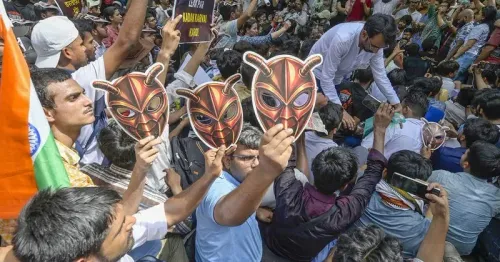
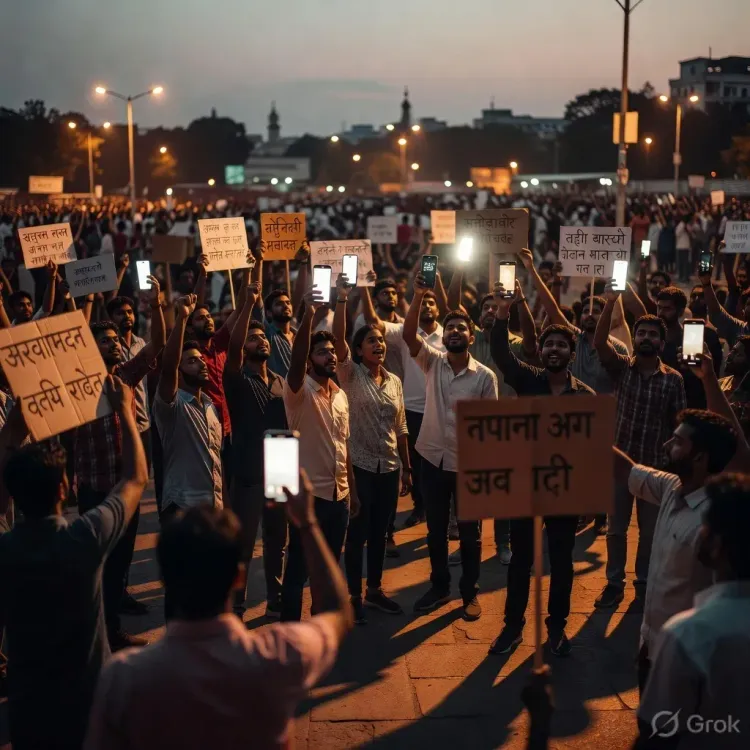
On the eve of Independence Day 2026, Congress MP Dr. Shashi Tharoor posted a Philip Larkin-style poem saluting Gen-Z protesters, blending literary allusion with sharp political imagery — from viral memes to bulldozers — to frame youth dissent as a democratic turning point.
Key Takeaways
Shashi Tharoor posted a poem on 14 August 2026 , the eve of India's Independence Day.
The poem is written in the style of English poet Philip Larkin , with Tharoor explicitly acknowledging the influence.
It frames the period between 2024 and 2026 as a shift from democratic anxiety to active street-level protest.
The word 'cockroaches' — placed in quotation marks — appears to reclaim a term used against protesters, inverting it as a symbol of resilience.
The poem references 'the bulldozer's grand design,' invoking a potent and contested symbol in contemporary Indian political discourse.
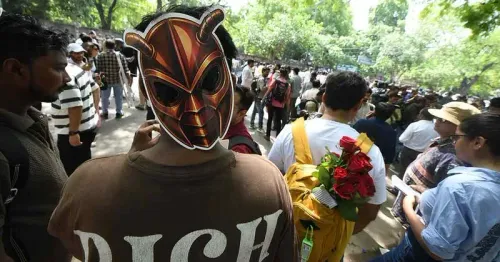
Gen-Z's fusion of viral social media and physical protest is central to the poem's narrative arc.
On the eve of Independence Day, Congress MP Dr. Shashi Tharoor turned to verse — channelling the spirit of British poet Philip Larkin — to salute what he frames as a generational awakening in Indian democracy. Posted on 14 August 2026, the poem arrives at a charged symbolic moment: the night before India marks 79 years of independence.
The poem, titled 'A Poem for Our Times,' opens with a wry nod to Larkin's cadence and closes with a defiant rallying cry. Tharoor writes: 'Hail! let the cockroaches multiply, unbothered by the spray; Gen-Z laugh, and meme, refuse to die, with a wink, a smile, a brazen cry, and they are here to win the day!' The word 'cockroaches' — placed pointedly in quotation marks in the original — appears to reclaim a slur sometimes used to demean protesters, inverting it into a badge of resilience.
Larkin's Shadow, Tharoor's Lens
Philip Larkin, the Hull-based English poet best known for unflinching observations of post-war British life, is an unlikely muse for Indian political commentary — which is precisely the point. Tharoor, himself a celebrated author and former diplomat, has long used literary allusion as a political instrument. The parenthetical 'with apologies to Philip Larkin' signals both homage and subversion: borrowing a distinctly English poetic register to describe a distinctly Indian democratic moment.
The poem's arc moves from paralysis to action — 'cautious, whispered phrase' giving way to 'trending tag and marching feet.' It situates the rupture between 2024 and 2026, a window the poem marks as the span between democratic anxiety and what Tharoor characterises as a street-level assertion of freedom.
Gen-Z, Memes, and the Grammar of Dissent
Across democracies, younger cohorts have increasingly fused digital culture with street mobilisation — viral hashtags amplifying physical protest, memes disarming official narratives with irony. Tharoor's poem maps this grammar precisely: 'the Gen-Z viral clicks' sit alongside 'marching feet,' suggesting the two are not alternatives but a single, hybrid repertoire of dissent.
The 'bulldozer' imagery in the poem — 'the bulldozer's grand design' — lands as one of the sharper lines. In Indian political discourse, bulldozers have become a potent and contested symbol, associated in public debate with state enforcement actions. Tharoor does not name a party or a government; the image does the work.
Posted hours before Independence Day 2026, the poem is less a policy statement than a literary provocation — one that asks, with Larkin's borrowed gravity, whether the ideals of 15 August 1947 are being honoured or merely inherited.
Point of View
Internationally literate audience. The poem fits a pattern in which Opposition figures have sought to frame youth unrest not as disruption but as democratic renewal, countering a narrative that positions protest as anti-national. The 'bulldozer' and 'cockroach' references are precisely calibrated: evocative enough to resonate with a politically aware readership, but indirect enough to avoid a direct confrontation. Posted on Independence Day eve, the timing maximises symbolic weight — positioning dissent as continuous with, not opposed to, the founding ideals of the republic.
NationPress
14 Aug 2026
Frequently Asked Questions
What poem did Shashi Tharoor post on 14 August 2026?
Tharoor posted an original poem titled 'A Poem for Our Times,' written in the style of English poet Philip Larkin, saluting Gen-Z protesters and framing their digital and street-level activism as a democratic awakening.
Who is Philip Larkin and why did Tharoor reference him?
Philip Larkin was a celebrated English poet known for spare, unflinching verse about post-war British life. Tharoor borrowed Larkin's cadence as a literary device — using a distinctly English poetic form to comment on Indian democratic politics.
What does 'cockroaches' mean in Tharoor's poem?
Tharoor places the word in quotation marks, suggesting he is reclaiming a slur sometimes directed at protesters and inverting it into a symbol of resilience — framing Gen-Z activists as unbothered by attempts to suppress them.
What is the 'bulldozer' reference in Tharoor's poem about?
The line 'the bulldozer's grand design' invokes a symbol that has become deeply contested in Indian political discourse, widely associated in public debate with state enforcement actions. Tharoor does not name a specific party or government.
Why did Tharoor post this poem on Independence Day eve?
Posting on 14 August — the night before India marks independence — maximises symbolic resonance, implicitly framing the poem's themes of protest and democratic renewal as continuous with the founding ideals of 15 August 1947 .