Trinamool split is 'politics without principles', says Shashi Tharoor
Synopsis
Shashi Tharoor didn't mince words: 20 TMC MPs who spent 12 years attacking the NDA have now joined it — and he says only the ruling party has the power to make that happen. The TMC fracture, triggered by a poor West Bengal election showing, has now reached Parliament, raising hard questions about the price of political loyalty in India.
Key Takeaways
Shashi Tharoor alleged that inducements, incentives, or threats from the ruling party drove the Trinamool Congress split.
20 Lok Sabha MPs announced they would join the Nationalist Citizens Party and support the NDA , reversing 12 years of opposition.
Three Rajya Sabha MPs also quit the TMC around the same period.
The rebellion began after TMC won only 80 seats in the West Bengal Assembly elections .
58 MLAs first sparked the crisis by refusing to accept Sovandeb Chattopadhyay as Leader of the Opposition in the Vidhan Sabha .
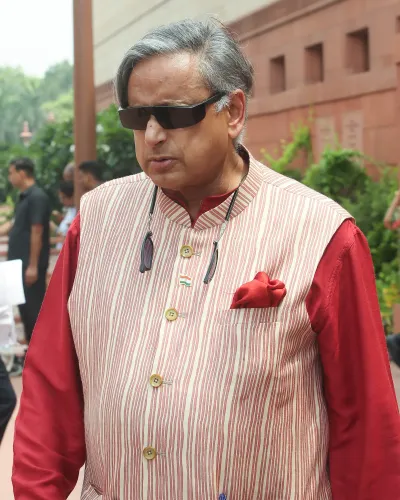
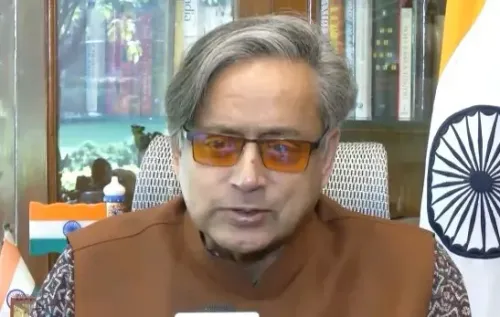
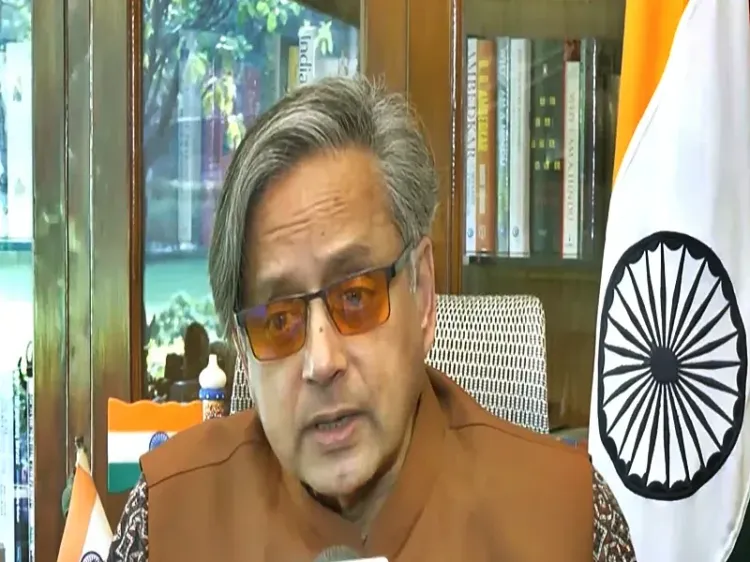
Senior Indian National Congress leader and Thiruvananthapuram MP Shashi Tharoor has sharply criticised the split within the All India Trinamool Congress (TMC), alleging that inducements, incentives, or threats from the ruling party were behind the rebellion. Speaking in an interview on 19 June, Tharoor said the defections represent a troubling erosion of principled politics in India.
What Tharoor Said
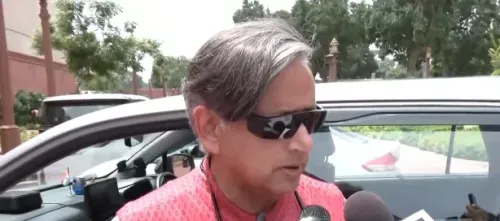
'Look, frankly, I don't think anyone has any very serious doubt that either some inducements, some incentives or some threats have been involved. And that can only come from the ruling party because they have the power,' Tharoor said, stopping short of naming the Bharatiya Janata Party (BJP) directly but pointing clearly at the party in power.
He reserved particular criticism for the 20 Lok Sabha MPs who announced their decision to align with the National Democratic Alliance (NDA) after years of publicly opposing it. 'These are the same party MPs who have been attacking the NDA day in and day out for the last 12 years. So, suddenly, to find all this virtue suggests that our country's politics has become a politics without principles. And that is rather sad...,' he said.
The Trinamool Fracture: Key Developments
The TMC's internal crisis deepened following the party's significant setback in the West Bengal Assembly elections, where it managed to win only 80 seats. The first signs of revolt came when 58 MLAs refused to accept Sovandeb Chattopadhyay as Leader of the Opposition in the Vidhan Sabha.
The rupture then spread to Parliament. Three Rajya Sabha MPs quit the party, while the 20 Lok Sabha MPs announced they would join the Nationalist Citizens Party and extend support to the NDA — a dramatic reversal for legislators who had built their political identity on opposing the ruling alliance.
Tharoor on the Purpose of Politics
Beyond the immediate controversy, Tharoor used the occasion to articulate what he sees as the foundational logic of democratic participation. 'Have your convictions, work constructively together. I have always said the other side is not your enemy; they are your adversary, and your job is to work for the collective interest of the country,' the Congress MP said.
The former diplomat added: 'You feel your way is better than their way, and that is the way politics should be. But, certainly, to be in politics you must have a vision of what is better for India, to create a better India and to create a better society. That is the logic of being in politics.'
Broader Context
This comes amid a pattern of regional party fragmentation that critics argue has accelerated under the current political dispensation. The TMC split is the latest in a series of high-profile defections that opposition parties have attributed to central pressure, while the ruling side has consistently described such moves as voluntary realignments based on ideology. The scale of this particular fracture — spanning both state legislature and Parliament — makes it one of the more consequential party splits in recent Bengali political history.
How the remaining TMC leadership responds, and whether further defections follow, will shape the opposition's arithmetic in both the Vidhan Sabha and Lok Sabha in the months ahead.
Point of View
While the BJP argues these are voluntary ideological shifts. What is harder to dismiss here is the scale: 20 Lok Sabha MPs and 58 MLAs moving in near-unison after a single electoral setback strains the 'change of heart' explanation. The deeper issue is structural — India has no effective anti-defection mechanism for splits above a threshold, making large-scale realignments legally clean even when politically suspect. The TMC fracture is less an anomaly than a stress test of a system that has consistently rewarded switching over staying.
NationPress
18 Sept 2026
Frequently Asked Questions
What did Shashi Tharoor say about the Trinamool Congress split?
Tharoor said the split reflects 'politics without principles,' alleging that inducements, incentives, or threats from the ruling party were behind the defections. He pointed out that the 20 TMC Lok Sabha MPs who joined the NDA had spent 12 years publicly attacking it.
Why did the Trinamool Congress split?
The split followed the TMC's poor performance in the West Bengal Assembly elections, where it won only 80 seats. The rebellion began with 58 MLAs rejecting the party's choice of Leader of the Opposition, before spreading to Parliament.
How many TMC MPs have broken away?
Twenty Lok Sabha MPs announced their decision to join the Nationalist Citizens Party and support the NDA, while three Rajya Sabha MPs also quit the party separately.
Who is Sovandeb Chattopadhyay and why does he matter here?
Sovandeb Chattopadhyay was the TMC's choice for Leader of the Opposition in the West Bengal Vidhan Sabha. His rejection by 58 MLAs was the first visible sign of the internal rebellion that later engulfed the party's parliamentary wing as well.
What is Tharoor's view on how politics should work?
Tharoor argued that politicians should treat opponents as adversaries rather than enemies, and work constructively toward the collective interest of the country. He said having a vision for a better India is the fundamental logic of entering politics.