Kerala CPM crisis: Thomas Isaac calls defeat a 'shock treatment' from voters
Synopsis
A Central Committee member openly calling his own party arrogant, demanding that leaders who misused cooperative bank funds either repay or quit, and conceding that the BJP-deal narrative gained traction because of the party's own actions — T.M. Thomas Isaac's speech in Alappuzha is the sharpest internal critique the Kerala CPI(M) has faced since its Assembly election rout, and it lands just days before a high-stakes Kozhikode reckoning.
Key Takeaways
Thomas Isaac , CPI(M) Central Committee member, called the Kerala Assembly election defeat a 'shock treatment' from voters at a party event in Alappuzha .
Isaac said the party had grown arrogant after 10 consecutive years in power and had stopped listening to dissenting voices.
He demanded that party leaders who misused cooperative bank funds repay the money or leave the party.
Isaac acknowledged that some party actions lent credibility to the campaign alleging a CPI(M)–BJP understanding, even while calling it false.
Growing internal unease has been reported over former Chief Minister Pinarayi Vijayan's handling of the post-defeat narrative.
An extended CPI(M) state committee meeting is scheduled in Kozhikode from 13 to 15 September , to be attended by nine Polit Bureau members including General Secretary M.A.
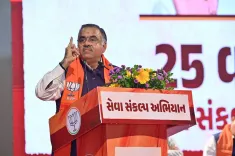
Senior Communist Party of India (Marxist) leader and Central Committee member T.M. Thomas Isaac has delivered a stinging internal critique of his party's functioning, calling the Kerala Assembly election defeat a 'shock treatment' administered by the electorate. Speaking at the foundation-stone laying ceremony of the CPI(M)'s Vallikunnam West local committee office in Alappuzha, Isaac said the party had grown arrogant after 10 consecutive years in power and had stopped listening to dissenting voices.
Isaac's Core Indictment
Isaac was unsparing in his assessment. He said the party had failed to approach people with humility and had become increasingly hostile to those who raised questions or challenged the leadership. He linked the electoral setback directly to errors in candidate selection and a widening disconnect between the party apparatus and public sentiment.
He also acknowledged that the campaign alleging a secret understanding between the CPI(M) and the Bharatiya Janata Party (BJP) had influenced voters. While he described the campaign as false, he conceded that certain statements and actions by party leaders had provided the narrative with credibility — an admission that carries significant weight coming from a Central Committee member.
Cooperative Banks and the Ayyappa Sangamam Row
Isaac raised pointed questions about the handling of cooperative bank affairs, stating that the money deposited in these institutions belonged to the people — not to party leaders or their families. 'Those who had taken money should repay it. If they were unwilling to do so, they should leave the party,' he said.
He also addressed the Ayyappa Sangamam controversy, arguing that even if the party had no harmful intent, it should have anticipated how its actions would be interpreted by the broader public. The remark signals a demand for greater political sensitivity within the organisation's decision-making.
Simmering Unease Over Pinarayi Vijayan's Approach
Isaac's remarks come against a backdrop of growing discomfort among senior leaders over the manner in which former Chief Minister Pinarayi Vijayan has managed the post-election discourse. Vijayan's categorical statement that the post of Deputy Leader of the Opposition would not be given to the Communist Party of India (CPI) — amid a dispute between the two Left allies — was among the first flashpoints. Left Democratic Front (LDF) convenor T.P. Ramakrishnan was subsequently compelled to clarify the party's position.
Vijayan's meetings in Taliparamba and Payyannur have also drawn internal scrutiny. A section of leaders reportedly felt that the framing of the defeat at these meetings appeared to shift blame onto cadres who voted for rebel candidates — a reading contradicted by the party's own organisational review, which identified failures in candidate selection and weakening ties between leaders and workers in traditional strongholds.
Attacks by Pinarayi Vijayan and Kannur district secretary K.K. Ragesh against rebel leaders T.K. Govindan and V. Kunjikrishnan have also drawn criticism from within, with some leaders warning that the public targeting of these figures could inadvertently boost their standing.
Kozhikode Meeting: A Reckoning Awaits
The CPI(M) is scheduled to hold an extended state committee meeting in Kozhikode from 13 to 15 September, attended by nine Polit Bureau members, including General Secretary M.A. Baby. The meeting is expected to conduct a detailed examination of the election defeat, candidate selection, organisational weaknesses, and leadership functioning.
The party suffered setbacks not only in Kannur — traditionally its strongest district — but across several of its established bastions, making the accountability question both urgent and politically sensitive.
Isaac's Own Political Journey
Isaac's intervention carries a personal dimension as well. He served as State Finance Minister in the first Pinarayi Vijayan cabinet (2016–21). When he was set to contest from his sitting seat in the subsequent election, the party decided to bar leaders who had contested multiple times from standing — a decision that came as a significant blow to him. He was then fielded for the 2024 Lok Sabha seat from Pathanamthitta, but lost. His current intervention, therefore, is not merely ideological — it reflects the experience of a leader who has himself felt the weight of decisions made at the top.
With the Kozhikode meeting approaching, Isaac's public remarks have sharpened the terms of debate: the party, he has made clear, cannot simply blame voters or rebel cadres. It must examine its own conduct, rebuild public trust, and demonstrate that it has genuinely changed.
Point of View
Just before the Kozhikode review meeting, is almost certainly deliberate. The cooperative bank remarks are the most explosive: framing misuse of depositor funds as a party-discipline issue rather than a legal one is a significant escalation. What mainstream coverage underplays is that Isaac himself was a casualty of the very top-down decision-making he now criticises — barred from his seat, then defeated in a Lok Sabha contest. His critique is credible precisely because it is personal. The real test is whether the Kozhikode meeting produces structural accountability or becomes another exercise in managed dissent.
NationPress
2 Sept 2026
Frequently Asked Questions
What did T.M. Thomas Isaac say about the Kerala CPI(M)'s election defeat?
Isaac described the Assembly election defeat as a 'shock treatment' administered by the voters, arguing that the party had become arrogant after a decade in power and had failed to listen to those who raised questions or disagreed with the leadership. He linked the loss to mistakes in candidate selection and a failure to read public sentiment.
What is the CPI(M) Kozhikode state committee meeting about?
The CPI(M) has convened an extended state committee meeting in Kozhikode from 13 to 15 September, to be attended by nine Polit Bureau members including General Secretary M.A. Baby. The meeting is expected to examine the reasons for the election defeat, review candidate selection, assess organisational weaknesses, and evaluate leadership functioning.
What did Isaac say about cooperative banks?
Isaac stated that the money held in cooperative banks belongs to the people, not to party leaders or their families, and demanded that those who had taken funds repay them. He warned that those unwilling to do so should leave the party — a pointed remark directed at leaders implicated in cooperative bank controversies.
Why is there unease within the CPI(M) over Pinarayi Vijayan?
Senior leaders have reportedly grown uncomfortable with how Vijayan has managed the post-election debate. Specific concerns include his statement ruling out the Deputy Leader of Opposition post for the CPI, his meetings in Taliparamba and Payyannur where the defeat was seen as being blamed on rebel-supporting cadres, and his attacks on rebel leaders T.K. Govindan and V. Kunjikrishnan, which some fear could boost their public profiles.
What is T.M. Thomas Isaac's political background?
Thomas Isaac served as Kerala's State Finance Minister in the first Pinarayi Vijayan cabinet from 2016 to 2021. He was subsequently barred from contesting his sitting seat under a party rule limiting multiple-term candidates, and then lost the 2024 Lok Sabha election from Pathanamthitta. His current critique of the party's top-down functioning is informed by his own experience of those decisions.