Safety Match Production in Thoothukudi to Cease Temporarily Due to Rising Costs
Synopsis
In a bold move, the safety match industry in Thoothukudi is set to halt production from April 12 to 25, driven by soaring raw material prices and alleged hoarding. As the industry grapples with a crisis, manufacturers urge for urgent government intervention to address the escalating challenges.
Key Takeaways
Shutdown Dates: April 12 to 25 Reason: Rising raw material costs and alleged hoarding Impact: Affects five lakh workers Industry Revenue: Approximately Rs 800 crore in domestic trade and Rs 600 crore in exports Government Action: Urged to intervene and address the crisis
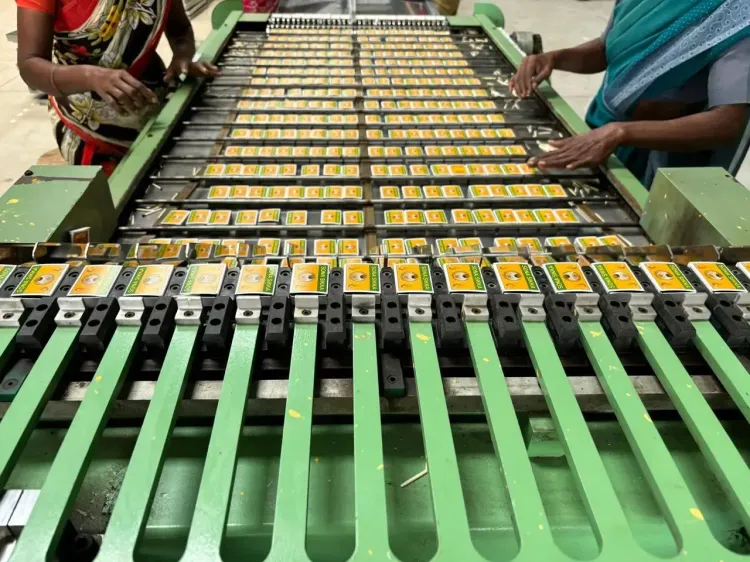
Thoothukudi, April 9 (NationPress) The safety match manufacturing sector in southern Tamil Nadu is set to shut down from April 12 to 25. This complete halt comes as manufacturers protest against the significant increase in raw material costs and the alleged hoarding practices by wholesale traders.
Industry leaders are calling on both state and federal governments to intervene urgently, initiating talks to address the escalating crisis. This decision to suspend operations was made collectively by manufacturers’ associations from Kovilpatti, Sattur, and Sivakasi—vital hubs for match production in India.
This shutdown is anticipated to affect around five lakh workers directly engaged in the industry, which contributes approximately Rs 800 crore to domestic trade and Rs 600 crore to annual exports.
Manufacturers express that the rising costs of inputs have rendered continued operations financially unfeasible, especially while adhering to the traditional retail price of Rs one per matchbox. The situation has worsened due to global supply chain disruptions arising from the ongoing geopolitical tensions in West Asia, particularly involving the United States, Israel, and Iran.
According to industry statistics, the cost of paraffin wax has surged from Rs 80 to Rs 165 per kilogram, while sulphur has risen from Rs 26 to Rs 81 per kilogram. The price of phosphorus has climbed from Rs 605 to Rs 646 per kilogram, and potassium dichromate has increased from Rs 276 to Rs 345 per kilogram.
Moreover, other materials like potassium chlorate, carton boxes, BOPP reels, and match splints sourced from Kerala have also experienced notable price hikes.
M. Paramasivam, president of the National Small Safety Match Association, has accused wholesale traders of hoarding raw materials, creating artificial scarcity in the market.
He stated that despite efforts to procure sufficient supplies, manufacturers have struggled to receive adequate materials since the onset of the conflict. He described the current circumstances as critical, emphasizing that the industry cannot maintain operations under these cost pressures.
Paramasivam has urged authorities to take stringent measures against hoarding and ensure fair pricing and accessibility of essential materials.
With production anticipated to cease for nearly two weeks, stakeholders in the industry are worried about severe economic repercussions, including wage losses for thousands of workers and disruptions in supply chains, unless immediate corrective actions are taken.
Point of View
Which is crucial for both local employment and the economy. The rising costs of raw materials, coupled with alleged market manipulations, demand immediate attention from policymakers to prevent severe economic fallout for both manufacturers and workers.
NationPress
16 Sept 2026
Frequently Asked Questions
Why is the safety match industry in Thoothukudi shutting down?
The industry is halting production from April 12 to 25 in response to soaring raw material prices and alleged hoarding by wholesale traders.
How many workers are affected by the shutdown?
Approximately five lakh workers are directly employed in the safety match sector, and their livelihoods are at risk due to the shutdown.
What actions are manufacturers urging from the government?
Manufacturers are calling for immediate discussions and interventions from both state and union governments to address the crisis caused by rising costs.
What raw materials have seen price increases?
Key materials such as paraffin wax, sulphur, phosphorus, and potassium dichromate have experienced significant price hikes.
What are the potential consequences of this shutdown?
The shutdown could lead to wage losses for workers and disruption in supply chains, impacting the overall economy.