UPSC centenary: PM Modi says women's share in civil services rose from 3% in 1952 to 30% today
Synopsis
At UPSC's centenary, Modi revealed that women's share in civil services exams has surged from 3% in 1952 to 30% today — and that 3 of the 4 women ever appointed as UPSC chairpersons came after 2014. It's a data point that reframes the diversity conversation around India's most competitive public exam.
Key Takeaways
PM Narendra Modi addressed the UPSC centenary celebrations in New Delhi on 1 October 2026 .
Women's participation in civil services exams has risen from 3% in 1952 to approximately 30% today .
Of the four women ever appointed as UPSC chairpersons, three were appointed after 2014 ; the four are Rose Millian Bathew , Rajni Razdan , Preeti Sudan , and Alka Sirohi .
The share of students appearing for the civil services exam rose by 45% between UPSC's founding and its golden jubilee in 1976 , with further growth since.
Modi released a commemorative coin , stamp , and a book titled '100 Landmark Judgements' at the event.
UPSC was established in 1926 ; centenary celebrations ran from 1 October 2025 to 1 October 2026 .
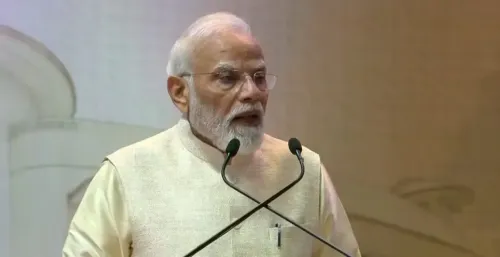
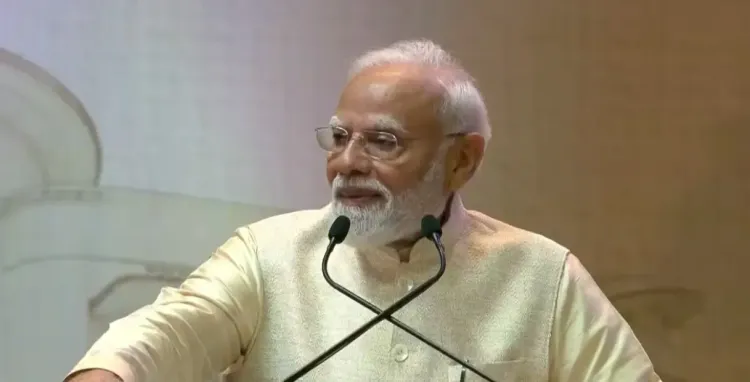
Prime Minister Narendra Modi on 1 October 2026 highlighted a sharp rise in women's participation in India's civil services examinations, noting that the figure had climbed from just 3 per cent in 1952 to approximately 30 per cent today. Speaking at the centenary celebrations of the Union Public Service Commission (UPSC) in New Delhi, Modi framed the shift as evidence of expanding opportunity rather than a mere statistical milestone.
Key Remarks by the Prime Minister
Addressing the gathering, Modi pointed to a particularly striking data point in UPSC's institutional history. 'In the entire history of the UPSC, there have been four women chairpersons, of whom three were appointed after 2014,' he said. The four women who have led the commission are Rose Millian Bathew — the first woman to head the body — Rajni Razdan, Preeti Sudan, and Alka Sirohi.
'This change is not only about numbers; it shows that the opportunities have increased,' Modi added, underscoring that the data reflected a structural shift in access rather than just policy intent.
A Growing Pool of Civil Services Aspirants
Modi also drew attention to the expanding base of candidates sitting the civil services examination, describing it as a source of national pride. Referencing UPSC's golden jubilee in 1976, he noted that the share of students appearing for the examination had risen by 45 per cent since that milestone. 'This means that there is a big pool of talent, and it is a proud thing for the country,' he said.
He tied this growth to a heightened responsibility for the selection body. 'When there is a bigger pool of talent, and you select one candidate, you are selecting someone who will become a representative of the government. At the ground level, people will consider them as the government,' Modi said.
UPSC's 100-Year Journey
The event marked the culmination of year-long centenary celebrations that began on 1 October 2025, commemorating a century since the commission's establishment in 1926. Modi described UPSC's evolution as a story of institutional credibility: 'UPSC, in its 100 years, has strengthened its reliability.'
On the occasion, the Prime Minister released a commemorative coin, a commemorative stamp, and a book titled '100 Landmark Judgements: Shaping the Policies of UPSC and Public Service Commissions in India'.
Why It Matters
The UPSC centenary arrives at a moment when civil services reform — covering recruitment timelines, transparency, and diversity — remains a live policy debate. The gender participation figures cited by Modi underscore a generational shift: a cohort that was largely absent from the services at Independence now constitutes nearly a third of all candidates. Notably, the appointment of three of UPSC's four ever women chairpersons within a single decade points to a concentration of representational change in recent years, a detail that analysts say deserves closer scrutiny beyond the headline numbers.
Point of View
But the more telling figure is the chairpersonship data — three of four women ever appointed to lead UPSC came within a single decade. That concentration warrants scrutiny: is it evidence of accelerating institutional change, or a result of a compressed appointment window? Mainstream coverage is likely to treat the numbers as a win without probing whether selection outcomes — not just candidacy rates — have kept pace. With civil services reform still debated, the UPSC centenary is also a prompt to ask whether a century-old recruitment architecture is adequately calibrated for a talent pool that is both larger and more diverse than its founders imagined.
NationPress
1 Oct 2026
Frequently Asked Questions
What did PM Modi say about women's participation in UPSC at the centenary event?
PM Modi said women's participation in the civil services examination has risen from just 3% in 1952 to around 30% today. He described this as a reflection of expanded opportunity, not merely a numerical change.
How many women have served as UPSC chairpersons, and who are they?
Four women have served as UPSC chairpersons: Rose Millian Bathew, who was the first, followed by Rajni Razdan, Preeti Sudan, and Alka Sirohi. According to PM Modi, three of these four appointments were made after 2014.
What is the significance of UPSC's centenary in 2026?
The UPSC centenary marks 100 years since the commission's establishment in 1926. Year-long celebrations began on 1 October 2025 and culminated on 1 October 2026 with the event addressed by PM Modi.
What commemorative items did PM Modi release at the UPSC centenary?
PM Modi released a commemorative coin, a commemorative stamp, and a book titled '100 Landmark Judgements: Shaping the Policies of UPSC and Public Service Commissions in India' at the centenary event.
What did Modi say about the growing number of civil services aspirants?
Modi noted that the pool of candidates appearing for the civil services examination has expanded significantly — citing a 45% rise by the time of UPSC's golden jubilee in 1976 — and described this as a source of national pride and a greater responsibility for the commission to select capable representatives.