Tiger carcass found in Kaziranga; departmental elephant Krishna dies
Synopsis
Two wildlife deaths have struck Kaziranga National Park in quick succession — a sub-adult tiger found dead in the Teteliguri area, apparently from infighting, and a visually impaired departmental elephant named Krishna, who succumbed to organ failure after a prolonged illness. For India's most celebrated UNESCO World Heritage reserve, which holds over 100 tigers and nearly 2,600 rhinos, every loss carries conservation weight.
Key Takeaways
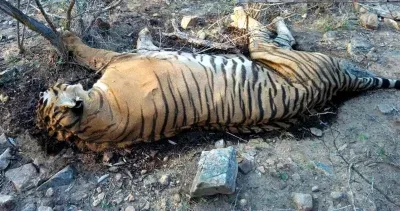
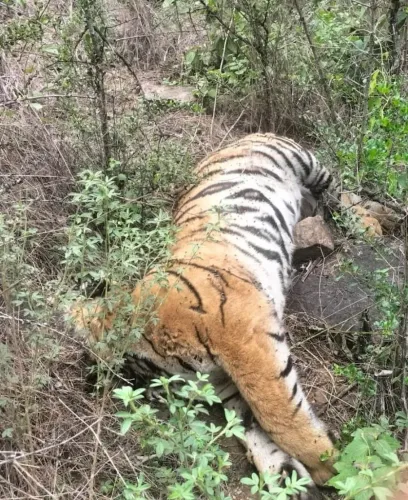
A sub-adult tiger carcass was recovered from the Teteliguri area, Kohora Range of Kaziranga National Park on 6 November 2026 ; estimated two days old .
Preliminary findings suggest the tiger died from injuries sustained in a fight with other animals — consistent with past tiger deaths at KNPTR.
A committee was constituted by KNPTR Director Sonali Ghosh for post-mortem and disposal as per NTCA SOP .
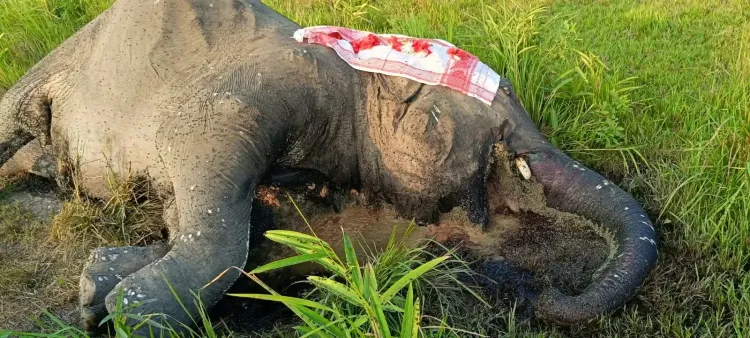
Departmental elephant Krishna , a visually impaired female, died on Thursday evening in the Western Range of Bagori from hepato-renal failure linked to old age.
Kaziranga hosts 104 Bengal tigers and 2,613 one-horned rhinos per the 2022 census , and is India's seventh UNESCO World Heritage Site .
KNPTR revenue rose to over ₹10.90 crore in 2024–25 , up from ₹8.81 crore the previous year.
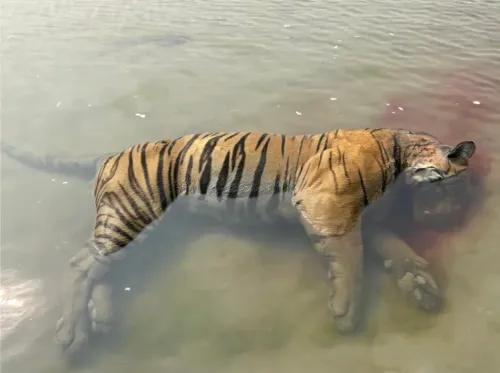
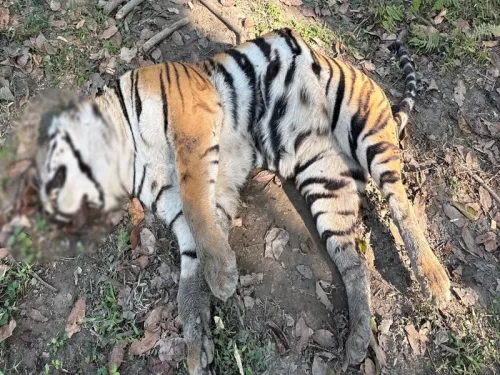
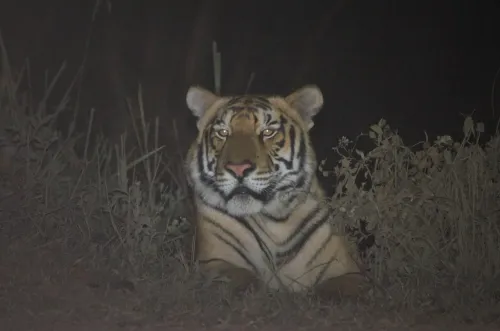
A sub-adult tiger carcass was recovered on Friday, 6 November 2026, from the Teteliguri area of Kaziranga National Park and Tiger Reserve (KNPTR) in Assam, forest officials confirmed. The carcass was estimated to be approximately two days old when found under the Kohora Range of the park.
Post-Mortem Process and Preliminary Findings
KNPTR Director Sonali Ghosh constituted a committee to carry out a post-mortem examination and dispose of the carcass in line with the Standard Operating Procedure (SOP) prescribed by the National Tiger Conservation Authority (NTCA). According to preliminary findings, the tiger sustained fatal injuries during a fight with other animals — a cause consistent with patterns seen in earlier recoveries at the same reserve.
Notably, this is not an isolated incident. On several previous occasions, tiger carcasses have been recovered from various parts of KNPTR, and post-mortem examinations in most of those cases have similarly pointed to infighting among tigers as the cause of death.
Departmental Elephant Krishna Dies After Prolonged Illness
In a separate development at the same reserve, a departmental elephant named Krishna died on Thursday evening inside the Western Range of Bagori in KNPTR. The female elephant had been suffering from prolonged ailments and was also visually impaired, according to forest officials.
A joint team of veterinarians from Kaziranga National Park and the Centre for Wildlife Rehabilitation and Conservation (CWRC) conducted a post-mortem examination on Friday. The preliminary report attributed her death to hepato-renal failure associated with old age.
Kaziranga's Conservation Status and Wildlife Population
Kaziranga National Park and Tiger Reserve is recognised as India's seventh UNESCO World Heritage Site and is home to the country's celebrated 'Big Five' wildlife species. According to the latest available population estimates, the park shelters 2,613 greater one-horned rhinoceroses (2022 census), 104 Bengal tigers (2022 census), 1,228 Asian elephants (2024 estimate), 2,565 wild water buffaloes (2022 census), and 1,129 eastern swamp deer (2022 census).
The reserve spans the districts of Golaghat, Nagaon, Sonitpur, and Biswanath, and comprises three forest divisions — the Eastern Assam Wildlife Division (Bokakhat), the Biswanath Wildlife Division (Biswanath Chariali), and the Nagaon Wildlife Division (Nagaon).
Revenue and Administrative Context
KNPTR generated revenue of more than ₹10.90 crore during 2024–25, up from over ₹8.81 crore in 2023–24, reflecting growing visitor interest in one of India's most biodiverse protected areas. The two deaths this week serve as a reminder of the challenges of managing and conserving wildlife populations within a high-density reserve, even as the park's ecological and economic profile continues to rise.
Point of View
Territorial conflict is an inevitable pressure valve, and repeat carcass recoveries suggest the reserve may be approaching carrying capacity for large predators. The death of Krishna, a working elephant that served the park for years, deserves more than a footnote — departmental elephants are critical to anti-poaching operations, and their welfare and retirement conditions warrant greater institutional scrutiny. What is missing from routine incident reporting is a longitudinal analysis: how do annual tiger mortality figures at KNPTR compare to national averages, and is the park's management response keeping pace?
NationPress
6 Nov 2026
Frequently Asked Questions
Where was the tiger carcass found in Kaziranga?
The carcass was recovered from the Teteliguri area under the Kohora Range of Kaziranga National Park and Tiger Reserve (KNPTR) in Assam on 6 November 2026. It was estimated to be approximately two days old at the time of recovery.
What caused the tiger's death at Kaziranga?
According to preliminary findings, the sub-adult tiger died from injuries sustained during a fight with other animals. Post-mortem infighting has been the most common cause in previous tiger carcass recoveries at KNPTR as well.
What happened to the elephant Krishna at Kaziranga?
Krishna, a female departmental elephant working in the Western Range of Bagori at KNPTR, died on Thursday evening after a prolonged illness. She was also visually impaired, and a joint post-mortem by veterinarians from Kaziranga and the CWRC attributed her death to hepato-renal failure associated with old age.
How many tigers does Kaziranga National Park currently have?
According to the 2022 census, Kaziranga National Park and Tiger Reserve is home to 104 Bengal tigers. The park is also known for sheltering 2,613 greater one-horned rhinoceroses, making it one of India's most biodiverse protected habitats.
What is the significance of Kaziranga National Park?
Kaziranga National Park and Tiger Reserve is India's seventh UNESCO World Heritage Site and is home to the country's 'Big Five' wildlife — the greater one-horned rhinoceros, Bengal tiger, Asian elephant, wild water buffalo, and eastern swamp deer. It spans four Assam districts and generated over ₹10.90 crore in revenue in 2024–25.