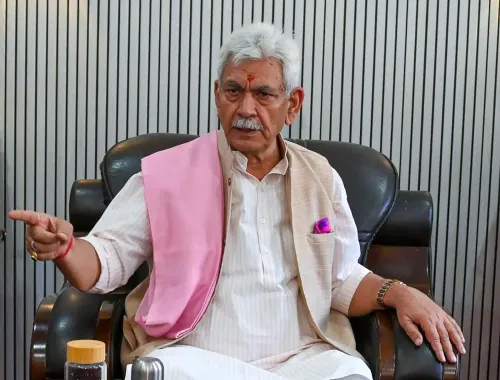
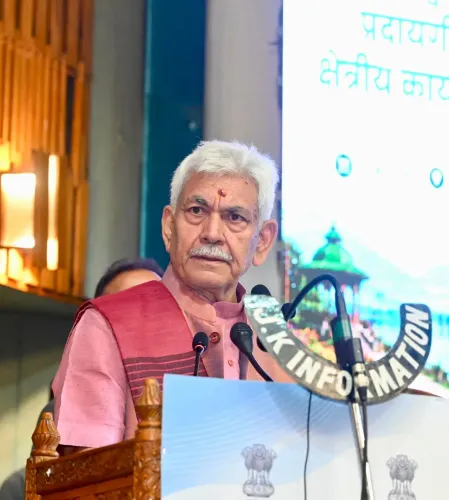
J&K L-G Manoj Sinha calls for quaternary healthcare push across India
Synopsis
J&K L-G Manoj Sinha used a Srinagar health summit to make a pointed case: India's healthcare ambition must leap from tertiary to quaternary — organ transplants, robotic surgery, proton-beam therapy, AI diagnostics — and it must reach the farmer's son, not just the city millionaire. The call is a signal that J&K intends to position itself at the frontier of that shift.
Key Takeaways
J&K L-G Manoj Sinha called for a national shift to quaternary-level healthcare at a summit in Srinagar on 26 August 2025 .
India currently offers free treatment to more than 56 crore citizens and e-Sanjeevani telemedicine to 37 crore people .
J&K now has 2 AIIMS , 10 medical colleges , 2 State Cancer Institutes , and 52 nursing colleges , among other facilities.
Sinha called for hospitals to offer organ transplantation, robotic surgery, proton-beam therapy, advanced genomics , and AI diagnostics .
He proposed a coalition of Himalayan states , universities, hospitals, and private institutions to drive biomedical research.
Sinha described quaternary care as a 'right of citizenship' , not a privilege for the wealthy.
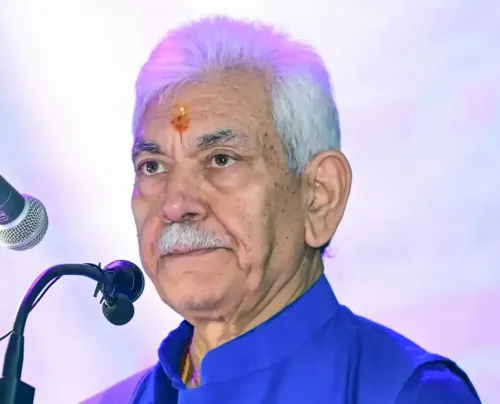
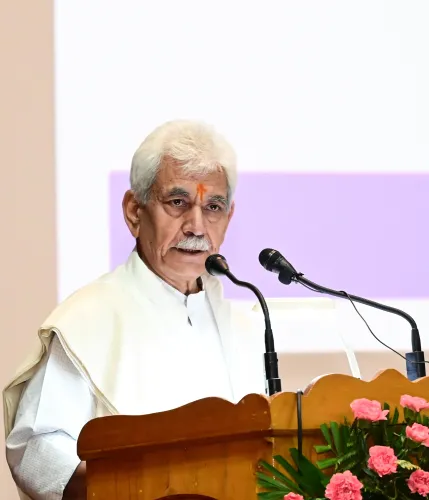
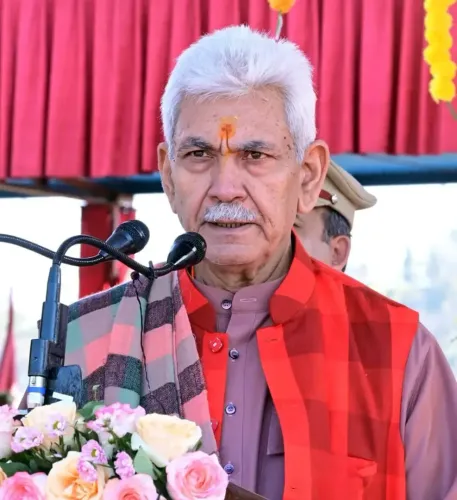
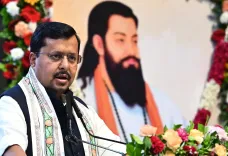
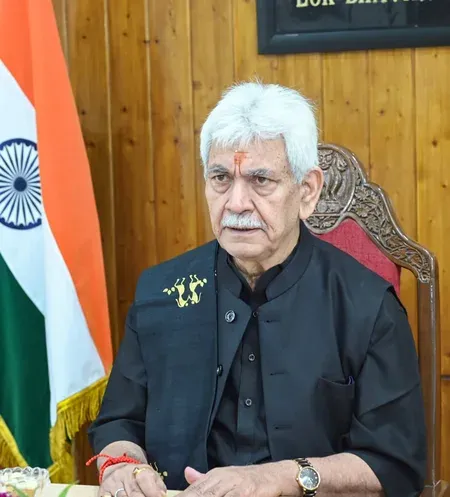
Jammu & Kashmir Lieutenant Governor Manoj Sinha on Wednesday, 26 August called on the nation to move beyond tertiary healthcare and build a full-scale quaternary treatment infrastructure accessible to every citizen, regardless of income or geography. Speaking at the Quaternary Healthcare & Research Summit in Srinagar, Sinha described the event as a turning point in both J&K's and India's broader healthcare journey.
The Gap That Sparked the Call
Sinha traced the urgency to a personal experience during the 'Back to Village' programme in 2020, when he visited Akhnoor and met doctors who flagged the absence of modern diagnostic equipment for rare diseases. That interaction, he said, exposed a stark divide between the care available in small district hospitals and what patients actually need. 'Bridging this gap is a national priority,' he told the gathering.
India's Healthcare Progress Under Review
The L-G cited a series of figures to illustrate how far India has come under Prime Minister Narendra Modi: free treatment now covers more than 56 crore citizens, annual vaccination campaigns reach 7 crore children, and the e-Sanjeevani telemedicine platform has served 37 crore people. On infrastructure, he pointed to 23 AIIMS and 2,045 medical colleges nationwide. Jammu & Kashmir alone now has 2 AIIMS, 10 medical colleges, 2 State Cancer Institutes, a Bone and Joint Hospital, a Paediatric Hospital, 52 nursing colleges, 23 paramedical colleges, and 5 pharmacy colleges.
'These figures show that India has succeeded in elevating primary, secondary and tertiary care. But the time has come to scale up tertiary hospitals into quaternary centres,' Sinha said.
What Quaternary Care Must Include
Sinha urged hospitals to evolve into research institutions capable of performing organ transplantation, robotic and precision surgery, advanced genomics, cellular therapies, and AI-supported diagnostics. He called on them to earmark annual budgets for specialised infrastructure — including modern operating theatres and proton-beam therapy facilities. He also proposed a dedicated corridor linking district hospitals and tertiary centres directly with quaternary-care institutions, integrated with telemedicine and AI-enabled diagnostic tools.
Expanded fellowship and training in organ transplantation, oncology, genomics, and critical care were among the specific measures he recommended. Private hospitals and research centres were explicitly asked to join the effort.
A Mission for Himalayan States and Beyond
The L-G proposed a unified mission bringing together Himalayan states, Jammu & Kashmir, universities, hospitals, private institutions, and innovators to advance biomedical research and address funding constraints. 'We must develop new inventions ourselves instead of importing innovation from abroad,' he said. He framed hospitals as strategic national assets requiring the same commitment to preservation and development as any other critical infrastructure.
'We must create a robust quaternary-care framework that guarantees equal access to the son of a farmer and to a millionaire living in a city,' Sinha said, underlining that advanced care must cease to be a metropolitan privilege. 'Quaternary care should not be a privilege reserved for the economically rich section of society. It must become a right of citizenship and a guarantee of the nation.'
What Comes Next
No formal timeline or budgetary outlay was announced at the summit, but Sinha's call for private-sector cooperation and a Himalayan-states coalition signals that institutional groundwork is expected to follow. The push comes as India's health policy debate increasingly shifts from access to quality — and from primary care to cutting-edge intervention at the district level.
Point of View
But the absence of any announced funding framework or policy mandate limits it to a vision statement for now. India's record on healthcare targets — from rural doctor shortages to underutilised AIIMS capacity — suggests the gap between announcement and delivery remains wide. The specific call to loop in Himalayan states is politically shrewd but logistically untested; quaternary care requires hyper-specialised human capital that even established metros struggle to retain. The real accountability question is whether this summit produces a measurable roadmap or joins the long queue of well-intentioned health summits that generated no binding commitments.
NationPress
26 Aug 2026
Frequently Asked Questions
What is quaternary-level healthcare and why is J&K L-G Manoj Sinha calling for it?
Quaternary healthcare refers to the most advanced tier of medical care, encompassing organ transplantation, robotic and precision surgery, advanced genomics, cellular therapies, and AI-supported diagnostics — services currently available only in select metropolitan hospitals. Sinha called for this level of care to be made universally accessible, arguing it should be a right of citizenship rather than a privilege of the wealthy.
What healthcare infrastructure does Jammu & Kashmir currently have?
As of the summit on 26 August, J&K has 2 AIIMS, 10 medical colleges, 2 State Cancer Institutes, a Bone and Joint Hospital, a Paediatric Hospital, 52 nursing colleges, 23 paramedical colleges, and 5 pharmacy colleges. Nationally, India has 23 AIIMS and 2,045 medical colleges.
How many people does India's e-Sanjeevani telemedicine platform serve?
The e-Sanjeevani telemedicine platform has provided care to 37 crore people, according to figures cited by L-G Sinha at the Srinagar summit. Annual vaccination campaigns additionally reach 7 crore children.
What specific measures did L-G Sinha propose at the healthcare summit?
Sinha called on hospitals to invest in proton-beam therapy facilities, modern operating theatres, AI-enabled diagnostics, and telemedicine integration. He also proposed a new corridor connecting district hospitals to quaternary centres, expanded fellowship training in oncology and genomics, and a coalition of Himalayan states to advance biomedical research.
Was any budget or policy announcement made at the Quaternary Healthcare & Research Summit?
No formal budgetary outlay or policy mandate was announced at the summit. L-G Sinha's remarks were framed as a call to action directed at private hospitals, research institutions, and state governments, with a proposed Himalayan-states coalition as the suggested institutional vehicle.