BJP's Manoj Tiwari blames AAP's Punjab govt for Delhi pollution surge

Synopsis
BJP MP Manoj Tiwari has escalated the winter pollution blame game, citing a jaw-dropping AQI reading of 1,435 in Punjab's Barnala and alleging that Delhi's index leapt from 60 to 300 in just four days. With 2,787 farm fires logged by Punjab's own pollution board as of 5 November, the data is real — but whether it indicts the AAP government or undercuts the BJP narrative depends on how seriously you take Punjab's simultaneous enforcement crackdown.
Key Takeaways
BJP MP Manoj Tiwari blamed the AAP -led Punjab government for Delhi's worsening air quality at a press conference on 6 November 2026 .
Tiwari alleged an AQI of 1,435 was recorded in Barnala, Punjab , with other cities logging readings of 1,100–1,200 .
Delhi's AQI reportedly dropped to 60 on 30 October before surging to 300 by 3 November .
The Punjab Pollution Control Board (PPCB) recorded 2,787 stubble burning incidents across the state as of 5 November .
Punjab imposed fines totalling ₹46.10 lakh in 914 cases , registered 710 FIRs , and made 829 red entries in revenue records.
Delhi Environment Minister Ashish Sood had earlier made similar allegations against the Punjab government.
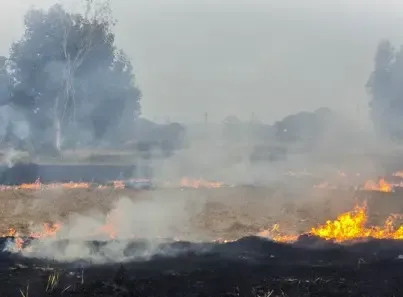
Bharatiya Janata Party (BJP) Member of Parliament Manoj Tiwari on Friday, 6 November 2026, held the Aam Aadmi Party (AAP)-led Punjab government directly responsible for the sharp deterioration in Delhi's air quality, alleging that large-scale stubble burning under Chief Minister Bhagwant Mann's administration had become the primary driver of the capital's pollution crisis. His remarks came a day after Delhi Environment Minister Ashish Sood levelled similar charges.
Key Allegations at the Press Conference
Addressing reporters, Tiwari accused AAP of having 'harmed Delhi in every possible way — whether it was water, the environment, or other issues,' during the party's tenure in the national capital. He alleged that stubble burning in Punjab had reached an unprecedented scale after 30 October, adding, 'The kind of stubble burning taking place after October 30 is unprecedented.'
Tiwari further claimed to have received fresh air quality data showing an Air Quality Index (AQI) reading of 1,435 from Punjab's Barnala district. 'You will be shocked to see it,' he told reporters. He alleged that other Punjab cities had recently registered AQI levels of 1,100, 900, and 1,200, attributing Delhi's worsening air to the seasonal wind pattern that carries particulate matter from Punjab eastward toward the capital.
Delhi AQI Trend: From 60 to 300 in Days
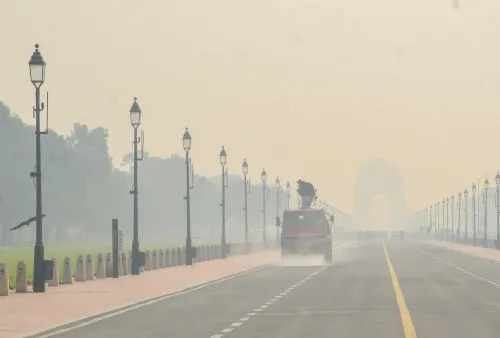
Citing what he described as Delhi's own AQI data, Tiwari claimed that through most of October, the city's readings had ranged broadly between 100 and 187, even dipping to 60 on 30 October. However, he alleged that the index surged rapidly thereafter, reaching 300 by 3 November — a trajectory he directly linked to cross-border stubble smoke. 'As the wind blows, pollution travels towards Delhi and further,' he said.
What Punjab Pollution Data Shows
According to a report by the Punjab Pollution Control Board (PPCB), a total of 2,787 stubble burning incidents had been recorded across the state as of 5 November, under the CAQMS Monitoring and Enforcement Actions Report. Patiala alone accounted for 156 cases.
The Punjab government has imposed environmental compensation (EC) fines totalling ₹46.10 lakh in 914 cases, of which ₹24.85 lakh has been recovered. Authorities have also registered 710 FIRs under Section 223 of the Bharatiya Nyaya Sanhita (BNS), and 'red entries' have been made in revenue records in 829 cases.
Political Context and Broader Pattern
The BJP's offensive is consistent with a pattern of Delhi-Punjab blame politics that intensifies each winter as the stubble-burning season peaks. This is the first post-election winter in which AAP no longer governs Delhi, sharpening the inter-state political dynamic. Notably, Punjab's own enforcement data reveals a government actively pursuing violators — a nuance that critics argue complicates the BJP's narrative of institutional inaction. The Supreme Court has previously issued directives on farm fire enforcement, and state compliance remains a contested benchmark.
What Comes Next
With peak stubble-burning season typically extending through mid-November, air quality in both Punjab and Delhi is expected to remain under severe stress in the coming days. The PPCB data and ongoing enforcement actions will likely face scrutiny from courts and central agencies. All eyes are now on whether the Centre steps in with emergency measures or leaves enforcement to the state machinery.
Point of View
So the BJP can play both offence and deflection simultaneously. Yet the PPCB's own data — 710 FIRs, ₹46 lakh in fines, 829 red entries — suggests the Punjab government is at least going through enforcement motions, which complicates a 'doing nothing' narrative. The more uncomfortable question, which neither party wants to answer, is why no administration across two decades and multiple governing parties has cracked the stubble problem structurally. Blame is cheap; viable alternatives to burning — happy-seeder subsidies, biomass plants, timely MSP — cost real political capital.
NationPress
6 Nov 2026
Frequently Asked Questions
What did BJP's Manoj Tiwari say about Punjab's stubble burning?
Tiwari alleged that stubble burning under the AAP-led Punjab government had reached unprecedented levels after 30 October 2026, directly causing Delhi's air quality to deteriorate. He cited an AQI reading of 1,435 from Barnala, Punjab, to support his claim.
How many stubble burning cases has Punjab recorded this season?
According to the Punjab Pollution Control Board's CAQMS report up to 5 November 2026, a total of 2,787 stubble burning incidents had been recorded across the state. Patiala alone accounted for 156 cases.
What enforcement action has the Punjab government taken against stubble burning?
Punjab authorities imposed environmental compensation fines totalling ₹46.10 lakh in 914 cases, recovering ₹24.85 lakh. Additionally, 710 FIRs were registered under Section 223 of the Bharatiya Nyaya Sanhita and red entries were made in revenue records for 829 cases.
How has Delhi's AQI changed in early November 2026?
According to Tiwari's claims, Delhi's AQI was as low as 60 on 30 October before rising sharply to 300 by 3 November. He attributed the sudden spike to smoke carried by seasonal winds from Punjab.
Why does Punjab's stubble burning affect Delhi's air quality?
During October and November, prevailing winds blow from Punjab toward Delhi, carrying particulate matter from burning crop residue into the capital. This seasonal wind pattern is a well-documented driver of Delhi's annual winter smog crisis.