Will TMP Block the Reopening of Bangladesh Mission in Agartala Due to Minority Attacks?
Key Takeaways
Tipra Motha Party opposes reopening of Bangladesh AHC until minority violence ceases.
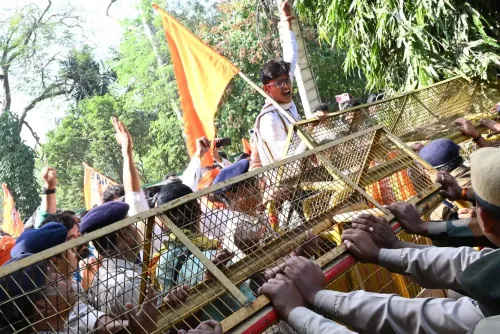
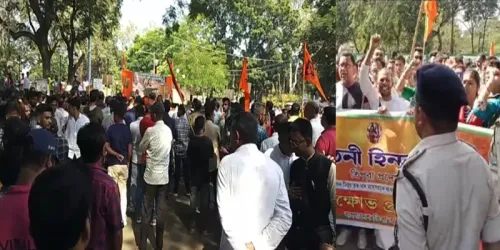
Protests have intensified outside the diplomatic mission.
Bangladesh AHC in Guwahati remains operational.
Concerns over human rights violations in Bangladesh are rising.
Security measures around the AHC are heightened.
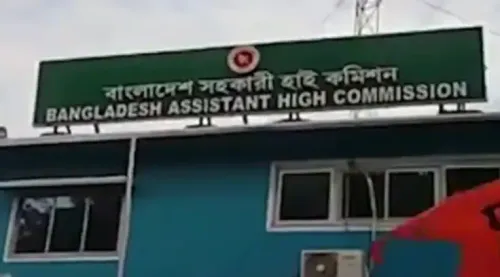
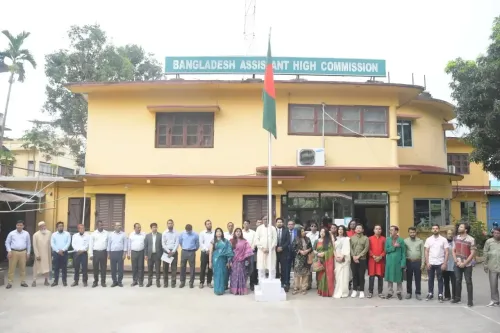
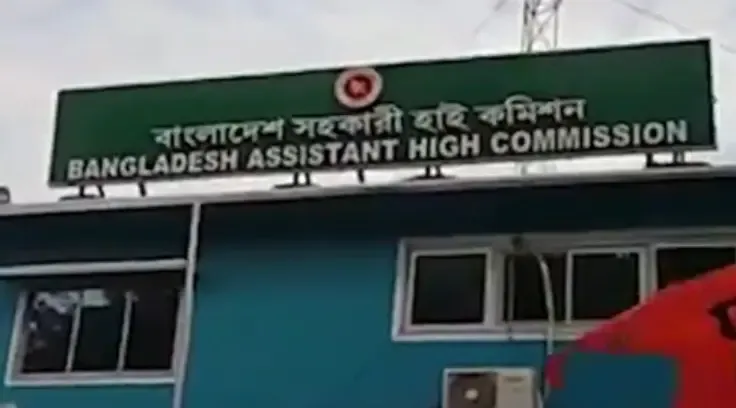
Agartala, Dec 23 (NationPress) Following the announcement from the Bangladesh Assistant High Commission (AHC) in Agartala regarding the indefinite halt of visa and consular services, the Tipra Motha Party (TMP), which is allied with the ruling BJP in Tripura, has issued a warning that it will oppose the reopening of the diplomatic mission until the violence and atrocities against minorities in Bangladesh cease.
In a notification, S. M. Almas Hossain, the First Secretary and Head of Commission of the Bangladesh AHC in Agartala, stated that “due to unavoidable circumstances, all visa and consular services at the Bangladesh Assistant High Commission in Agartala will remain closed from December 23 until further notice.”
Nonetheless, the Bangladesh Assistant High Commission in Guwahati, responsible for Assam, Meghalaya, Manipur, Mizoram, Nagaland, and Arunachal Pradesh, continues to operate as usual.
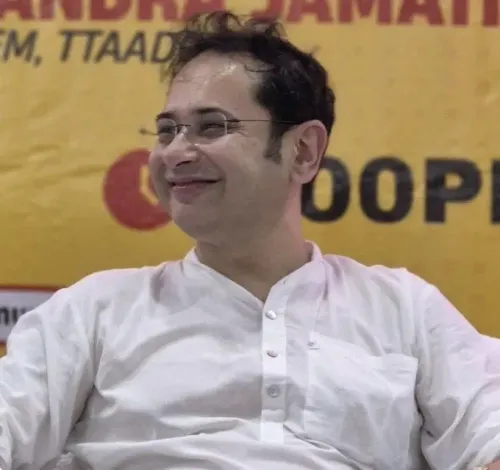
The TMP leader and former royal figure, Pradyot Bikram Manikya Debbarma, conveyed through a video message that his party will prevent the reopening of the AHC in Agartala unless there is a halt to the violence against minorities in Bangladesh.
He also noted that various organizations have held protests outside the Indian High Commission in Bangladesh.
In a post on X, Debbarma took credit for the closure of the Agartala mission, asserting: “Our protest in front of the high commission and ultimatum has finally paid off. The Bangladesh High Commission has shut down its operation in Agartala. What should have been done by others has been done by the Tipra Motha Party and YTF.”
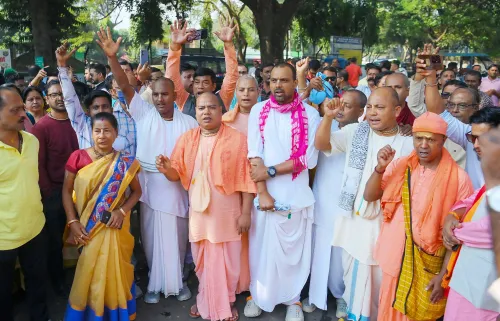
Numerous organizations and political parties in Tripura have condemned the reported lynching of a Hindu man, Dipu Das, a garment factory worker in Mymensingh, Bangladesh, accusing the interim government of failing to prevent violence against religious minorities.
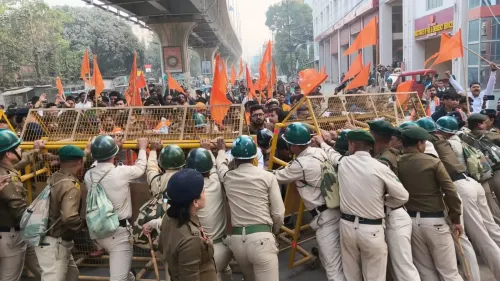
The youth wing of the TMP recently conducted protest demonstrations near the Bangladesh AHC in Agartala, condemning alleged remarks from leaders of the neighboring country regarding India’s Northeastern region.
Youth Tipra Federation (YTF) President Suraj Debbarma, who led the protests on December 19, alleged that NCP leader Hasnat Abdullah, Bangladesh interim government’s Chief Adviser Muhammad Yunus, and other leaders have made “baseless and anti-India” claims, inciting hostile actions against India.
He further asserted that demonstrations have occurred outside the Indian High Commission in Dhaka and other locations in Bangladesh, where “anti-India” slogans were voiced.
Suraj Debbarma accused Hasnat Abdullah of asserting that Bangladesh would seize India’s ‘Seven Sisters’ and the Siliguri Corridor.
The Siliguri Corridor, commonly known as the ‘Chicken’s Neck’, connects Northeast India with the rest of the nation through West Bengal.
The seven Northeastern states—Arunachal Pradesh, Assam, Manipur, Meghalaya, Mizoram, Nagaland, and Tripura—are collectively referred to as the “seven sisters”.
Suraj Debbarma emphasized that some Bangladeshi leaders have overlooked India’s contributions and sacrifices during the 1971 Liberation War that led to Bangladesh's independence.
He cautioned that if such statements persist, TMP supporters might raise historical claims, including those related to areas like Cox’s Bazar, spotlighting the presence of minorities in the Chittagong Hill Tracts.
Meanwhile, another senior TMP official mentioned that the former ‘Chakla Roshnabad’ was a zamindari of the prior princely state of Tripura, which once encompassed regions now part of the Noakhali and Sylhet districts of Bangladesh.
A senior Tripura police representative noted that security around the Bangladesh Assistant High Commission in Agartala has been significantly bolstered since August of the previous year.
“A substantial contingent of the CRPF and Tripura State Rifles has been deployed to safeguard the officials and the diplomatic mission,” the official added.
Point of View
It is vital to understand the implications of the Tipra Motha Party's stance on the reopening of the Bangladesh AHC. The demand for justice for minorities in Bangladesh reflects a broader concern for human rights. It is essential to ensure that diplomatic channels remain open while advocating for the protection of all communities. Striking a balance between political alliances and moral responsibilities is crucial for sustainable peace in the region.
NationPress
24 Sept 2026
Frequently Asked Questions
What is the reason for the Bangladesh AHC's closure?
The Bangladesh Assistant High Commission in Agartala has suspended visa and consular services due to unavoidable circumstances, as stated by their officials.
Who is leading the protests against the Bangladesh AHC's reopening?
The protests are being led by the Tipra Motha Party (TMP) and its youth wing, the Youth Tipra Federation (YTF), demanding justice for minorities in Bangladesh.
What triggered the TMP's strong stance?
The TMP's strong stance was triggered by reported attacks on minorities in Bangladesh, including the lynching of a Hindu man, Dipu Das.
How has the Indian public reacted to these incidents?
Various organizations and political parties within Tripura have condemned the attacks, expressing solidarity with the victims and calling for accountability from the Bangladeshi government.
What does the 'Seven Sisters' refer to?
The 'Seven Sisters' refers to the seven Northeastern states of India: Arunachal Pradesh, Assam, Manipur, Meghalaya, Mizoram, Nagaland, and Tripura.