DMK-AIADMK 'merger' remark by CPI(M)'s Shanmugam sparks Tamil Nadu debate
Synopsis
The CPI(M)’s Tamil Nadu chief has done what few in the state’s left would dare — publicly floated the idea that the DMK and AIADMK could one day function as a single party. Coming just weeks after post-election talks between the two rivals were reported, the remark cuts to the heart of what Dravidian politics actually stands for in 2025.
Key Takeaways
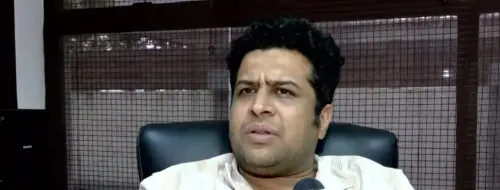
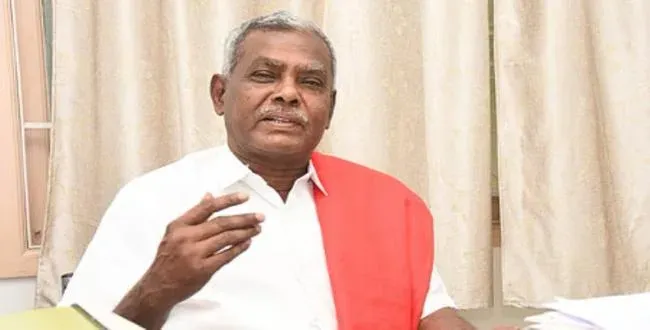
Shanmugam , CPI(M) Tamil Nadu State Secretary, said on 21 June that a future DMK-AIADMK merger 'would not be surprising.' The remarks were made in a YouTube interview and later shared on X , drawing sharp condemnation from DMK leaders.
Shanmugam accused both Dravidian parties of drifting from founding principles and making repeated compromises on issues like caste discrimination and honour killings .
He also criticised the DMK leadership for allegedly permitting attacks on parties that exit its alliance.
The remarks follow post-election reports of exploratory talks between the DMK and AIADMK on alternative government formation.
Both CPI and CPI(M) extended support to the ruling TVK government to prevent political instability.
P. Shanmugam, Tamil Nadu State Secretary of the Communist Party of India (Marxist), has ignited a fresh political controversy after suggesting that a future merger between the Dravida Munnetra Kazhagam (DMK) and the All India Anna Dravida Munnetra Kazhagam (AIADMK) would not be surprising. The remarks, made during a YouTube channel interview and subsequently shared on X (formerly Twitter), drew swift and sharp condemnation from DMK leaders on 21 June.
What Shanmugam Said
Defending the CPI(M)'s history of shifting alliances with both Dravidian majors, Shanmugam argued that such decisions were driven by political realities rather than ideological compromise. 'Electoral alliances are formed based on political realities. Constituency-sharing arrangements benefit both sides, and there is no place for the term ‘betrayal’ in such political decisions,' he said.
He further contended that the DMK had itself leaned on smaller parties such as the Desiya Murpokku Dravida Kazhagam (DMDK) at critical electoral junctures when it lacked the strength to win on its own. According to Shanmugam, evolving political dynamics in Tamil Nadu and shifting public aspirations had shaped the Marxist party’s current stance.
Criticism of DMK Leadership
Shanmugam also took aim at the DMK leadership for allegedly permitting attacks on parties that chose to exit its alliance. 'The tendency to target those who exit an alliance is wrong. The DMK leadership must restrain those who make emotional and hostile remarks,' he said.
While acknowledging that the DMK and AIADMK are not ideologically identical, he argued that both Dravidian parties have progressively drifted from their founding principles. He accused them of repeated electoral compromises and of failing to take firm positions on issues such as caste discrimination and honour killings.
The Political Backdrop
Shanmugam’s remarks come against the backdrop of post-election political discussions in Tamil Nadu, during which reports emerged of exploratory talks between the DMK and AIADMK regarding the possibility of an alternative government formation. Both the CPI and CPI(M) ultimately extended support to the ruling Tamilaga Vettri Kazhagam (TVK) government, citing the need to avert political instability and President’s Rule.
Notably, leaders from both the DMK and AIADMK have at various points acknowledged that discussions on alternative arrangements did take place after the election results were declared. This context has lent additional weight — and additional controversy — to Shanmugam’s observations.
DMK Response and What Comes Next
DMK leaders have strongly condemned Shanmugam’s remarks and categorically rejected any suggestion of a future merger with the AIADMK. The two parties have been arch-rivals since the AIADMK’s founding by M. G. Ramachandran as a breakaway from the DMK in 1972, and the prospect of a formal union remains politically contentious.
The episode underscores the fragile and fluid nature of alliance politics in Tamil Nadu, where ideological boundaries have historically been porous. Whether Shanmugam’s remarks reflect a broader reading of the state’s political trajectory or a tactical provocation remains to be seen.
Frequently Asked Questions
What did CPI(M)’s P. Shanmugam say about DMK and AIADMK?
Shanmugam said that given both parties’ repeated compromises and drift from their founding principles, it would not be surprising if the DMK and AIADMK eventually functioned as a single political entity. He made the remarks in a YouTube interview that was later shared on X on 21 June.
Why did Shanmugam’s remarks trigger a controversy?
The remarks touched a raw nerve because the DMK and AIADMK are historic rivals, and any suggestion of a merger challenges the foundational identity of both parties. They also came in the wake of post-election reports of exploratory talks between the two parties on alternative government formation.
How did the DMK respond to Shanmugam’s comments?
DMK leaders strongly condemned Shanmugam’s observations and categorically rejected any suggestion of a future merger with the AIADMK. The party has not indicated any formal response beyond public criticism.
What is the political context behind these remarks?
After the recent Tamil Nadu Assembly election, reports emerged that the DMK and AIADMK had held exploratory discussions on forming an alternative government. Both the CPI and CPI(M) eventually supported the TVK government to prevent President’s Rule, forming the backdrop for Shanmugam’s comments.
Why does CPI(M) have alliances with both DMK and AIADMK?
Shanmugam explained that the CPI(M)’s shifting alliances with both Dravidian parties were dictated by prevailing political circumstances rather than ideological alignment. He argued that electoral alliances are pragmatic arrangements and that the term ‘betrayal’ does not apply to such decisions.