Tamil Nadu notifies 3 elephant corridors in Hosur, linking TN-Karnataka forests

Synopsis
Tamil Nadu has formally notified three elephant corridors spanning over 10,300 hectares in the Hosur forest division, following Madras High Court directions. The move formalises migration routes that elephant herds have used for generations across the Tamil Nadu–Karnataka border — and could become a blueprint for corridor protection elsewhere in India.
Key Takeaways
Tamil Nadu has formally notified 3 elephant corridors in the Cauvery North Wildlife Sanctuary , Hosur forest division .
The three corridors — Jawalagiri–Ulibanda–Thaggatti , Jawalagiri–Panai–Anchetty , and Billikkal–Jawalagiri — together cover more than 10,300 hectares .
The largest corridor, Jawalagiri–Panai–Anchetty , spans 20.90 km and 6,881.47 hectares .
The notification follows interim directions from the Madras High Court and a report by the Principal Chief Conservator of Forests .
The legal status of the land will not change; no new restrictions will be imposed on local residents.
Publication in the Tamil Nadu Government Gazette and Krishnagiri district gazette will complete the formal recognition process.
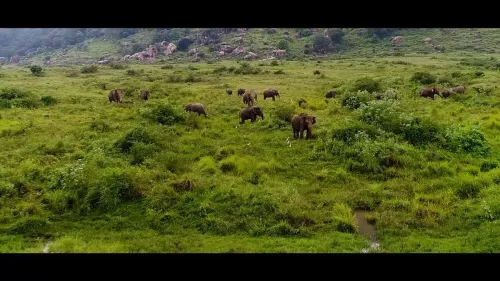
The Tamil Nadu government has formally notified three elephant corridors within the Cauvery North Wildlife Sanctuary in the Hosur forest division, strengthening habitat connectivity and enabling the safe seasonal movement of elephant herds between Tamil Nadu and Karnataka. The gazette notification, issued by Kakarla Usha, Additional Chief Secretary of the Environment, Climate Change and Forests Department, covers more than 10,300 hectares of reserve forests and wildlife sanctuary land.
The Three Corridors at a Glance
The corridors formally recognised under the notification are Jawalagiri–Ulibanda–Thaggatti, Jawalagiri–Panai–Anchetty, and Billikkal–Jawalagiri. The largest, Jawalagiri–Panai–Anchetty, extends 20.90 km and encompasses 6,881.47 hectares. The Jawalagiri–Ulibanda–Thaggatti corridor covers 3,241.53 hectares along an 18.50-km stretch. The smallest, Billikkal–Jawalagiri, runs 2.20 km and covers nearly 196 hectares.
Why the Corridors Were Notified
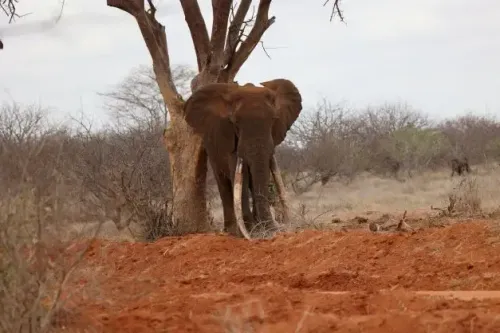
The gazette notification follows interim directions from the Madras High Court and recommendations by committees appointed to identify elephant corridors and address obstacles to their conservation. A report by the Principal Chief Conservator of Forests and Chief Wildlife Warden identified the three routes as critical for the seasonal movement of elephant herds. Elephants regularly cross the Tamil Nadu–Karnataka border in response to monsoon patterns, shifting water and fodder availability, breeding cycles, and broader habitat conditions.
What the Notification Changes — and What It Does Not
Since all three corridors fall within existing reserve forests or protected sanctuary areas, the notification will not alter the legal classification of the land. It will also not impose additional restrictions on local residents, as these landscapes are already governed by reserve forest and wildlife protection provisions. Formal recognition is, however, expected to elevate conservation priority for these routes and improve coordination between forest departments on both sides of the state border.
Broader Conservation Impact
Beyond immediate protection, the notification is expected to support long-term landscape planning, wildlife monitoring, and targeted restoration of degraded habitat patches along the migration routes. Authorities also anticipate it will guide measures to reduce human-elephant conflict in settlements near these corridors — a persistent challenge across the Krishnagiri and adjoining districts. The notification will be published in the Tamil Nadu Government Gazette and the Krishnagiri district gazette, completing the formal recognition process. This comes amid growing national attention on elephant corridor protection, with the Supreme Court and various high courts having directed states to expedite corridor notifications in recent years.
Point of View
But the harder work begins after the gazette. Tamil Nadu's corridors sit astride a state border, which means effective protection requires real-time coordination between two forest departments — historically an area of friction. The notification's value will depend on whether it is backed by joint patrolling protocols, rapid-response mechanisms for human-elephant conflict, and credible habitat restoration budgets. India has dozens of identified but unnotified corridors; Tamil Nadu's move could pressure other states to act, but only if this one demonstrably reduces conflict and improves elephant survival outcomes over the next five years.
NationPress
29 Aug 2026
Frequently Asked Questions
What are the three elephant corridors notified by Tamil Nadu?
The three corridors are Jawalagiri–Ulibanda–Thaggatti, Jawalagiri–Panai–Anchetty, and Billikkal–Jawalagiri, all located within the Cauvery North Wildlife Sanctuary in the Hosur forest division. Together they cover more than 10,300 hectares of reserve forest and wildlife sanctuary land.
Why has Tamil Nadu notified these elephant corridors?
The notification follows interim directions from the Madras High Court and recommendations by state-appointed committees. A report by the Principal Chief Conservator of Forests identified the three routes as critical for the seasonal cross-border movement of elephant herds between Tamil Nadu and Karnataka.
Will the notification impose new restrictions on residents near the corridors?
No. Since all three corridors lie within existing reserve forests or protected sanctuary areas, the notification does not change the legal classification of the land and does not introduce additional restrictions on local residents, who are already subject to reserve forest and wildlife protection rules.
How large is each notified elephant corridor?
Jawalagiri–Panai–Anchetty is the largest at 20.90 km and 6,881.47 hectares. Jawalagiri–Ulibanda–Thaggatti covers 3,241.53 hectares over 18.50 km. Billikkal–Jawalagiri is the smallest, running 2.20 km and covering nearly 196 hectares.
What conservation benefits are expected from the notification?
Formal recognition is expected to give the corridors greater conservation priority, improve coordination between Tamil Nadu and Karnataka forest authorities, and guide habitat restoration along migration routes. It is also expected to support long-term wildlife monitoring and help reduce human-elephant conflict in settlements near the corridors.