Tamil Nadu reservoir storage drops to 37% amid weak monsoon crisis
Synopsis
Tamil Nadu's reservoirs are at just 37% capacity — less than half of last year's level — with Mettur Dam holding barely 46% of its storage. Karnataka has released a fraction of the Cauvery water mandated by the Supreme Court, and officials say Mettur reaching full capacity this season is now unlikely. Everything now rides on the northeast monsoon.
Key Takeaways
Tamil Nadu's 90 reservoirs held 83.124 tmcft as of 18 August — just 37.05% of combined capacity of 224.343 tmcft .
Storage is less than half of the year-ago level of 189.545 tmcft recorded during the same period.
58 of 90 reservoirs have less than 25% storage; only Gundar reservoir in Tenkasi is at full capacity.
Mettur Dam holds 43.275 tmcft ( 46.30% ), down sharply from 97.48% at the same time last year.
Karnataka released only 2.915 tmcft in June and 0.7138 tmcft in July against Supreme Court-mandated shares of 9.190 tmcft and 31.240 tmcft .
Officials say Tamil Nadu will depend heavily on the northeast monsoon to ease the water crisis.
Tamil Nadu's 90 monitored reservoirs held just 83.124 thousand million cubic feet (tmcft) as of Monday, 18 August — a mere 37.05 per cent of their combined capacity of 224.343 tmcft, according to the state's Water Resources Department. An underperforming southwest monsoon and unusually high temperatures have pushed the state's water crisis to its most severe point in at least a year, raising urgent concerns over irrigation and drinking-water availability across several districts.
How Bad the Storage Deficit Is
The current storage level is less than half of what it was during the same period last year, when the same reservoirs collectively held 189.545 tmcft. Of the 90 reservoirs, 58 have less than 25 per cent storage, 14 are between 26 and 50 per cent, 15 are between 51 and 76 per cent, and only two have crossed the 80 per cent mark. The sole exception is the Gundar reservoir in Tenkasi district, which has reached its full capacity of 18.43 million cubic feet.
Mettur's Critical Shortfall
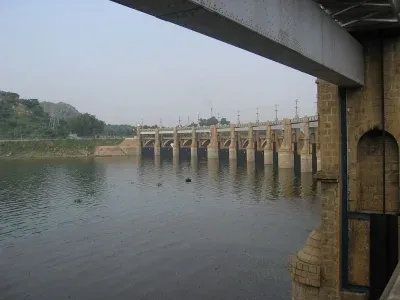
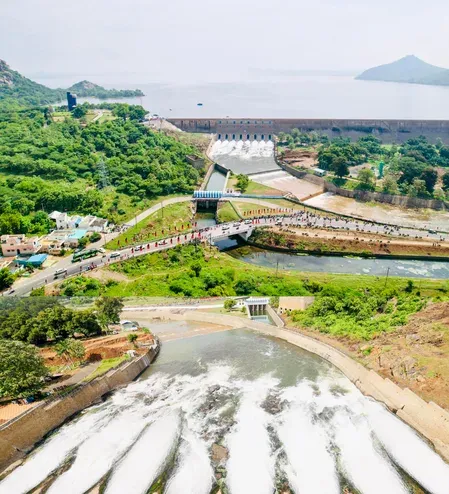
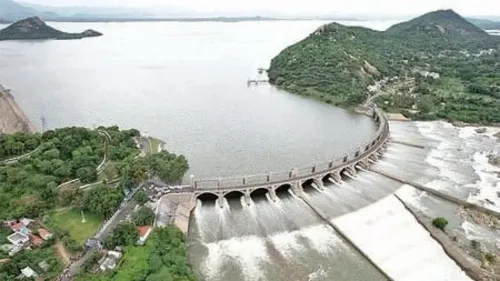
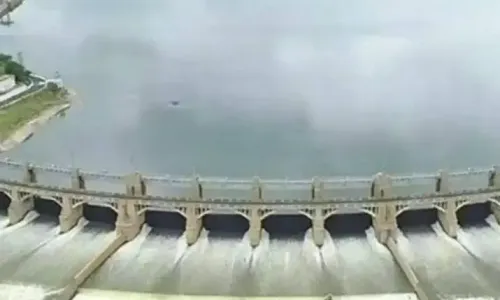
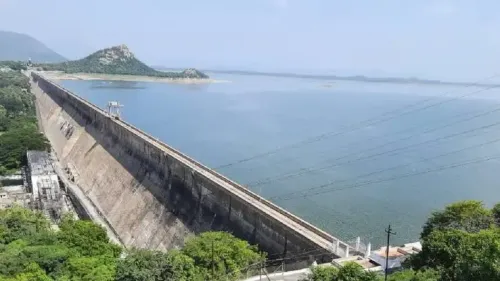
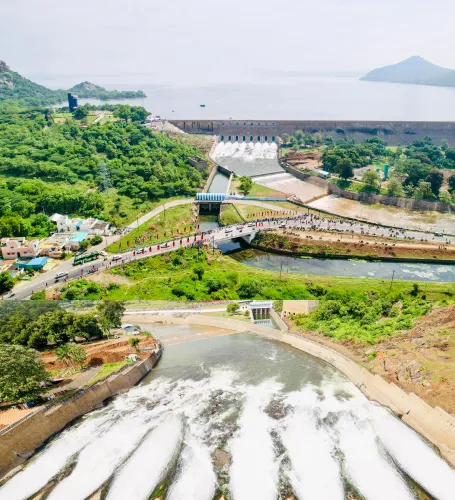
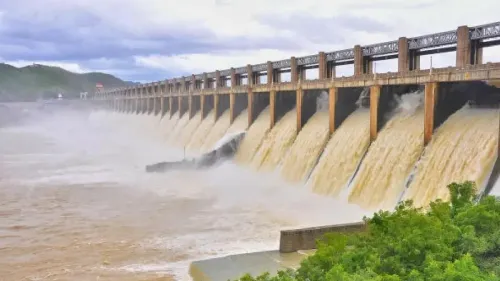
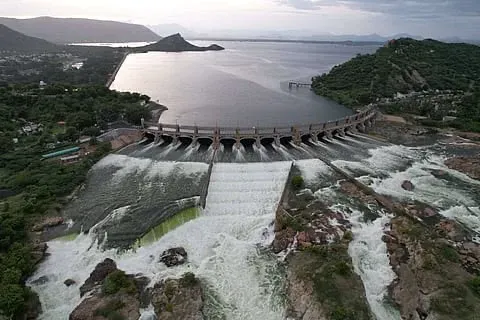
Mettur Dam, Tamil Nadu's most strategically important reservoir for Cauvery delta irrigation, held 43.275 tmcft on Monday — just 46.30 per cent of its total capacity of 93.470 tmcft. A year ago, it stood at 91.114 tmcft, or 97.48 per cent of capacity. While water availability along the Cauvery between Mettur and Tiruchy remains relatively stable, downstream and tail-end areas are experiencing serious shortages, including difficulties in meeting basic drinking-water requirements. Officials have said maintaining a stable supply-demand balance is becoming increasingly difficult in reservoir-dependent regions. Storage in other major irrigation reservoirs — Bhavanisagar, Amaravathi, and Vaigai — also remains poor.
Karnataka's Cauvery Releases Fall Short
The situation is compounded by Karnataka's failure to release Tamil Nadu's stipulated Cauvery share, according to Water Resources Department officials. Under the Supreme Court's final order, Karnataka was required to release 9.190 tmcft in June and 31.240 tmcft in July. Tamil Nadu, however, received only 2.915 tmcft in June and 0.7138 tmcft in July — a fraction of the mandated volumes. This comes despite comparatively healthy storage in Karnataka's four major Cauvery-linked reservoirs: Krishnaraja Sagar at 63.64 per cent, Kabini at 92.31 per cent, Harangi at 97.06 per cent, and Hemavathy at 86.56 per cent.
What Comes Next
Officials now consider it unlikely that Mettur will reach full capacity this season. With the southwest monsoon yielding inadequate rainfall, Tamil Nadu will depend heavily on the northeast monsoon later this year to replenish reservoirs and ease mounting pressure on agriculture and drinking-water supplies. The state's water outlook for the coming months will hinge critically on how the northeast monsoon performs — and whether Karnataka releases the Cauvery water owed under court order.
Point of View
Yet the state released barely a tenth of its Supreme Court-mandated share to Tamil Nadu in June and July; that is not a rainfall problem, it is a compliance problem. The northeast monsoon is now Tamil Nadu's last realistic lifeline for the season, but depending on a single seasonal window to correct a structural inter-state water deficit is a precarious position for a state of 80 million people. The pattern of Cauvery shortfalls recurring year after year — despite a final court order — raises a harder question about enforcement that neither state government nor the Cauvery Water Management Authority has answered.
NationPress
18 Aug 2026
Frequently Asked Questions
What is the current reservoir storage level in Tamil Nadu?
As of 18 August, Tamil Nadu's 90 monitored reservoirs collectively held 83.124 tmcft, which is 37.05 per cent of their combined capacity of 224.343 tmcft. This is less than half the 189.545 tmcft stored during the same period last year.
How much water is Mettur Dam holding right now?
Mettur Dam held 43.275 tmcft as of 18 August, representing 46.30 per cent of its total capacity of 93.470 tmcft. At the same time last year, it was at 91.114 tmcft — nearly 97.48 per cent full.
Why has Karnataka not released Tamil Nadu's Cauvery water share?
Water Resources Department officials stated that Karnataka has not released Tamil Nadu's stipulated Cauvery share as mandated by the Supreme Court's final order. Karnataka was required to release 9.190 tmcft in June and 31.240 tmcft in July; Tamil Nadu received only 2.915 tmcft and 0.7138 tmcft respectively. No official reason from Karnataka has been cited in the available reports.
Which districts and areas are most affected by the water shortage?
Downstream and tail-end areas along the Cauvery are facing the most serious shortages, including difficulties in meeting drinking-water requirements. Regions dependent on Bhavanisagar, Amaravathi, and Vaigai reservoirs are also under stress, as storage in all three remains poor.
What is Tamil Nadu's outlook for water supply for the rest of the year?
Officials consider it unlikely that Mettur will reach full capacity this season. The state is now heavily dependent on the northeast monsoon, expected later in the year, to replenish reservoirs and ease pressure on both agriculture and drinking-water supplies.