How is the National Education Policy Transforming Education in India?
Synopsis
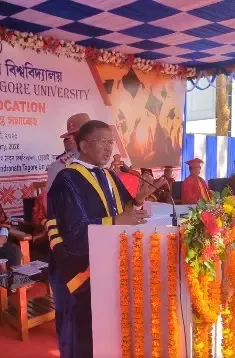
On January 29, Assam Governor Lakshman Prasad Acharya highlighted the transformative impact of the National Education Policy (NEP) on India's education system during the convocation of Rabindranath Tagore University. The reforms aim to create a more holistic and competitive educational landscape, integrating global opportunities for students. Explore the implications of these changes!
Key Takeaways
Transformative reforms in India's education sector are underway.
The National Education Policy (NEP) aims for holistic and skill-oriented education.
Foreign universities will enhance educational opportunities for Indian students.
Education should also focus on social welfare .
Youth play a crucial role in nation-building .
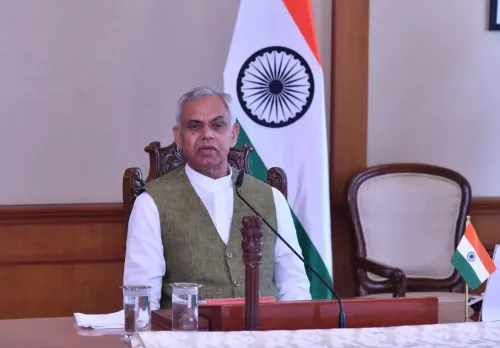
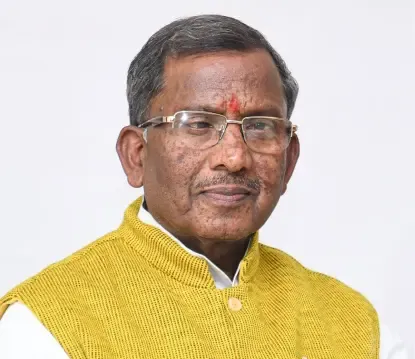
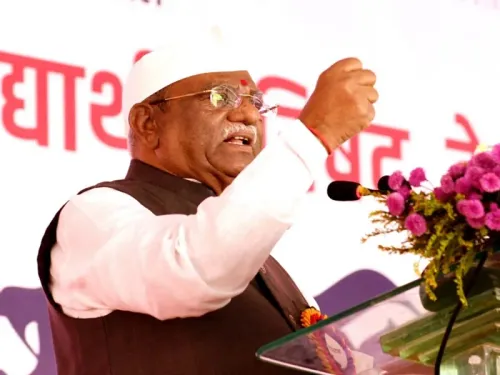
Guwahati, Jan 29 (NationPress) The Governor of Assam and Chancellor of Rabindranath Tagore University, Lakshman Prasad Acharya, has stated that significant reforms are being initiated in India's educational framework, including the rollout of the National Education Policy (NEP) and the establishment of foreign universities within the country.
Speaking at the third convocation ceremony of Rabindranath Tagore University held in Hojai on Wednesday, the Governor referred to the event as a pivotal moment, symbolizing the end of years of dedication and the commencement of a new chapter for the graduates.
In his address, he commended the students for their accomplishments and acknowledged the indispensable support provided by parents and educators in their journeys.
Highlighting the transforming educational landscape, Governor Acharya remarked that the reforms under the NEP are designed to make Indian education more comprehensive, skill-focused, and competitive on a global scale.
He noted that permitting esteemed foreign universities to set up campuses in India signifies increasing global trust in the nation's education system and expands international opportunities for Indian students, enabling them to pursue quality education without the need to travel abroad.
Referring to India's rich civilizational values, the Governor emphasized that the country has long embraced principles of truth, compassion, harmony, and non-violence, drawing inspiration from renowned figures like Lord Ram, Lord Krishna, Srimanta Sankardev, Madhavdev, and Rabindranath Tagore.
He reiterated the relevance of Tagore's educational philosophy, which aims to liberate the mind and cultivate humanity, in today's world.
Moreover, Governor Acharya stressed that education should transcend personal gain and actively contribute to societal welfare, especially for marginalized communities.
He encouraged the graduates to integrate service to humanity into their professional ethos.
Emphasizing the role of youth in nation-building, the Governor quoted Prime Minister Narendra Modi's assertion that youth energy is the greatest asset of the nation.
He articulated that skill development, innovation, and global competitiveness are critical as India strives to achieve its vision of becoming a developed nation by 2047.
The Governor also urged the academic community at Rabindranath Tagore University to equip students with skills relevant to Industry 4.0, expressing confidence that the university's learning environment would empower graduates to play a significant role in India’s growth narrative.
Present at the ceremony were Rabindranath Tagore University Vice-Chancellor Manabendra Dutta Chaudhary, former Gauhati University Vice-Chancellor Amarjyoti Choudhury, Registrar Sandeep Ratna, along with faculty members, students, parents, and other dignitaries.
Point of View
It is crucial to recognize the ongoing reforms under the National Education Policy as a significant step towards enhancing India's educational framework. The emphasis on skill development and global competitiveness aligns with national goals, making it a pivotal moment for both students and the education sector.
NationPress
19 Sept 2026
Frequently Asked Questions
What is the National Education Policy (NEP)?
The National Education Policy (NEP) is a comprehensive framework aimed at transforming the educational landscape in India, focusing on holistic and skill-oriented education.
How does the NEP benefit students?
The NEP aims to provide students with a more comprehensive education, making them globally competitive and enabling access to international educational opportunities.
What role do foreign universities play under the NEP?
The NEP allows reputed foreign universities to establish campuses in India, creating more opportunities for students to receive quality education domestically.
Why is social responsibility emphasized in education?
The Governor stresses that education must contribute to societal welfare, especially for underprivileged communities, promoting a sense of social responsibility among graduates.
How can youth contribute to nation-building?
Youth are considered the greatest asset of the nation, and they can contribute to nation-building through innovation, skill development, and active participation in societal issues.