Hyderabad cybercrime bust: 2 arrested for supplying 70 mule accounts

Synopsis
Two Hyderabad men allegedly built a 70-account mule pipeline that fed cybercriminals across India, enabling an estimated ₹60–70 crore in fraud across 450 cases. The arrests — triggered by a fake old-currency scam on Facebook — expose a broader, organised network with physical credentials being couriered to Haryana.
Key Takeaways
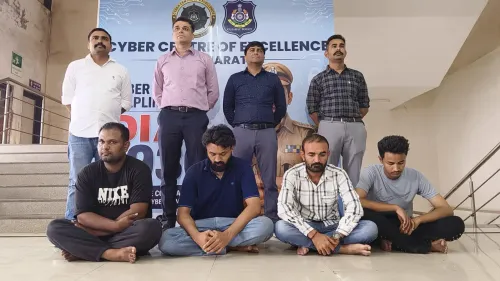
Gumma Ramesh , 39, and Mudale Anil , 19, both of Ramanthapur, Hyderabad , were arrested on 11 October 2026 by Hyderabad Cybercrime Police .
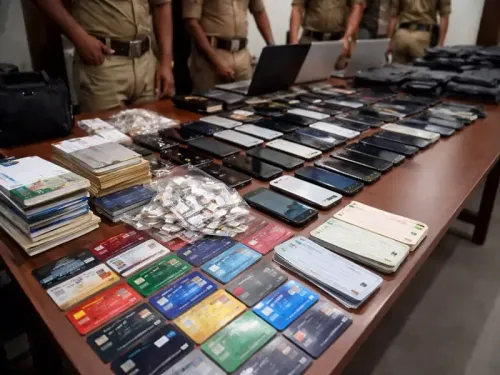
The duo allegedly collected and supplied approximately 70 mule bank accounts and SIM cards to cybercriminals.
The accounts are linked to 450 cybercrime cases across India with estimated transactions of ₹60–70 crore .
Ramesh allegedly recruited 60–70 individuals and couriered their banking credentials to contacts in Haryana .
The case was triggered by a Facebook fake old-currency scam in which a victim was defrauded of ₹7,93,351 on the pretext of receiving ₹45 lakh for an antique one-rupee coin.
Charges filed under Sections 66C and 66D of the IT Act and Sections 318(4), 319(2), 336(3), 340(2) of the BNS ; a co-accused remains at large.
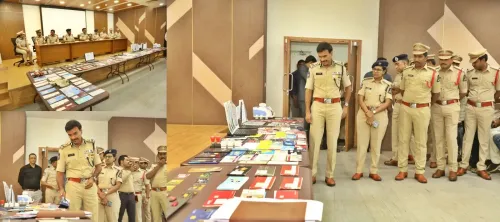
Hyderabad's Cybercrime Police have arrested two men — Gumma Ramesh, 39, and Mudale Anil, 19, both residents of Ramanthapur, Hyderabad — for allegedly collecting and supplying approximately 70 mule bank accounts to cybercriminals. The accounts were reportedly linked to 450 cybercrime cases across India, involving transactions estimated at ₹60–70 crore, police said on Sunday, 11 October 2026.
How the Mule Account Network Operated
According to S. Chaitanya Kumar, in-charge Deputy Commissioner of Police at the Cybercrime Police Station, the accused cited inadequate income as the motivation behind their actions. Ramesh, who had previously lived in Bidar district, Karnataka, relocated to Hyderabad due to financial hardship and was working as a cab driver when he allegedly developed contacts with cyber fraudsters.
Ramesh, along with an absconding co-accused, reportedly approached students, delivery partners, and other individuals in and around the Ramanthapur area, inducing approximately 60–70 persons to surrender their bank accounts and SIM cards in exchange for commissions. After collecting passbooks, ATM and debit cards, internet banking credentials, and SIM cards, he allegedly couriered the material to contacts in Haryana for use in committing cybercrime offences.
The Original Case That Led to the Arrests
The arrests were triggered by a complaint in which the accused allegedly defrauded a victim on the pretext of purchasing an old one-rupee currency note. The victim was promised ₹45 lakh for the antique coin but was instead cheated out of ₹7,93,351 through a fake old-currency scam operated via Facebook.
Based on the complaint, a case was registered under Sections 66C and 66D of the IT Act, as well as Sections 318(4), 319(2), 336(3), and 340(2) of the Bharatiya Nyaya Sanhita (BNS). During interrogation, both accused confessed to their involvement, police said.
Anil's Role and Commission Structure
The second accused, Mudale Anil, played a more limited but direct role — he allegedly opened three savings bank accounts across different banks in return for commissions from Ramesh and handed over the associated credentials. The arrangement illustrates a layered recruitment model common to mule-account networks, where frontline recruiters draw in lower-tier participants who may not fully grasp the scale of the fraud operation they are enabling.
Scale and Broader Context
The suspected total fraud volume of ₹60–70 crore across 450 cases nationally underscores the outsized damage even a modest mule-account pipeline can cause. This is not an isolated pattern: law enforcement agencies across India have noted a sharp rise in mule-account-linked cybercrime, where fraudsters outsource their financial infrastructure to recruits drawn from economically vulnerable groups. Notably, the routing of physical credentials via courier to Haryana — a state that has featured prominently in cybercrime investigations — points to organised interstate networks rather than opportunistic local crime.
Both accused remain in custody; the investigation continues with police working to identify and apprehend the absconding co-accused and trace the Haryana-based recipients of the couriered credentials.
Point of View
Yet prosecutions tend to catch the foot soldiers while the network architects remain elusive. Without sustained pressure on the Haryana end of this pipeline, arrests like these will continue to be tactically satisfying but strategically insufficient.
NationPress
11 Oct 2026
Frequently Asked Questions
What is a mule account and why do cybercriminals use them?
A mule account is a legitimate bank account whose credentials are handed over — voluntarily or under deception — to fraudsters, who use it to receive and launder the proceeds of cybercrime. Criminals use mule accounts to distance themselves from the money trail, making it harder for investigators to trace funds back to the actual perpetrators.
What fraud did Gumma Ramesh and Mudale Anil allegedly commit?
The two are accused of collecting approximately 70 mule bank accounts and SIM cards from individuals around Ramanthapur, Hyderabad, and supplying them to cybercriminals. These accounts are linked to 450 cybercrime cases across India involving transactions of an estimated ₹60–70 crore.
How were the accused caught?
The arrests stemmed from a complaint about a Facebook-based fake old-currency scam in which a victim was cheated out of ₹7,93,351 after being promised ₹45 lakh for an antique one-rupee coin. Investigation into that case led police to Ramesh and Anil.
What legal sections have been invoked against the accused?
Police registered the case under Sections 66C and 66D of the IT Act, covering identity theft and cheating by impersonation using computer resources, and under Sections 318(4), 319(2), 336(3), and 340(2) of the Bharatiya Nyaya Sanhita (BNS).
Is the investigation complete?
No. An absconding co-accused remains at large, and police are working to identify the Haryana-based contacts who received the couriered banking credentials. The probe is ongoing.