J&K ACB arrests two Women's Development Corporation officials for bribery

Synopsis
Two J&K Women's Development Corporation field supervisors were caught red-handed taking a bribe to release a ₹3 lakh government loan meant for a woman entrepreneur — turning a welfare scheme into a toll booth. The ACB trap exposes last-mile corruption that directly undercuts one of J&K's flagship women's empowerment programmes.
Key Takeaways
The J&K Anti-Corruption Bureau (ACB) arrested two field supervisors of the J&K Women's Development Corporation on 14 September 2026 .
Accused Owais Ahmad Khan was caught red-handed demanding and accepting a bribe to release a sanctioned loan of ₹3 lakh under the Women Entrepreneurship Platform (WEP) Scheme .
Second accused Meiraj-ud-din Sheikh was arrested on the spot for alleged involvement; his exact role is under investigation.
Case registered as FIR No.
15/2026 under the Prevention of Corruption Act, 1988 and Section 61(2) BNS at Police Station ACB Srinagar .
Both accused have been lodged at Police Station Shaheed Gunj, Srinagar ; investigation is ongoing.
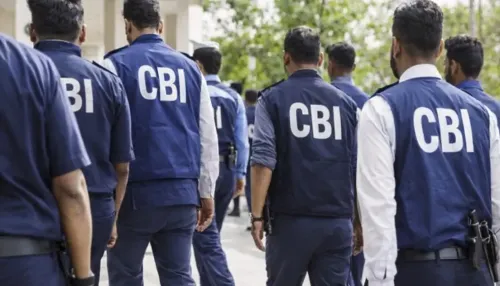
The Jammu & Kashmir Anti-Corruption Bureau (ACB) on Monday, 14 September 2026, arrested two field supervisors of the J&K Women's Development Corporation for allegedly demanding and accepting bribes to facilitate loan disbursements under a government scheme meant to support women entrepreneurs. The tainted bribe money was recovered from the accused in the presence of independent witnesses.
How the Trap Was Laid
The action followed a written complaint received by the ACB, alleging that Owais Ahmad Khan, a Field Supervisor with the corporation, had demanded illegal gratification from a complainant in exchange for releasing a sanctioned loan of ₹3 lakh under the Women Entrepreneurship Platform (WEP) Scheme. The complainant, unwilling to pay the bribe, approached the ACB and lodged a formal complaint.
Upon receipt of the complaint, the bureau verified the allegations, which prima facie established the demand of illegal gratification. A trap team was subsequently constituted, and during the operation, Owais Ahmad Khan was caught red-handed while accepting the bribe amount.
Second Official Also Arrested
During the course of the trap proceedings, a second public servant — Meiraj-ud-din Sheikh, also a Field Supervisor — was arrested on the spot for his alleged involvement in the offence. According to the ACB, the exact role and extent of Sheikh's involvement is being ascertained through ongoing investigation.
Both accused were subjected to medico-legal formalities and have been lodged at Police Station Shaheed Gunj, Srinagar.
Legal Action Initiated
A case — FIR No. 15/2026 — has been registered at Police Station ACB Srinagar under Section 7 and Section 7A of the Prevention of Corruption Act, 1988, as well as Section 61(2) of the Bharatiya Nyaya Sanhita (BNS). The investigation is currently in progress.
Why This Case Matters
The WEP Scheme is designed to empower women in Jammu & Kashmir by providing access to credit and entrepreneurship support. Allegations of gatekeeping by field-level officials — demanding bribes to release funds that beneficiaries are already entitled to — strike at the scheme's foundational purpose. Notably, this is not an isolated concern: complaints of intermediary corruption in government loan disbursement programmes have persisted across states, raising questions about last-mile accountability mechanisms.
The J&K ACB has been increasingly active in targeting mid-level government employees, and this arrest underscores the bureau's focus on protecting welfare beneficiaries from predatory officials. Further investigation is expected to determine whether the corruption was systematic or limited to the two arrested individuals.
Point of View
The scheme's credibility takes a direct hit. The J&K ACB has been stepping up mid-level enforcement, but trap operations are reactive by design; the structural fix requires digitising and auto-disbursing welfare funds so no human intermediary controls the release trigger. Until that happens, schemes like WEP will remain vulnerable to exactly this kind of extraction.
NationPress
14 Sept 2026
Frequently Asked Questions
Who were the two officials arrested by the J&K ACB?
The two arrested officials are Owais Ahmad Khan and Meiraj-ud-din Sheikh, both Field Supervisors with the J&K Women's Development Corporation. Owais Ahmad Khan was caught red-handed accepting a bribe, while Meiraj-ud-din Sheikh was arrested on the spot for alleged involvement in the offence.
What bribe amount was involved and for which scheme?
The bribe was demanded to facilitate the release of a sanctioned loan of ₹3 lakh under the Women Entrepreneurship Platform (WEP) Scheme, a government initiative to support women entrepreneurs in Jammu & Kashmir. The tainted bribe money was recovered from the accused in the presence of independent witnesses.
What charges have been filed against the accused?
An FIR (No. 15/2026) has been registered at Police Station ACB Srinagar under Section 7 and Section 7A of the Prevention of Corruption Act, 1988, and Section 61(2) of the Bharatiya Nyaya Sanhita (BNS). Investigation is currently in progress.
What is the Women Entrepreneurship Platform (WEP) Scheme?
The WEP Scheme is a government initiative aimed at empowering women in Jammu & Kashmir by providing access to credit and entrepreneurship support, including sanctioned loans. The scheme is designed to support women in starting or growing businesses, making the alleged bribe demand particularly damaging to its core purpose.
What happens next in the case?
Both accused have been lodged at Police Station Shaheed Gunj in Srinagar, and the investigation is ongoing. The ACB is working to ascertain the full extent of Meiraj-ud-din Sheikh's involvement, and authorities are expected to determine whether the corruption was systematic or limited to the two arrested individuals.