UAE rises to India's third-largest trade partner under CEPA: Gujarat CM Bhupendra Patel
Synopsis
India and the UAE have quietly built one of the world's fastest-growing bilateral trade corridors — crossing USD 100 billion in 2025 and targeting USD 200 billion by 2032. The CEPA, signed just three years ago, has already vaulted the UAE to India's third-largest business partner. Gujarat, with its ports, semiconductor plants, and GIFT City, is positioning itself as the primary gateway for this corridor.
Key Takeaways
The 2022 CEPA has made the UAE India's third-largest business partner , according to Gujarat CM Bhupendra Patel at Investopia Global - Ahmedabad on 23 July .
Bilateral trade between India and the UAE exceeded USD 100 billion in 2025 ; the two countries have set a target of USD 200 billion by 2032 .
PM Modi has visited the UAE seven times since his first visit in 2015 — the first by an Indian PM in 34 years .
UAE President Sheikh Mohamed bin Zayed Al Nahyan has visited India five times , including to the Vibrant Gujarat Summit in 2024 .
Gujarat hosts three operational semiconductor plants , approvals for six more , over 51 GW of renewable energy capacity, and 49 ports .
The Abu Dhabi Investment Authority (ADIA) has set up a subsidiary office in GIFT City , deepening India-UAE financial integration.
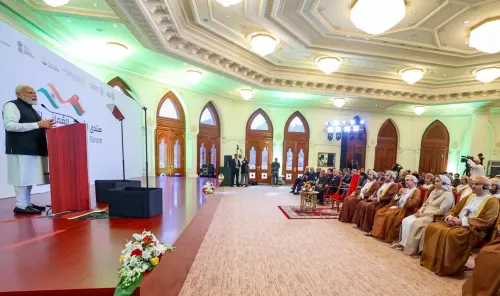
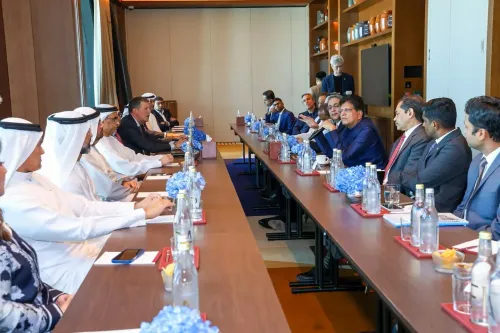
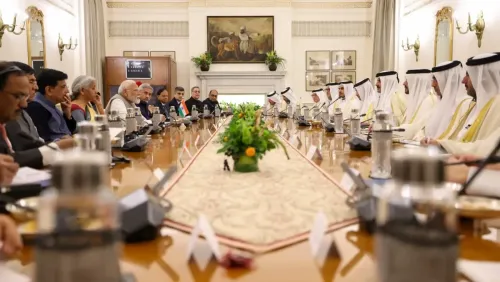
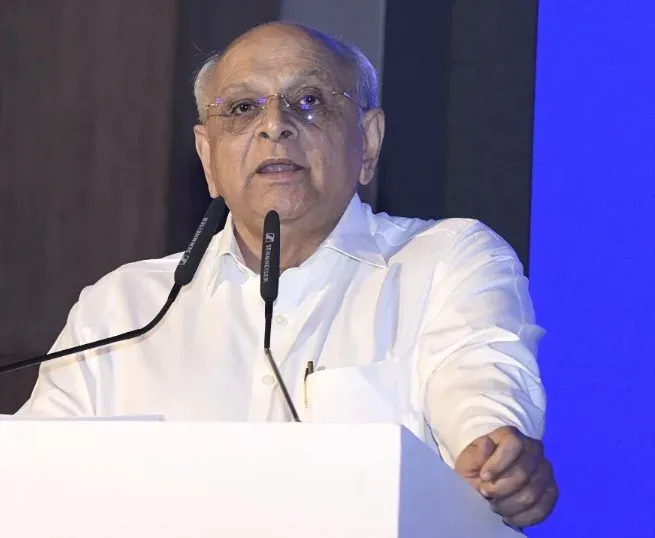
Gujarat Chief Minister Bhupendra Patel on Thursday, 23 July declared that the Comprehensive Economic Partnership Agreement (CEPA) signed in 2022 has elevated the United Arab Emirates to the position of India's third-largest business partner, speaking at the inauguration of 'Investopia Global - Ahmedabad' in Gandhinagar. The event brought together senior officials from both nations to deepen an economic relationship that now spans trade, investment, and strategic infrastructure.
CEPA's Historic Transformation
Addressing the inaugural session, Patel described the 2022 CEPA as having brought about a 'historic transformation' in bilateral economic ties. He credited the agreement directly for the UAE's rise in India's trade partner rankings, noting that the two nations had moved well beyond conventional commerce.
The Chief Minister pointed to the centuries-old maritime trading relationship between Gujarat and the UAE across the Arabian Sea, framing the Investopia Global event as a convergence of 'two civilisations and two economies.'
Modi's Diplomatic Footprint in UAE Relations
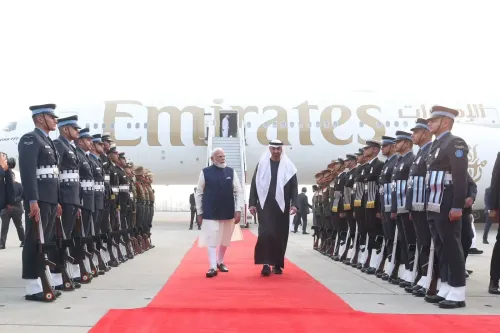
Patel highlighted that Prime Minister Narendra Modi's visit to the UAE in 2015 was the first by an Indian Prime Minister in 34 years, and that Modi has since visited the country seven times. UAE President Sheikh Mohamed bin Zayed Al Nahyan has reciprocated with five visits to India, including a visit to Gujarat during the Vibrant Gujarat Summit in 2024.
Patel also cited the inauguration of the first Hindu Swaminarayan Temple in Abu Dhabi as evidence of deepening cultural ties alongside economic cooperation.
Gujarat's Trade and Industrial Strengths
Outlining Gujarat's export profile, Patel said the state ships chemicals, pharmaceuticals, gems and jewellery, engineering products, ceramics, textiles, agricultural produce, and processed food to the UAE. He positioned the partnership as offering Gujarat not just economic opportunity but a stronger foothold in the global supply chain.
On infrastructure, Patel noted that Gujarat operates one major port and 48 non-major ports, holds more than 51 GW of renewable energy capacity, hosts GIFT City as India's first fintech city, and has three operational semiconductor plants with approvals pending for six more — the highest count in the country.
UAE Minister: $100 Billion Trade, Target of $200 Billion by 2032
UAE Minister of Economy and Tourism Abdulla Bin Touq Al Marri said bilateral trade between India and the UAE exceeded USD 100 billion in 2025, with both governments having set a target of scaling this to USD 200 billion by 2032. He described the relationship as going beyond trade: 'The UAE and India are not just engaged in trade, but are building a strong economic corridor.'
Al Marri disclosed that the UAE recorded GDP growth of 5.6 per cent in 2025 and that the non-oil sector now accounts for more than 77.3 per cent of the country's GDP — a marker of its economic diversification. He also noted that the Abu Dhabi Investment Authority (ADIA) has established a subsidiary office in GIFT City, signalling deepening financial integration.
Sectors earmarked for expanded collaboration include semiconductors, financial corridors, food security, tourism, digital infrastructure, and logistics. Al Marri urged stakeholders to move from dialogue to concrete investment agreements.
Aligning Visions: Viksit Bharat and We the UAE 2031
Patel drew a direct line between Prime Minister Modi's 'Viksit Bharat' vision and the UAE's 'We the UAE 2031' strategic framework, arguing that Gujarat-UAE partnerships could contribute meaningfully to both national goals. Memoranda of Understanding (MoUs) signed during the event were expected to further formalise investment commitments and invite UAE businesses to establish ventures in Gujarat.
With bilateral trade already past the USD 100 billion mark and a clear roadmap to double it by 2032, the India-UAE economic corridor appears to be entering its most consequential phase yet.
Point of View
But the more consequential signal at Investopia Global was institutional: ADIA planting a flag in GIFT City marks a shift from portfolio flows to structural financial integration. The CEPA, often discussed in aggregate trade numbers, is now producing sector-specific depth — semiconductors, logistics, food security — that earlier trade agreements with the Gulf rarely achieved. Gujarat's positioning as the primary corridor is strategically sound given its port density and manufacturing base, but the state will need to convert MoU signings into verified investment disbursals, a step where Indian summits have historically underperformed. The USD 200 billion by 2032 target is ambitious; at the current trajectory, it is achievable only if both sides accelerate regulatory harmonisation and reduce non-tariff barriers that the CEPA framework has not yet fully addressed.
NationPress
22 Oct 2026
Frequently Asked Questions
How has the India-UAE CEPA changed bilateral trade?
The Comprehensive Economic Partnership Agreement signed in 2022 has elevated the UAE to India's third-largest business partner, according to Gujarat CM Bhupendra Patel. Bilateral trade crossed USD 100 billion in 2025, and both nations have set a target of USD 200 billion by 2032.
What is Investopia Global - Ahmedabad?
Investopia Global - Ahmedabad is an investment forum inaugurated on 23 July in Gandhinagar, Gujarat, designed to deepen economic and investment ties between India and the UAE. The event featured MoU signings and participation from senior officials including the UAE Minister of Economy and Tourism.
What sectors are covered under India-UAE economic cooperation?
Collaboration spans semiconductors, financial corridors, food security, tourism, digital infrastructure, and logistics. Gujarat specifically exports chemicals, pharmaceuticals, gems and jewellery, engineering products, ceramics, textiles, and agricultural produce to the UAE.
What role does GIFT City play in India-UAE financial ties?
GIFT City is emerging as a key hub for India-UAE financial cooperation. The Abu Dhabi Investment Authority (ADIA) has already established a subsidiary office there, signalling a deepening of financial integration between the two countries.
How many times has PM Modi visited the UAE?
Prime Minister Narendra Modi has visited the UAE seven times since 2015, when he made the first visit by an Indian Prime Minister in 34 years. UAE President Sheikh Mohamed bin Zayed Al Nahyan has visited India five times in return.