Umar Khalid documentary screened at NALSAR Hyderabad without permission
Synopsis
A documentary on imprisoned activist Umar Khalid — barred at NLSIU Bengaluru after ABVP pressure and blocked at IIIT-Hyderabad with disciplinary warnings — found its audience at NALSAR Hyderabad, where students screened the uncertified film without institutional approval, marking six years of Khalid's detention without trial under UAPA.
Key Takeaways
Filmmaker Lalit Vachani 's documentary 'Prisoner No.
626710 is Present' was screened at NALSAR University of Law, Hyderabad on Wednesday, 24 September 2026 .
Around 30 students attended; the screening was held without NALSAR administration permission and without CBFC certification.
Similar screenings were cancelled at NLSIU Bengaluru after ABVP objections and at IIIT-Hyderabad after disciplinary warnings to 8 students .
Umar Khalid has been in custody since September 2020 — six years — charged under the UAPA in connection with the 2020 Delhi riots ; the trial has not yet begun.
The CBFC warned on 17 September that public screenings of uncertified films violate the Cinematograph Act without a specific exemption.
Filmmaker Lalit Vachani's documentary on imprisoned activist Umar Khalid, titled 'Prisoner No. 626710 is Present', was screened by a group of students at the National Academy of Legal Studies and Research (NALSAR) University of Law in Hyderabad on Wednesday evening, law school officials confirmed on Thursday, 24 September 2026. The screening took place without prior permission from the NALSAR administration and without certification from the Central Board of Film Certification (CBFC).
What Happened at NALSAR
Approximately 30 students attended the 60-minute documentary screening, held on campus on Wednesday evening. Organisers noted that heavy rain deterred a larger turnout, with some attendees seen holding umbrellas. The event was not cleared by the university authorities, and the film itself has not received CBFC certification — the statutory requirement under the Ministry of Information and Broadcasting for public screenings in India.
According to the organisers, the gathering was intended as 'a space for solidarity and conversation.' They stated: 'The film's questions are about rights, accountability, and the human cost of prolonged incarceration, while solemnly standing in support of those affected by these failures of the justice system, including the Supreme Court.'
Why Students Bypassed Official Channels
The NALSAR screening followed the cancellation of similar screenings at two other prominent institutions. At the National Law School of India University (NLSIU) in Bengaluru, the student organisation Law and Society Committee (LawSoc) cancelled the event after the Akhil Bharatiya Vidyarthi Parishad (ABVP) — the Rashtriya Swayamsevak Sangh-backed student body — lodged a formal email complaint with the university administration, urging it to halt the screening.
At International Institute of Information Technology Hyderabad (IIIT-Hyderabad), the administration issued 'disciplinary warnings' to eight students associated with a platform called 'No Tyrants, No Silence (NTNS)', which had planned to host the film as part of conversations on caste, merit, and politics. Aware of these precedents, the NALSAR group reportedly chose not to seek administrative approval before proceeding.
The Umar Khalid Case: Six Years Without Trial
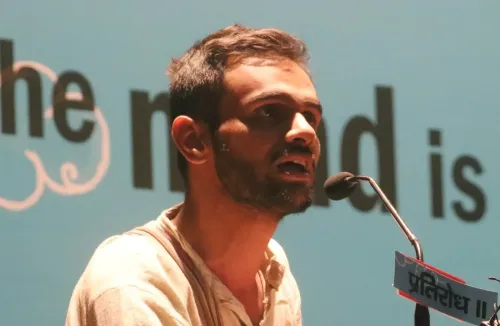
Umar Khalid, a former student leader at Jawaharlal Nehru University (JNU), has been in custody since September 2020 — marking six years of imprisonment without trial at the time of the screening. He was arrested in connection with the 2020 Delhi riots and charged under the stringent Unlawful Activities (Prevention) Act (UAPA) along with other provisions. The trial in the case has not yet commenced.
The screening was organised as part of a broader series of solidarity events planned across the country. Notably, Political Prisoners' Day — observed in India on 13 September — coincides with the date of Khalid's arrest in 2020, lending the screenings symbolic weight for the organisers.
CBFC Certification and Legal Questions
On 17 September, the CBFC stated that any public screening of an uncertified documentary would violate the Cinematograph Act unless a specific exemption had been obtained. The documentary, 'Prisoner No. 626710 is Present', has not received such certification, raising legal questions about its screenings across campuses. The NALSAR administration has not publicly indicated whether it intends to take action against the students involved.
As solidarity screenings continue to be planned at other locations, the debate around campus freedoms, CBFC certification requirements, and the application of the UAPA to student activists appears set to intensify in the weeks ahead.
Point of View
IIIT-Hyderabad, and now NALSAR reveals less about any individual institution and more about a broader chilling effect on campus discourse — where pre-emptive cancellations and disciplinary threats have made unsanctioned screenings the only available route for students. The CBFC certification question is legally valid, but its selective invocation against campus civil-liberties events invites scrutiny. Six years of undertrial detention without the commencement of a trial is itself a significant accountability question that mainstream coverage tends to flatten into a 'controversial activist' frame. The deeper story is structural: what the UAPA's bail provisions do to the right to a speedy trial, and whether India's premier law schools are equipped — or willing — to hold that conversation.
NationPress
25 Sept 2026
Frequently Asked Questions
What is the documentary 'Prisoner No. 626710 is Present' about?
'Prisoner No. 626710 is Present' is a 60-minute documentary by filmmaker Lalit Vachani about imprisoned activist Umar Khalid, examining questions of rights, accountability, and prolonged pre-trial incarceration. The film has not been certified by the Central Board of Film Certification (CBFC), making its public screening legally contentious under the Cinematograph Act.
Why was the documentary screened without permission at NALSAR?
Students at NALSAR chose to bypass the administration after similar screenings were cancelled at NLSIU Bengaluru — following ABVP pressure — and blocked at IIIT-Hyderabad, where eight students received disciplinary warnings. Anticipating institutional resistance, the group organised the screening independently.
Who is Umar Khalid and why has he been in prison?
Umar Khalid is a former student leader at Jawaharlal Nehru University (JNU) who was arrested in September 2020 in connection with the 2020 Delhi riots. He has been charged under the Unlawful Activities (Prevention) Act (UAPA) and other provisions, but the trial has not commenced even after six years of detention.
What legal issues surround screening an uncertified documentary?
The CBFC stated on 17 September that publicly screening a documentary without its certification violates the Cinematograph Act unless a specific exemption has been obtained. The documentary 'Prisoner No. 626710 is Present' does not hold CBFC certification, putting its campus screenings in a legal grey area.
Where else was the documentary cancelled or restricted?
The documentary was cancelled at National Law School of India University (NLSIU) in Bengaluru after the ABVP lodged a complaint with the administration. At IIIT-Hyderabad, the administration issued disciplinary warnings to eight students associated with the platform 'No Tyrants, No Silence (NTNS)' that had planned the screening.