Sea level rise threatens 14 million in Kolkata, Mumbai: UN report

Synopsis
A UN report released at the Pacific Islands Forum has put a stark number on India's coastal crisis: more than 14 million people in Kolkata and Mumbai alone are at immediate risk of permanent inundation. With annual sea-level rise hitting a record 6mm in 2024 and Himalayan glaciers accelerating melt, the window for South Asia to adapt is narrowing faster than most governments have acknowledged.
Key Takeaways
A UN report released on 1 September warns more than 14 million people in Kolkata , Mumbai , and Dhaka face permanent displacement from rising seas.
Annual sea-level rise reached a record high of nearly 6 millimetres in 2024 , according to the report.
Globally, approximately 770 million people — nearly one in ten — live in coastal zones less than 5 metres above the high-tide line.
At least $1.8 trillion worth of global infrastructure is at risk from sea-level-rise-related threats.
Assistant Secretary-General Navid Hanif warned that South Asia faces severe flooding from glacial melt within the next 15 to 20 years , followed by drought threatening food security.
High-income cities including Miami , New York , and Guangzhou face coastal asset exposure estimated between $2 trillion and $3.5 trillion .
A new report by United Nations Secretary-General António Guterres warns that rising sea levels driven by global warming could displace more than 14 million people in the low-lying coastal cities of Kolkata and Mumbai in India, and Dhaka in Bangladesh, through permanent inundation. The report, released on Monday, 1 September at the 55th Pacific Islands Forum Leaders Meeting in Palau, records the annual rise in sea levels hitting an all-time high of nearly six millimetres in 2024.
Key Findings of the UN Report
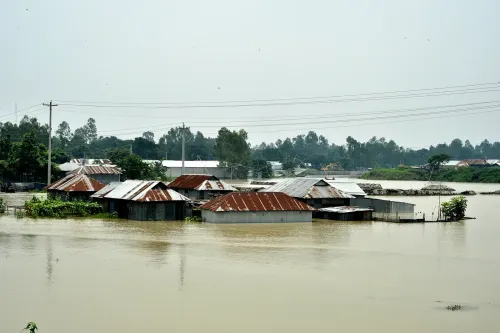
The report states directly: 'In the low-lying deltas of South Asia, in cities such as Kolkata and Mumbai in India, and Dhaka, the defining impact is human displacement, with more than 14 million people at immediate risk of losing their homes to permanent inundation.' No definitive deadline is set for this scenario, but the trajectory of current data offers little comfort.
Globally, the report estimates that approximately 770 million people — nearly one in every ten people on Earth — live in coastal areas less than five metres above the high-tide line and already face significant exposure. Infrastructure worth at least $1.8 trillion is endangered by sea-level-rise-related risks worldwide.
What Officials Said
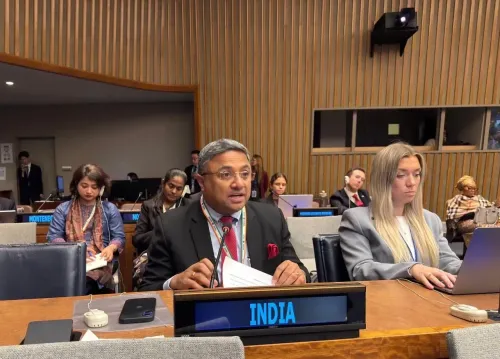
Assistant Secretary-General Navid Hanif, speaking at a news conference in New York, described rising sea levels as a 'systemic threat' that extends far beyond coastlines. 'Please treat sea level rise as a systemic threat,' he said, warning it will affect 'your health, food security, your human rights culture, you lose your ancestral land, you lose your identity.'
Hanif called on governments to integrate sea-level-rise planning into their broader policy frameworks. 'So that's why this issue requires a very comprehensive approach by governments to make it a part of their planning process,' he added.
The Himalayan Glacier Dimension
The report's release coincided with fresh evidence of glacial danger in the region. A tsunami-like surge of water and mud, reportedly caused by a glacier breaking loose from the Himalayas, killed hundreds along the Nepal-Tibet border last week, devastating several areas.
Hanif described the Himalayan glacier system as the 'Third Pole' — after the North and South Poles — given the sheer concentration of ice it holds. He warned that over the 'next 15 to 20 years', South Asia faces a compounding threat: first, severe flooding from glacial melt, followed by prolonged drought that could devastate crops and food security.
Global Financial Exposure
The threat is not confined to developing nations. The report notes that in high-income cities such as Miami and New York in the United States, and Guangzhou in China, the primary concern is financial — with coastal infrastructure assets at risk estimated between $2 trillion and $3.5 trillion. The report underscores that sea-level rise 'does not respect geographies.'
The meeting's host, Palau — a Pacific island nation facing existential risk from rising ocean waters — lends particular urgency to the findings. As climate negotiations continue, the pressure on major emitters to act will only intensify in the months ahead.
Point of View
And India's urban planning apparatus has yet to treat it as such. Both cities sit on low-lying deltaic and coastal terrain with ageing drainage infrastructure, and neither has a credible managed-retreat or climate-adaptation plan at the scale the UN is describing. The Himalayan glacier warning compounds the problem: India faces a two-phase threat — first floods, then drought — that will stress food systems and internal migration simultaneously. The report's release at a Pacific Islands forum is a diplomatic signal too: the nations least responsible for emissions are hosting the conversation that the largest emitters should be having at home.
NationPress
16 Oct 2026
Frequently Asked Questions
Why are Kolkata and Mumbai at risk from sea level rise?
Both cities are built on low-lying coastal and deltaic terrain, making them highly vulnerable to permanent inundation as sea levels rise. The UN report identifies more than 14 million people across Kolkata, Mumbai, and Dhaka as being at immediate risk of losing their homes.
How fast are sea levels rising, according to the UN report?
The annual rise in sea levels reached nearly 6 millimetres in 2024, the highest ever recorded, according to the report released at the 55th Pacific Islands Forum Leaders Meeting in Palau on 1 September.
What is the Himalayan glacier threat to South Asia?
UN Assistant Secretary-General Navid Hanif described Himalayan glaciers as the 'Third Pole' due to their vast ice concentration. He warned that over the next 15 to 20 years, glacial melt could cause severe flooding across South Asia, followed by drought that threatens crops and food security.
How many people globally are at risk from rising seas?
Approximately 770 million people — nearly one in ten on Earth — live in coastal areas less than 5 metres above the high-tide line and already face significant risk, according to the UN report. Global infrastructure worth at least $1.8 trillion is also endangered.
Which wealthy cities face the biggest financial exposure from sea level rise?
The report singles out Miami and New York in the United States, and Guangzhou in China, where coastal infrastructure assets at risk are estimated between $2 trillion and $3.5 trillion. The report notes that sea-level rise 'does not respect geographies.'