India backs stable maritime zones, statehood continuity for island States at UNGA 81
Synopsis
At the UN General Assembly's high-level plenary on sea-level rise, India drew a clear line: maritime boundaries and statehood should not dissolve as oceans rise. Senior diplomat Sibi George backed UNCLOS, equity principles, and the new UN Declaration — positioning India as a key Global South voice on one of climate diplomacy's sharpest emerging legal battles.
Key Takeaways
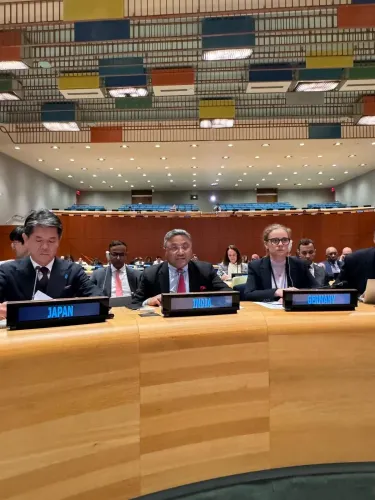
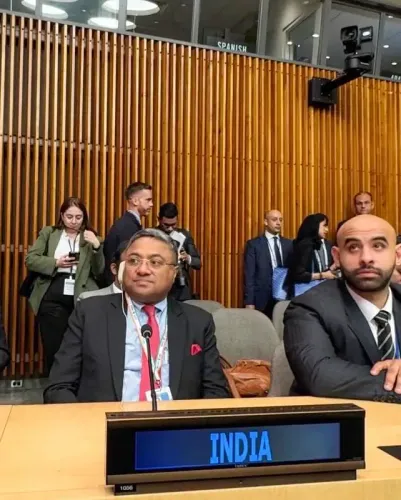
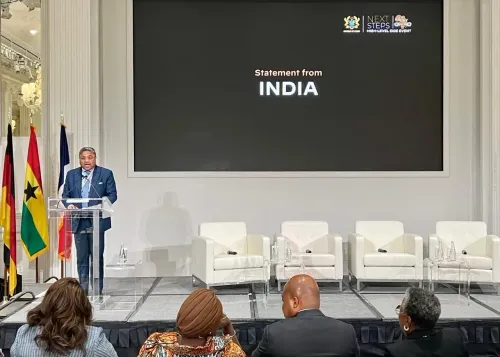
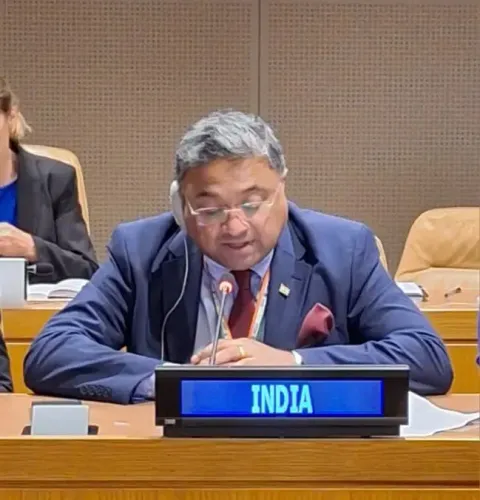
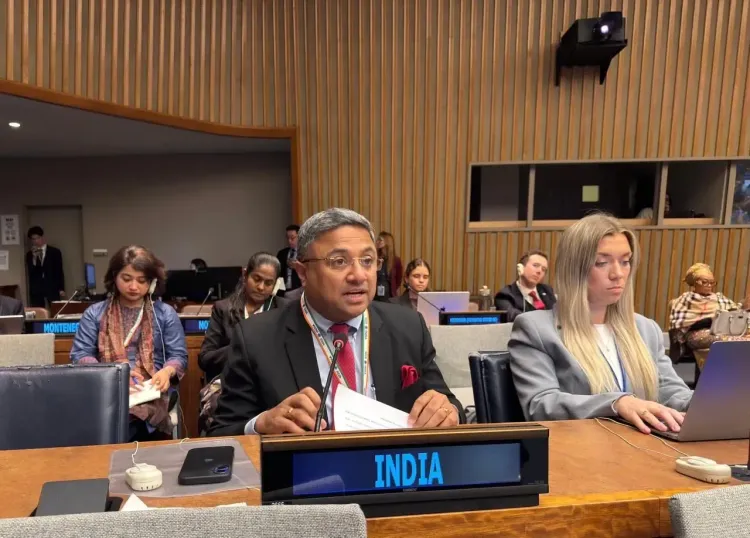
Sibi George , Secretary (West), MEA, delivered India's statement at the UNGA 81 High-Level Plenary on sea-level rise in New York on 25 September 2026 .
India welcomed the adoption of the UN Declaration on Sea Level Rise and backed stable maritime zones and continuity of statehood for island and coastal States.
George reaffirmed India's commitment to UNCLOS and the CBDR-RC principle of climate equity.
India highlighted domestic efforts on coastal resilience , mangrove conservation , and disaster-resilient infrastructure .
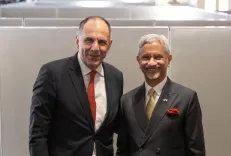
George also attended the Peacebuilding Commission Ministerial and the UNRWA Ministerial meetings on the UNGA sidelines.
India has extended tens of billions in grants, concessional credit, and capacity-building, prioritising LDCs and SIDS nations through the India-UN Development Partnership Fund .
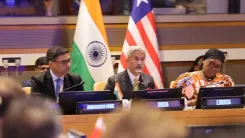
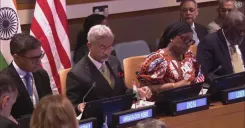
Sibi George, Secretary (West) in India's Ministry of External Affairs (MEA), on 25 September 2026 delivered India's national statement at the High-Level Plenary Meeting on Addressing the Existential Threats Posed by Sea Level Rise at the 81st session of the United Nations General Assembly (UNGA) in New York. George welcomed the adoption of the UN Declaration on Sea Level Rise and underscored India's commitment to coastal resilience, mangrove conservation, and disaster-resilient infrastructure.
Key Positions India Articulated
At the plenary, George reaffirmed the centrality of the United Nations Convention on the Law of the Sea (UNCLOS), arguing for the preservation of stable maritime zones and the continuity of statehood for island and coastal nations threatened by rising seas. He also emphasised equity and the principle of Common But Differentiated Responsibilities and Respective Capabilities (CBDR-RC) — a framework that holds developed nations to a higher standard of climate accountability than developing ones.
The MEA, in a post on X, noted that George 'welcomed the adoption of the UN Declaration on Sea Level Rise and highlighted India's efforts on coastal resilience, mangrove conservation and disaster-resilient infrastructure,' adding that he 'reaffirmed the importance of equity and CBDR-RC, and underscored the significance of UNCLOS, stable maritime zones and continuity of statehood for island and coastal States.'
India's Peacebuilding Engagement at UNGA
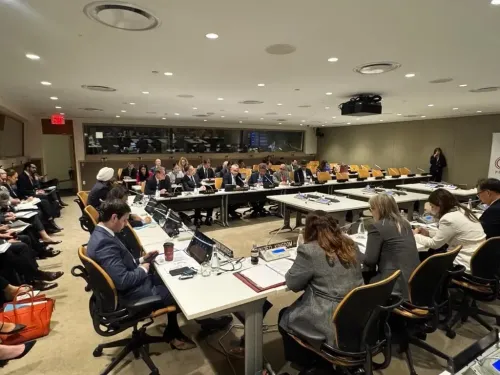
A day earlier, on Thursday, George participated in the Peacebuilding Commission Ministerial meeting focused on 'National Ownership in Practice: Strengthening Inclusive State Institutions through International Peacebuilding Support.' He reaffirmed what India calls the centrality of national ownership in peacebuilding — the principle that lasting stability must be driven from within, not imposed from outside.
According to the MEA, George shared India's perspectives on nation-building, specifically highlighting decentralisation of power, human-centric digital public infrastructure, and inclusive development with a focus on women and youth participation. The MEA also noted that 'India has extended tens of billions in grants, concessional credit, and capacity-building, including through the India-UN Development Partnership Fund, with priority for LDCs and SIDS countries.'
India's Commitment to Palestinian Refugees
On the sidelines of the 81st UNGA session, George also attended the ministerial meeting of the United Nations Relief and Works Agency for Palestine Refugees in the Near East (UNRWA). The MEA described his participation as reflective of 'India's longstanding commitment to the Palestinian people' and said India's ongoing partnership with UNRWA aims to make 'tangible and lasting impact on the daily lives of Palestinian people.'
Why These Positions Matter
India's advocacy for UNCLOS-backed stable maritime zones carries particular weight given the country's own extensive coastline and island territories, including the Andaman and Nicobar and Lakshadweep archipelagos. For Small Island Developing States (SIDS) — many of which face genuine existential risk from sea-level rise — India's diplomatic backing at the UNGA provides an important voice from the Global South. This comes amid growing international debate over whether rising seas that physically alter coastlines should automatically trigger a revision of maritime boundaries and even statehood — a legal question the new UN Declaration begins to address. India's stance, backing continuity of statehood, aligns with the positions of vulnerable Pacific and Indian Ocean nations.
Point of View
New Delhi is staking out a position in a fast-moving international legal debate — one where the rules for disappearing coastlines remain genuinely unsettled. Notably, India's own strategic island territories give it direct skin in the game, not just diplomatic solidarity. The CBDR-RC reaffirmation also signals that India will resist any reframing of climate adaptation that shifts financial burdens toward developing nations. Whether India's advocacy translates into concrete support mechanisms for the most vulnerable SIDS nations — beyond the Development Partnership Fund — will be the harder test of intent.
NationPress
25 Sept 2026
Frequently Asked Questions
What did India say at the UNGA sea level rise plenary?
India's MEA Secretary (West) Sibi George welcomed the adoption of the UN Declaration on Sea Level Rise and called for stable maritime zones and continuity of statehood for island and coastal States. He also reaffirmed the CBDR-RC principle and highlighted India's coastal resilience and mangrove conservation efforts.
What is the UN Declaration on Sea Level Rise?
The UN Declaration on Sea Level Rise is a multilateral declaration adopted at the 81st session of the UN General Assembly, addressing the legal and existential threats that rising sea levels pose to island and coastal nations, including questions around maritime boundaries and statehood. India formally welcomed its adoption on 25 September 2026.
Why does India support continuity of statehood for island States?
India argues that island and coastal nations should not lose their legal statehood or maritime entitlements simply because rising seas alter their physical coastlines. This position aligns India with vulnerable Small Island Developing States (SIDS) in the Pacific and Indian Ocean, and also protects the legal status of India's own island territories.
What is CBDR-RC and why did India raise it?
CBDR-RC stands for Common But Differentiated Responsibilities and Respective Capabilities — a UN principle holding that developed nations bear greater responsibility for climate action than developing ones. India's reaffirmation of this principle at UNGA signals its resistance to any burden-sharing frameworks that treat all nations equally regardless of historical emissions.
What other meetings did Sibi George attend at UNGA 81?
Sibi George attended the Peacebuilding Commission Ministerial on national ownership in peacebuilding, where he highlighted India's focus on decentralisation, digital public infrastructure, and inclusive development. He also attended the UNRWA Ministerial on the sidelines, reaffirming India's support for Palestinian refugees.