India pitches 'Sarvodaya' principles at G7 Development Ministers meeting in New York
Synopsis
At the G7 Development Ministers meeting in New York, India's MEA Secretary Sibi George invoked 'Sarvodaya' — welfare for all — to argue that real development builds domestic capability, not just capital flows. The move signals India's bid to position itself as a normative force in global development architecture, not just a beneficiary, as the 40th anniversary of the UN's Right to Development Declaration opens a new push for a binding covenant.
Key Takeaways
Sibi George , Secretary (West), MEA, represented India at the 2nd G7 Development Ministers meeting in New York on 24 September 2026 .
George anchored India's position in the principles of 'Sarvodaya' , emphasising capability-building and resilience over financing alone.
He also delivered India's national statement at the UNGA High-level segment marking the 40th Anniversary of the Declaration on the Right to Development .
India voiced support for the early adoption of the Covenant on the Right to Development , a prospective binding international instrument.
The UN acknowledged that while progress since 1986 has been significant, global development gains remain 'uneven'.
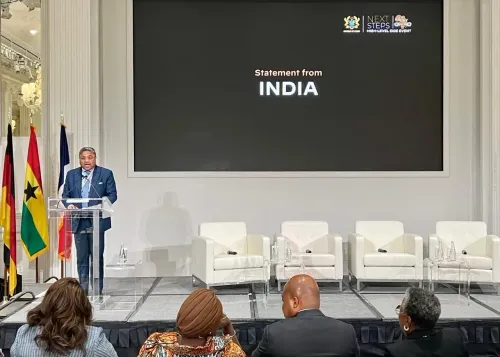
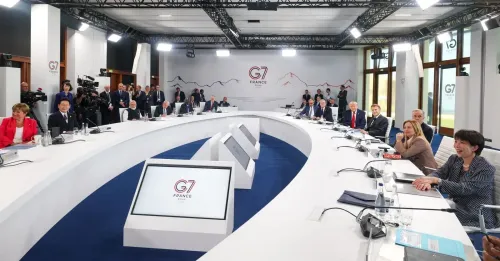
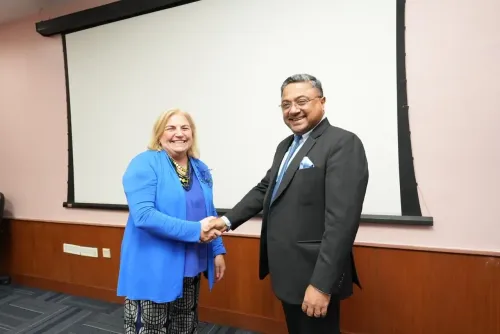
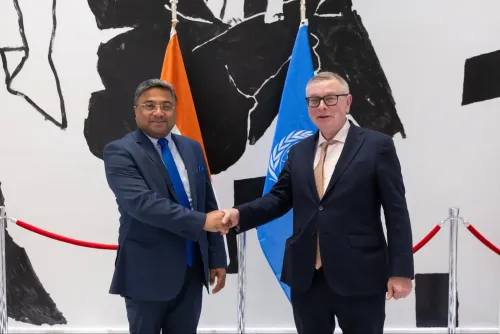
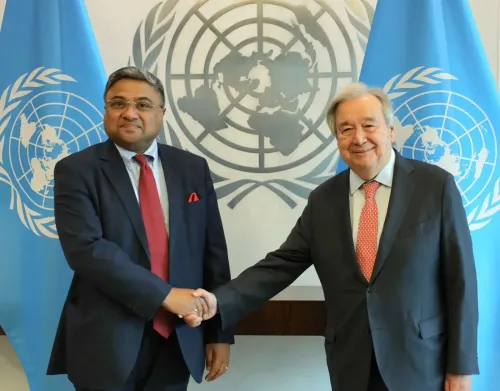
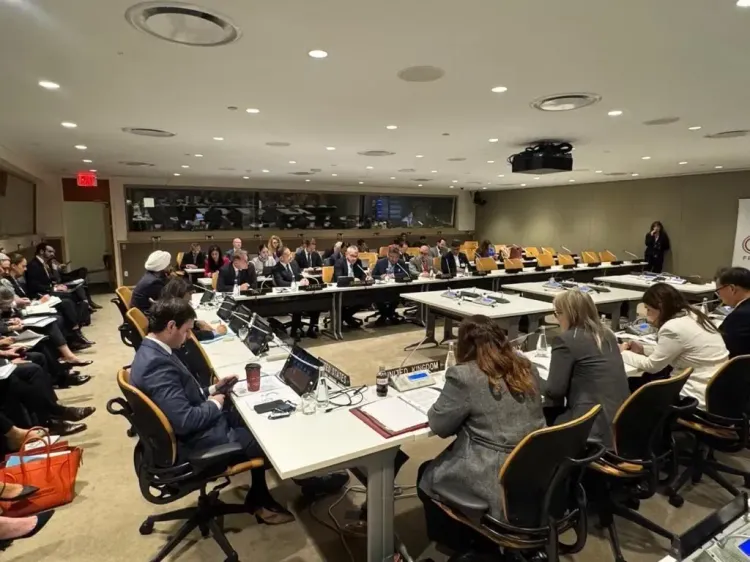
Sibi George, Secretary (West) at India's Ministry of External Affairs (MEA), on Thursday, 24 September 2026, represented India at the 2nd G7 Development Ministers meeting in New York, organised by the G7 Chair, France, on the sidelines of the 81st UN General Assembly (UNGA 81). In his address, George underscored India's human-centric and inclusive approach to development, rooted in the philosophy of 'Sarvodaya' — a concept meaning 'welfare for all', associated with Gandhian thought.
India's Core Development Position
In his remarks at the G7 ministerial, George articulated India's view that development must go beyond the mere provision of financing. According to the MEA, he stressed that genuine development is about 'building domestic capabilities and strengthening resilience' — a position that distinguishes India's approach from traditional donor-recipient frameworks. He cited India's own development partnership initiatives as a model for this philosophy in practice.
This framing reflects India's broader diplomatic push, particularly through platforms like the Global South Summit and the Voice of the Global South initiative, where New Delhi has consistently argued that technology transfer and capacity building must accompany financial aid.
India at the UN Right to Development Anniversary
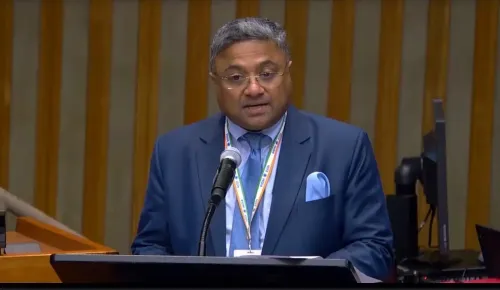
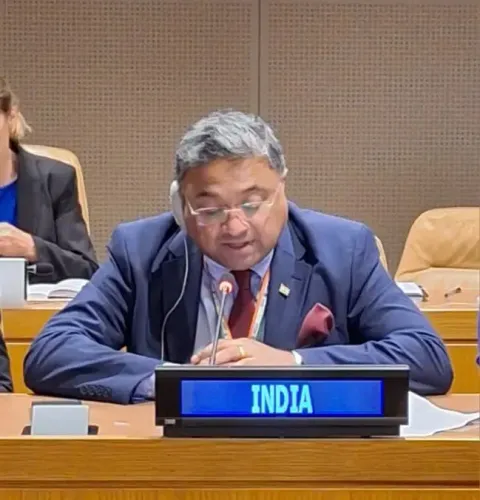
Earlier on the same day, George delivered India's national statement at the High-level segment of the UN General Assembly, convened to mark the 40th Anniversary of the Declaration on the Right to Development. He reaffirmed India's commitment to inclusive development, international cooperation, and multilateral reform, and voiced support for the early adoption of the Covenant on the Right to Development. MEA spokesperson Randhir Jaiswal confirmed the remarks in a post on X (formerly Twitter).
The Declaration on the Right to Development, adopted in 1986, proclaims the right to development as an inalienable human right, entitling every person and all peoples to participate in, contribute to, and enjoy economic, social, cultural, and political development. The United Nations noted that while the past four decades have seen significant progress — including lifting hundreds of millions out of extreme poverty and expanding access to education and healthcare — progress remains 'uneven' globally.
Why India's Stance Matters at G7
India is not a member of the G7, making its participation in the Development Ministers meeting notable — a reflection of New Delhi's growing influence in shaping global development norms. The 'Sarvodaya' framing is a deliberate philosophical counterpoint to Western-led aid architectures, signalling that India sees itself as a development partner and thought leader, not merely a beneficiary. This comes amid heightened global debates about debt distress in developing nations and the effectiveness of multilateral development bank (MDB) financing.
What Comes Next
India's advocacy for the early adoption of the Covenant on the Right to Development signals an intent to push for a binding international instrument on development rights — a process that could reshape obligations for both developed and developing nations. Diplomatic observers will watch whether India's 'Sarvodaya' framing gains traction as a formal normative contribution to post-2030 Agenda discussions.
Point of View
And the 'capabilities over capital' argument is a direct challenge to conditionality-heavy Western aid models. The push for an early binding Covenant on the Right to Development is higher-stakes than it appears — if adopted, it could create enforceable obligations on wealthy nations. Whether India can build a coalition around this framing, especially among African and South Asian nations, will be the real diplomatic test in the months ahead.
NationPress
24 Sept 2026
Frequently Asked Questions
What is 'Sarvodaya' and why did India raise it at the G7?
'Sarvodaya' is a Gandhian concept meaning 'welfare for all', emphasising inclusive uplift of every individual in society. India's MEA Secretary Sibi George invoked it at the G7 Development Ministers meeting in New York to articulate India's view that development must build domestic capabilities and resilience, not just rely on external financing.
What is the Covenant on the Right to Development that India supports?
The Covenant on the Right to Development is a proposed binding international treaty that would codify the right to development — currently a non-binding declaration adopted by the UN in 1986 — into enforceable obligations. India has called for its early adoption, a position reaffirmed at the 40th Anniversary High-level UNGA segment on 24 September 2026.
Why is India participating in a G7 Development Ministers meeting if it is not a G7 member?
India was invited to participate in the 2nd G7 Development Ministers meeting, held on the sidelines of UNGA 81 in New York, reflecting its growing role as a major voice on global development issues. India has used similar platforms to advocate for the Global South's interests in multilateral development frameworks.
What did India say at the UN General Assembly's Right to Development anniversary event?
MEA Secretary Sibi George delivered India's national statement at the High-level UNGA segment marking the 40th Anniversary of the Declaration on the Right to Development. He reaffirmed India's commitment to inclusive development, international cooperation, and multilateral reform, and supported the early adoption of a binding Covenant on the Right to Development.
What is the Declaration on the Right to Development?
Adopted by the United Nations in 1986, the Declaration on the Right to Development proclaims that every person and all peoples are entitled to participate in and benefit from economic, social, cultural, and political development. The UN has noted that while progress since 1986 has been significant, gains remain uneven across the world.