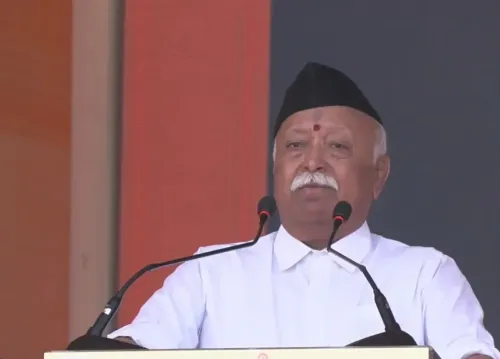
How Can We Define Our Priorities Without Knowing Our Identity? Dr. Manmohan Vaidya at Shabdotsav 2026
Synopsis
At Shabdotsav 2026, Dr. Manmohan Vaidya stressed the significance of understanding Indian identity for setting national priorities. He invoked historical perspectives, urging the youth to embrace their heritage and acknowledge the true essence of being Indian. His insights challenge us to rethink our cultural roots in a global context.
Key Takeaways
Importance of Identity: Understanding who we are is crucial for setting national priorities.
Swadeshi Mindset: Embracing our roots can guide India's direction in a globalized world.
Historical Context: Cultural influence transcends military power, as illustrated by India's historical impact on China.
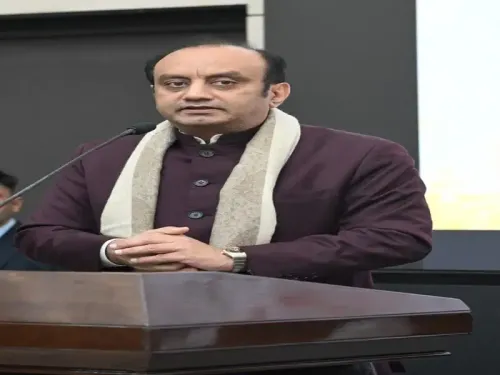
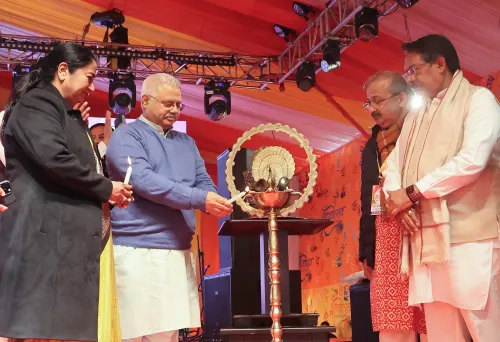
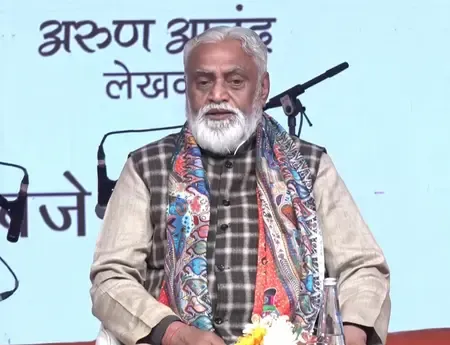
New Delhi, Jan 4 (NationPress) Dr. Manmohan Vaidya, the RSS joint general secretary (Sah Sarkaryawah), was a prominent speaker during the concluding discussions at the Delhi Shabdotsav 2026 event, hosted at the Major Dhyan Chand Stadium in the city.
Dr. Vaidya highlighted the necessity of fostering a Swadeshi mindset among individuals, particularly the youth, urging them to take pride in their cultural roots and heritage.
He expressed that every Indian must first comprehend our identity.
Referring to the book ‘Who Are We?’ by American political scientist Samuel Huntington, he stated, "The author mentions that as a nation and society, we must establish our identity. Without this understanding, we cannot define our priorities or future direction."
He further quoted Rabindranath Tagore, noting that in his work 'Swadeshi Samaj', he emphasized the importance of recognizing our true selves. He remarked, "No country in the world possesses two names. Each has only one, yet the debate in India continues: are we India or Bharat?"
Elaborating on the theme, he pointed out, "Next to us lies a country called Brahmadesh, which evolved to Burma and then Myanmar. It is now recognized solely by one name. Until we establish our identity, our foreign policy, defense policy, education policy, and economic policy cannot align with our vision."
"Even after achieving Independence, we have continued to emulate the West. Following the electoral results in 2014, The Guardian remarked that May 18, 2014, would be remembered as the day the British genuinely departed from India. Thus, to shape India’s future and fulfill our global role, we must first grasp our identity," he added.
The RSS joint general secretary also referred to a notable statement made by a Chinese ambassador in the United States, Hu Shih.
“The ambassador stated that without deploying a single soldier, India culturally and spiritually influenced China for 2,000 years. Therefore, understanding India is crucial,” he emphasized.
Point of View
I believe Dr. Vaidya's insights resonate profoundly in today's globalized world. Understanding our identity is paramount for shaping India's future direction. His call for a Swadeshi mindset encourages a return to our roots, fostering national pride while navigating international relations.
NationPress
9 Oct 2026
Frequently Asked Questions
What is the main theme of Dr. Vaidya's speech?
Dr. Vaidya emphasized the importance of understanding Indian identity to define national priorities.
Why is a Swadeshi mindset important?
A Swadeshi mindset fosters pride in cultural roots and helps shape a nation's direction in the global context.
Who is Dr. Manmohan Vaidya?
Dr. Vaidya is the joint general secretary of the RSS and a prominent speaker on national identity and cultural heritage.