What Does 'Shabdotsav 2026' Reveal About Indian Culture?
Synopsis
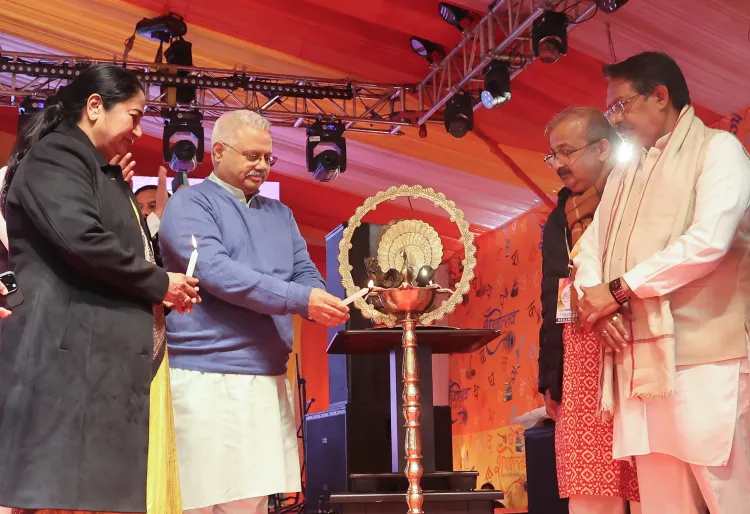
The vibrant cultural festival, 'Shabdotsav 2026', kicked off in New Delhi, featuring prominent political figures and celebrating the richness of Indian heritage. With a focus on reviving traditional values amidst challenges, the event underscores India's unity in diversity and its commitment to cultural empowerment.
Key Takeaways
Shabdotsav 2026 is a celebration of Indian culture and literature.
Prominent leaders attended the event, emphasizing its significance.
The festival aims to revive traditional values and art.
India's unity in diversity is highlighted through its rich languages.
Efforts are being made to combat ideological extremism.
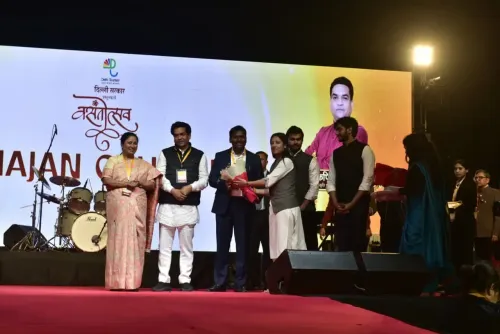
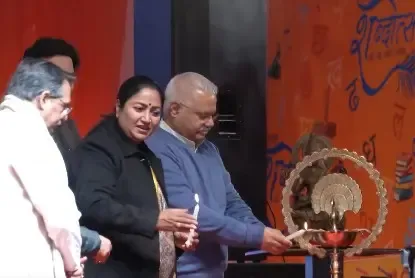
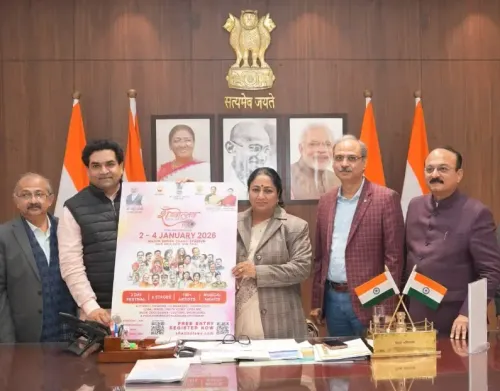
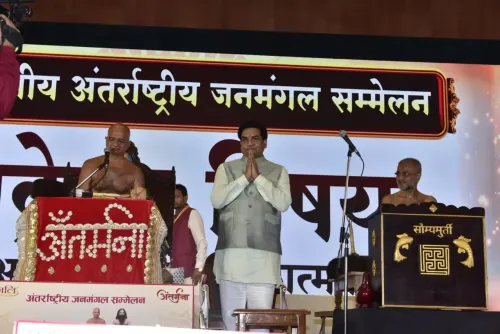
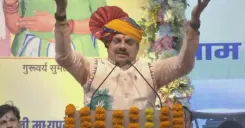
New Delhi, Jan 2 (NationPress) The three-day cultural and literary festival, ‘Shabdotsav 2026’, commenced in the national capital on Friday, graced by the presence of Union Minister of State (MoS) Harsh Malhotra, Delhi Chief Minister Rekha Gupta, cabinet minister Kapil Mishra, and several esteemed leaders affiliated with the Rashtriya Swayamsevak Sangh (RSS).
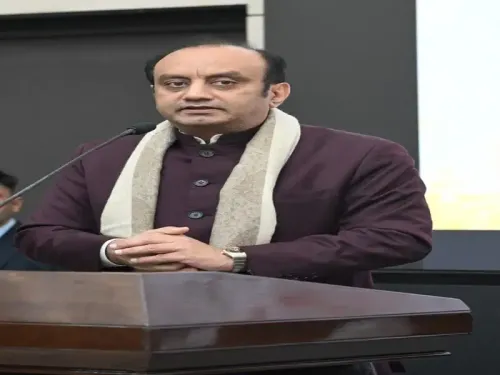
In his address, MoS Harsh Malhotra praised the literary event as a “microcosm of Indian culture” and reflected on the enduring values and traditions that define the world’s oldest and still thriving culture.
He emphasized that centuries ago, when India was a global leader, scholars from around the world traveled to Nalanda and Takshashila for their studies. He also mentioned that the Modi government has implemented significant reforms in the new Education policy, aimed at integrating Indian culture with education for the youth.
Moreover, the Union Minister highlighted that India is renowned for its unity in diversity, a phenomenon unparalleled globally.
“The country boasts over 340 vibrant languages and more than 1,600 dialects. This is a true reflection of India's rich cultural heritage,” he remarked.
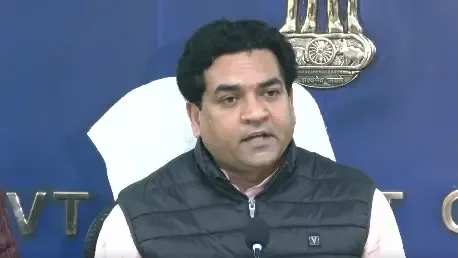
Delhi minister Kapil Mishra asserted that recent years have seen attempts to transform the capital into a “hub of ideological terrorism”.
“In Delhi, art and culture had either vanished or were heading in an anti-national and anti-religious direction. Today, under Chief Minister Rekha Gupta's leadership, efforts are underway to revive this,” he stated.
Minister Mishra noted that in the past 10 months, the Department of Art and Culture has organized several grand programs, unmatched during previous administrations.
“In this context, an event like 'Shabdotsav' is crucial. We are committed to liberating Delhi from Naxalite ideologies, false histories, and anti-religious sentiments. We will exert all possible efforts towards this goal,” he added.
He characterized the event as a ‘surgical strike’ against jihadi and Naxal ideological terrorism, asserting that while the decision to resort to violence may arise from external provocations, the original idea stems from the individual's mind.
Point of View
'Shabdotsav 2026' emerges as a vital platform to reinforce Indian cultural values and traditions. It reflects the government's commitment to cultural revival amid challenges and serves as a reminder of India's rich heritage and diversity.
NationPress
26 Oct 2026
Frequently Asked Questions
What is 'Shabdotsav 2026'?
Shabdotsav 2026 is a three-day cultural and literary festival held in New Delhi, celebrating the richness of Indian culture.
Who attended the event?
The event was attended by Union Minister of State Harsh Malhotra, Delhi Chief Minister Rekha Gupta, cabinet minister Kapil Mishra, and leaders from the Rashtriya Swayamsevak Sangh.
What did Harsh Malhotra say about Indian culture?
He described the festival as a microcosm of Indian culture and emphasized the importance of integrating cultural education in the youth.
What initiatives were mentioned to revive art and culture?
Minister Kapil Mishra highlighted efforts to restore art and culture in Delhi, aiming to counter anti-national ideologies.
What is the significance of the festival?
The festival aims to celebrate India's diversity and rich linguistic heritage while promoting cultural unity.