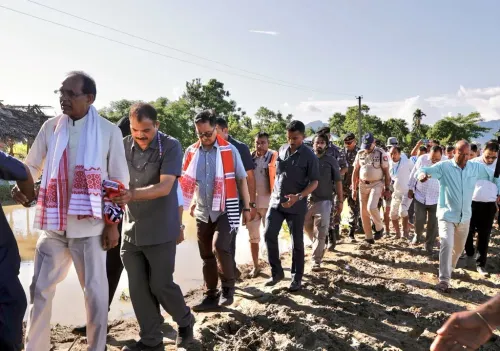
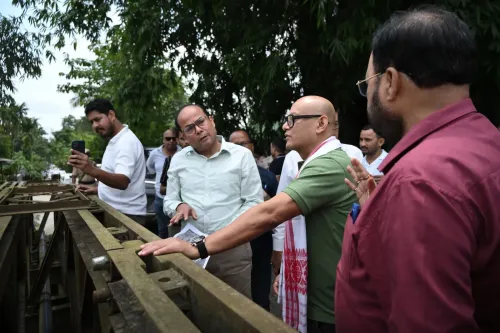
Union Ministers Visit Flood-Hit Assam, Pledge Centre's Full Support
Synopsis
Union Ministers Shivraj Singh Chouhan and Kiren Rijiju visited flood-affected Assam on 2 July 2026, pledging the Centre's full support. The visit underscores India's cooperative federal disaster framework as Brahmaputra flooding displaces lakhs and threatens kharif crops across the state.
Key Takeaways
Union Ministers Shivraj Singh Chouhan and Kiren Rijiju visited flood-hit Assam on 2 July 2026 .
The Centre pledged its 'full support' to Assam in managing the ongoing flood crisis.
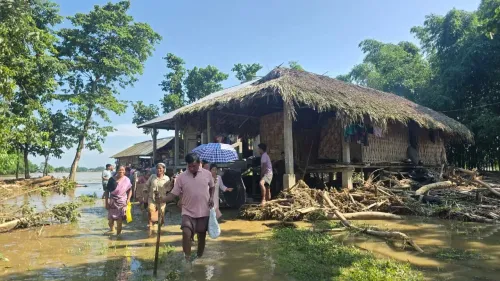
Assam's annual Brahmaputra floods displace lakhs of residents and damage kharif crops each monsoon season.
India's disaster response is governed by the Disaster Management Act, 2005 , which enables central funding and NDRF deployments to states.
The Flood Management Programme (2007) provides central support for anti-erosion and drainage infrastructure in flood-prone states.
Further announcements on central funds and relief operations are expected in the coming weeks as the monsoon season intensifies.
The Chief Minister's Office of Assam announced on Thursday, 2 July 2026 that Union Ministers Shivraj Singh Chouhan and Kiren Rijiju visited flood-affected areas of the state, with the Centre pledging its full support to Assam in managing the ongoing crisis.
Context
Assam faces severe flooding almost every monsoon season, driven by the overflowing Brahmaputra river and its tributaries. The annual cycle of inundation displaces lakhs of people, destroys standing crops, and strains state relief infrastructure. The arrival of two senior Union ministers signals the Centre's acknowledgement of the scale of this year's flood situation.
The CMO's post stated that the ministers 'offer Centre's full support' — an assurance that typically precedes the release of central funds and deployment of additional disaster-response resources to the affected state.
Policy Backdrop
India's disaster-response framework is anchored in the Disaster Management Act, 2005, which established the National Disaster Management Authority (NDMA) and created the National Disaster Response Fund (NDRF) to channel central assistance to calamity-hit states. The Flood Management Programme, launched in 2007, further supports states with anti-erosion works, embankment strengthening, and drainage improvements.
Under this cooperative federal model, ministerial visits serve a dual purpose: they allow rapid first-hand damage assessment and fast-track coordination between state authorities and central agencies, including the National Disaster Response Force teams already operational on the ground.
Stakeholders and Impact
The communities most directly affected are flood-hit families sheltering in relief camps and Assam's farming households, whose kharif crops face destruction from prolonged waterlogging. For these groups, a high-level central visit often translates into faster disbursal of ex-gratia payments and accelerated procurement of relief material.
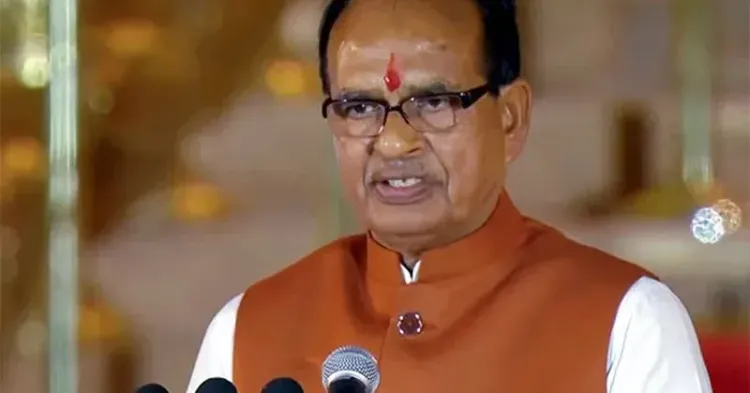
Shivraj Singh Chouhan, a senior BJP leader with extensive administrative experience as a former Chief Minister of Madhya Pradesh, brings familiarity with large-scale state disaster management. Kiren Rijiju, hailing from neighbouring Arunachal Pradesh, brings regional understanding of the Northeast's unique flood geography and infrastructure challenges.
The visit also carries political significance: visible central engagement reassures the state government and affected populations that New Delhi is treating the crisis as a national priority rather than a state-level administrative matter.
What's Next
Following such ministerial visits, the standard sequence involves a formal damage assessment report submitted to the Centre, followed by the release of funds from the State Disaster Response Fund or additional central grants. Announcements on NDRF deployments, relief camp operations, and longer-term flood-mitigation infrastructure investment are expected in the coming weeks.
With the monsoon season still in its early phase, Assam's administration and central agencies will need to sustain coordinated operations through August and September — historically the peak months for Brahmaputra flooding. The outcome of this visit may set the tone for Centre-state disaster cooperation across the Northeast for the remainder of the season.
Point of View
Visible solidarity during a crisis serves both administrative and political functions — accelerating relief pipelines while reinforcing the party's governance narrative in a sensitive border state. The choice of Shivraj Chouhan, a figure with mass administrative credibility, alongside Rijiju, a Northeast insider, signals that the Centre is calibrating its outreach carefully. Whether this visit translates into structural flood-mitigation investment — rather than routine relief — will be the real test of its long-term policy intent.
NationPress
2 Jul 2026
Frequently Asked Questions
Why did Union ministers visit Assam in July 2026?
Union Ministers Shivraj Singh Chouhan and Kiren Rijiju visited flood-affected Assam on 2 July 2026 to assess the damage caused by monsoon flooding and to convey the Central Government's full support to the state administration.
Which areas of Assam are affected by floods in 2026?
The post from the Chief Minister's Office of Assam confirms flood-hit conditions in the state, consistent with the annual pattern of Brahmaputra river flooding that affects multiple districts every monsoon season. Specific district-level details were not provided in the official post.
What central funds are available for Assam flood relief?
Under the Disaster Management Act 2005, Assam can access the National Disaster Response Fund and State Disaster Response Fund for relief operations. The Flood Management Programme also provides central grants for anti-erosion and drainage infrastructure.
Who is Shivraj Chouhan and what is his role in the Assam flood visit?
Shivraj Singh Chouhan is a senior BJP leader and Union Minister who previously served as Chief Minister of Madhya Pradesh. He visited flood-hit Assam on 2 July 2026 alongside Kiren Rijiju to assess the situation and pledge central support.
What happens after a central minister visits a flood-hit state in India?
Typically, a ministerial visit is followed by a formal damage assessment report, release of central funds from disaster relief reserves, and decisions on additional NDRF deployments and relief camp support — all coordinated under the Disaster Management Act 2005 framework.