UP AAP women's wing chief, BSP leader join Congress ahead of state polls
Synopsis
With Uttar Pradesh Assembly elections on the horizon, the Congress has inducted AAP’s state women’s wing chief and a former BSP candidate, while signalling a Brahmin outreach strategy it last tried — and failed with — in 2017. The party won just 7 seats that year contesting 114. Whether history repeats itself depends on what the Congress does differently this time.
Key Takeaways
Neelam Yadav , Uttar Pradesh president of AAP ’s women’s wing, joined the Congress on 8 October 2026 in Lucknow .
Former BSP candidate from Ghaziabad , Parmanand Garg , and social worker Haji Imamuddin Ansari from Bijnor were among other new entrants.
UP Congress in-charge Rajendra Pal Gautam formally inducted the leaders and alleged ‘dictatorship’ conditions in the country.
UP Congress president Aradhana Misra Mona hinted at a major organisational shake-up with a visible Brahmin outreach component.
A similar Brahmin-focused strategy ahead of the 2017 UP elections yielded only 7 seats for Congress out of 114 contested.
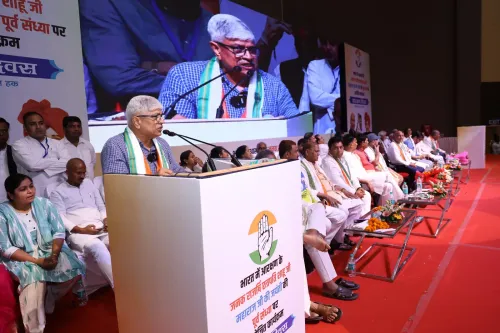
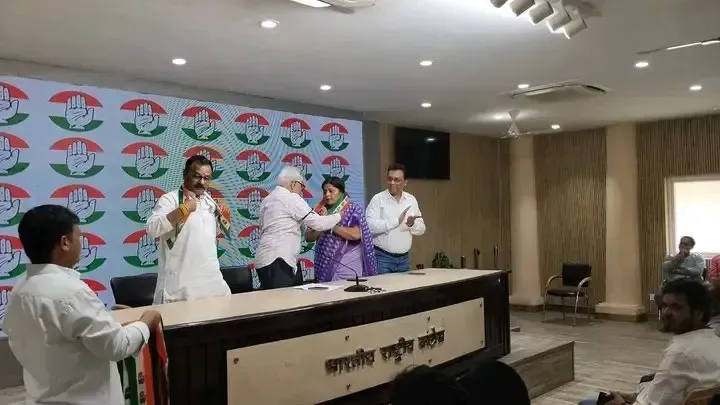
Lucknow, 8 October 2026: Several leaders and social workers from rival political parties formally joined the Indian National Congress in Uttar Pradesh on Thursday, in what the party described as a sign of growing momentum ahead of the state Assembly elections. The inductions were overseen by Uttar Pradesh Congress in-charge Rajendra Pal Gautam at a formal party event.
Key Entrants and Who They Are
Among those who switched allegiances was Neelam Yadav, the Uttar Pradesh president of the Aam Aadmi Party (AAP)'s women's wing and a former national executive member of the party. She was joined by Parmanand Garg, a former Bahujan Samaj Party (BSP) candidate from Ghaziabad, retired Government of India official Durga Prasad, and Haji Imamuddin Ansari, a social worker and representative of the weavers' community from Noorpur in Bijnor district.
What the Congress Said
Welcoming the new members, Gautam claimed that people were joining the Congress in large numbers daily, attributing the trend to what he described as public frustration with the “misrule” of the Bharatiya Janata Party (BJP). He stated that the Congress, under the leadership of party president Mallikarjun Kharge and Leader of the Opposition in the Lok Sabha Rahul Gandhi, alongside the INDIA bloc, was working to protect the country’s democracy and Constitution.
Gautam also alleged that the country was experiencing a situation akin to “dictatorship and an undeclared Emergency.” Referring to protests at Jantar Mantar, he alleged that police directives requiring citizens to submit applications 10 days in advance for public demonstrations violated fundamental rights and the constitutional guarantee of freedom of speech and expression.
Organisational Shake-Up and Brahmin Outreach Signal
The joinings come a day after Uttar Pradesh Congress president Aradhana Misra Mona hinted at a major organisational restructuring ahead of next year’s Assembly elections, with what observers noted as an evident Brahmin outreach component. This is not the first time the Congress has attempted such a play in Uttar Pradesh.
Notably, ahead of the 2017 Uttar Pradesh Assembly elections, the Congress had reportedly brought in political strategist Prashant Kishor to architect its revival. Reports indicated that Kishor favoured projecting a prominent Brahmin face as the party’s Chief Ministerial candidate, reportedly settling on Sheila Dikshit — a three-term Chief Minister of Delhi and daughter-in-law of veteran Uttar Pradesh Congress leader Uma Shankar Dikshit — on the basis of her perceived appeal among upper-caste voters.
The strategy was reportedly premised on the estimate that Brahmins constitute around 10 to 12 per cent of Uttar Pradesh’s electorate and remained one of the few communities where the Congress could plausibly recover ground. The experiment, however, did not yield results: the Congress won only 7 seats in that election, having contested 114 out of 403 Assembly constituencies.
What It Means for the Road Ahead
Whether the current wave of joinings signals a meaningful shift in Uttar Pradesh’s deeply fractured political landscape or remains optics-driven consolidation will depend on the organisational depth these entrants bring to the ground. The Congress has remained a marginal force in the state for over three decades, and its ability to translate high-profile inductions into vote share has historically been limited. All eyes will now be on the shape of the party’s candidate list and alliance arithmetic as the election calendar approaches.
Point of View
And the party returned with just 7 seats from 114 contested. What is missing from the current narrative is any indication of what structurally changes this time — in candidate selection, booth-level organisation, or alliance strategy. Without that, these joinings risk being more performative than transformative.
NationPress
8 Oct 2026
Frequently Asked Questions
Who joined the Congress in Uttar Pradesh on 8 October 2026?
Among those who joined were Neelam Yadav, Uttar Pradesh president of AAP’s women’s wing; Parmanand Garg, a former BSP candidate from Ghaziabad; retired Government of India official Durga Prasad; and Haji Imamuddin Ansari, a social worker representing the weavers’ community from Noorpur in Bijnor. UP Congress in-charge Rajendra Pal Gautam formally inducted them.
Why are these party joinings significant ahead of UP elections?
The inductions signal the Congress’s attempt to consolidate a cross-community coalition ahead of the Uttar Pradesh Assembly elections. The party is simultaneously hinting at a Brahmin outreach strategy, a move that echoes a similar play in 2017 which yielded only 7 seats from 114 contests.
What is the Congress’s Brahmin outreach strategy in Uttar Pradesh?
UP Congress president Aradhana Misra Mona hinted at an organisational shake-up with a focus on Brahmin voters, who reportedly constitute 10 to 12 per cent of the state’s electorate. A similar strategy was attempted in 2017 with Sheila Dikshit as a potential Chief Ministerial face, but failed to deliver meaningful results.
What did UP Congress in-charge Rajendra Pal Gautam say at the event?
Gautam said people were joining the Congress in large numbers due to frustration with the BJP’s ‘misrule’. He also alleged that the country was facing a situation akin to ‘dictatorship and an undeclared Emergency’, and criticised police directives requiring 10-day advance applications for protests at Jantar Mantar.
How did Congress perform in the 2017 Uttar Pradesh Assembly elections?
The Congress won only 7 seats in the 2017 UP Assembly elections, having contested 114 out of 403 constituencies. This came despite a pre-election strategy reportedly shaped by political strategist Prashant Kishor, which had centred on a Brahmin outreach led by Sheila Dikshit.