US sees India as 'critical power' after INDOPACOM-to-PACOM shift

Synopsis
A senior Pentagon official has gone on record to say the US sees India as a 'critical power' — and that renaming INDOPACOM back to PACOM is about Western Pacific military focus, not a demotion of India. The distinction matters: it's Washington's clearest public signal yet that the command reshuffle is a China-deterrence move, not an India pivot.
Key Takeaways
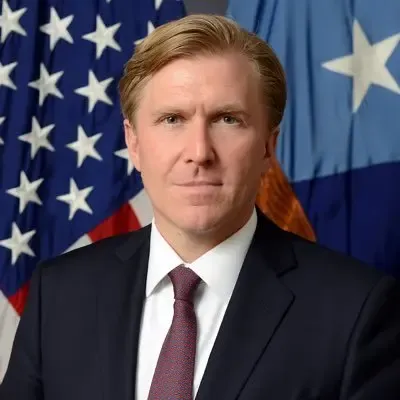
Under Secretary of Defense Elbridge A.
Colby called India a 'critical power' on 14 August , rejecting any reading of the PACOM rename as a downgrade.
The shift from INDOPACOM to PACOM reflects US military focus on the first island chain and Western Pacific , per Colby.
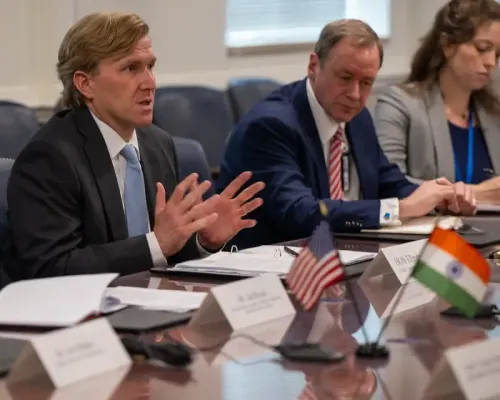
Colby cited his March 2025 visit to India and other senior US officials' visits as evidence of sustained bilateral engagement.
Washington is not asking regional partners to 'choose sides' — it is seeking access, training, intelligence sharing, and maritime cooperation.
The US wants partners to strengthen their own defence industries, measured by contribution to deterrence rather than political objectives.
The United States views India as a 'critical power' and is seeking a deeper strategic partnership with New Delhi, a senior Pentagon official said on 14 August, pushing back firmly against suggestions that renaming Indo-Pacific Command (INDOPACOM) back to Pacific Command (PACOM) signals a reduced US commitment to India or the Indian Ocean region.
What Colby Said
Under Secretary of Defense for Policy Elbridge A. Colby addressed the name change during an on-the-record virtual briefing organised by the State Department's Asia Pacific Media Hub, speaking from a visit that included stops in the Philippines, Indonesia, Thailand, and Cambodia. He was unequivocal: 'This is not in any way a sort of denigration of the importance of the Indian Ocean area or of India itself,' Colby said.
He described India as central to US strategic thinking. 'We really see India as a critical power, and the Indian Ocean, of course, is very important,' he said. 'If anything, we really see India as a vital relationship where there's a natural partnership.'
Why PACOM, Not INDOPACOM
Colby explained that the command rename reflects a military prioritisation consistent with the US National Security Strategy and National Defense Strategy, both of which concentrate resources on the first island chain — the arc stretching from Japan through Taiwan and the Philippines toward parts of Southeast Asia. 'The strategic focus of the United States military is really on the first island chain... the Western Pacific area, obviously stretching into Southeast Asia,' he said.
Colby also noted that regional geographic terminology carries different meanings in different contexts. 'Indo-Pacific has one meaning, the Pacific has another, the Asia Pacific has a third,' he said, suggesting the label shift is partly a matter of lexicon rather than a recalibration of relationships.
India-US Ties: Areas of Alignment and Divergence
Colby acknowledged that the two countries would not always see eye to eye, but framed disagreement as compatible with a strong bilateral relationship. 'Let's look where our interests align. We're going to have areas where we don't always agree. But we're looking for a stronger India,' he said.
He cited his own visit to India in March and subsequent visits by other senior Trump administration officials as evidence of sustained high-level engagement. This comes amid broader US-India defence deepening under the Initiative on Critical and Emerging Technology (iCET) and expanding Quad cooperation.
Washington's Broader Regional Approach
Colby characterised the Trump administration's Indo-Pacific posture as one grounded in military strength, practical cooperation, and respect for national sovereignty — and explicitly rejected any binary framing. 'We're not asking for fealty; we're asking for practical things: access, collaboration, these kinds of things,' he said.
He said the US wants regional partners to build up their own defence industries and military capabilities, with the benchmark being their contribution to deterrence — not domestic political or industrial objectives. Notably, this framing aligns with Washington's push for allies to take on greater burden-sharing as US strategic attention concentrates on the Western Pacific.
Point of View
During a Southeast Asia tour, suggesting Washington is acutely aware that the INDOPACOM-to-PACOM rename landed badly in New Delhi. Colby's framing — that the rename is about the first island chain, not about India — is strategically coherent, but it does not resolve the underlying tension: India has never been part of the Pacific Command's core geography, and the name change inadvertently makes that visible. The deeper question is whether US-India defence convergence can survive a period where Washington's primary military theatre is the Taiwan Strait, not the Indian Ocean. India's own strategic autonomy doctrine means it will not be a formal ally; whether it can be a reliable partner in a China-focused US security architecture remains the central unresolved question.
NationPress
29 Sept 2026
Frequently Asked Questions
Why did the US rename INDOPACOM to PACOM, and what does it mean for India?
The US renamed Indo-Pacific Command back to Pacific Command to reflect its military strategic focus on the first island chain — the arc from Japan through Taiwan and the Philippines. Senior Pentagon official Elbridge Colby has stated explicitly that the change does not diminish US commitment to India or the Indian Ocean.
What did Pentagon official Elbridge Colby say about India?
Colby described India as a 'critical power' and said the US sees a 'natural partnership' with New Delhi. Speaking at a State Department briefing on 14 August, he said Washington is looking for a stronger India and that the two countries' occasional disagreements do not undermine the relationship.
What is the first island chain and why does it matter?
The first island chain is the arc of islands running from Japan through Taiwan and the Philippines toward Southeast Asia. It is the central theatre of US defence planning in the Western Pacific, primarily in the context of deterring Chinese military expansion.
Is the US asking India to choose sides against China?
No, according to Colby. He said Washington is not asking regional partners for 'fealty' or to choose sides, but is instead seeking practical cooperation — including access, training, intelligence sharing, surveillance, and maritime capabilities.
How does this affect US-India defence cooperation?
Colby's remarks suggest no change in the trajectory of US-India defence ties. He cited his March visit to India and multiple senior US official visits as evidence of continued engagement, consistent with existing frameworks such as iCET and the Quad.