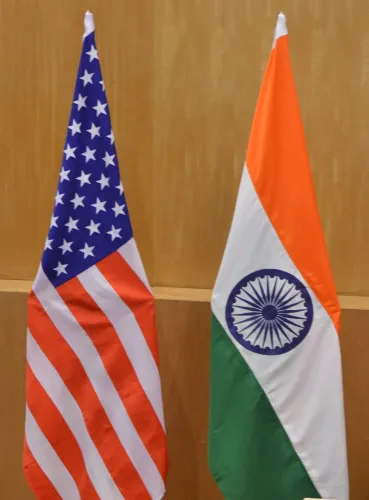
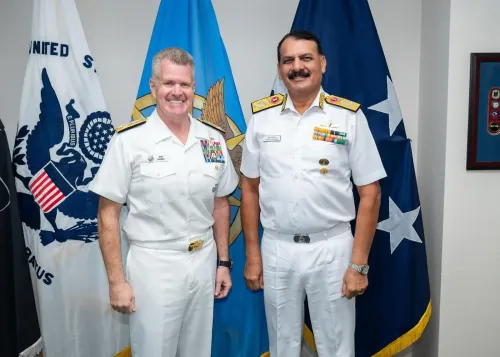
Dropping 'Indo' from Pacific Command risks US strategy in Indian Ocean: Report
Synopsis
A report in The National Interest argues that renaming USINDOPACOM back to 'US Pacific Command' is not bureaucratic housekeeping — it is a symbolic demotion of India in American strategic thinking. At a time when the Indian Ocean's chokepoints and energy corridors are more contested than ever, dropping the 'Indo' could signal exactly the wrong message to the world's most consequential swing power.
Key Takeaways
The National Interest has warned that the US decision to rename USINDOPACOM back to US Pacific Command carries significant strategic implications.
The report argues that removing 'Indo' risks signalling that India 's role in US strategy is 'secondary or optional.' The Indian Ocean — including chokepoints like the Strait of Hormuz , Bab el-Mandeb , and Strait of Malacca — lies within India's broader strategic landscape.
The 'Indo-Pacific' concept was built on recognition that the Indian and Pacific Oceans form a single interconnected strategic theatre, with India at its centre.
The report calls the potential marginalisation of India in US planning 'a mistake neither Washington nor the wider international order can afford to make.'
A prominent American foreign policy journal has argued that the United States' decision to rename US Indo-Pacific Command (USINDOPACOM) back to its former designation — US Pacific Command — carries consequences far beyond bureaucratic routine, potentially signalling a strategic retreat from one of Washington's most consequential geopolitical frameworks in recent decades.
The analysis, published in The National Interest, contends that removing the word 'Indo' from the command's title risks marginalising India's role in American strategic planning at a moment when the Indian Ocean Region (IOR) is growing in geopolitical weight, not receding from it.
Why the Name Change Matters
According to the report, names in international politics are rarely administrative trivialities — they function as declarations of priority, geography, and intent. 'The decision of the United States to restore the US Indo-Pacific Command to its former designation as the US Pacific Command may appear, at first glance, to be little more than bureaucratic housekeeping. Governments rename institutions all the time. Acronyms change. Organisational charts evolve. Yet in international politics, symbols often reveal deeper strategic thinking,' the report stated.
The inclusion of 'Indo' in the Indo-Pacific concept, the journal argues, was never merely a cartographic label. It reflected Washington's recognition that India had become indispensable to Asia's evolving security architecture and that the Indian and Pacific Oceans had fused into a single interconnected strategic theatre.
India's Geographic and Strategic Centrality
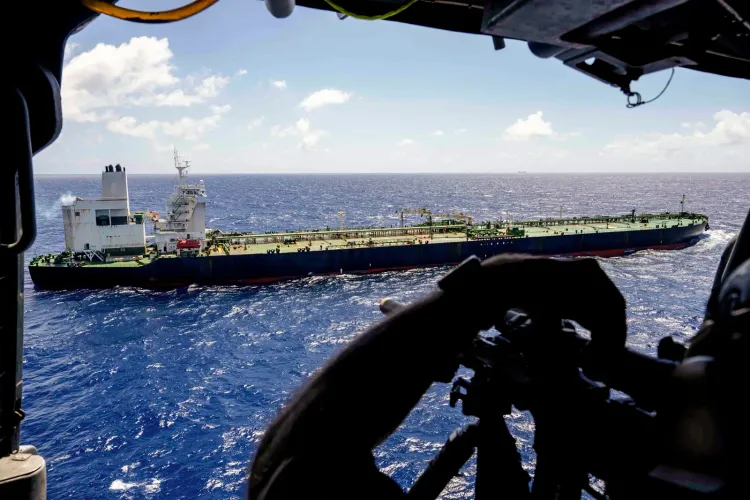
The report underscores that the Indian Ocean serves as a vital artery for global trade, energy supplies, and maritime commerce. Critical chokepoints — the Strait of Hormuz, Bab el-Mandeb, and the Strait of Malacca — all fall within India's broader strategic landscape. Any durable maritime security framework, the analysis argues, will inevitably require India's active participation.
'To remove the 'Indo' today is to risk sending a message that India's role in American strategy is somehow secondary or optional. That would be a profound strategic mistake,' the report warned. This comes amid a broader global debate about the durability of US alliance frameworks as Washington recalibrates its commitments across multiple theatres.
Broader Questions About US Strategic Vision
The report argues that the renaming debate goes well beyond terminology, raising fundamental questions about whether the United States retains the long-term strategic vision required to navigate a rapidly shifting world order. It questions how Washington views the emerging balance of power in Asia, the future of its relationship with India, and the role of partnerships in sustaining a stable international order.
Notably, Asia's future, the journal contends, will not be determined solely in the Pacific. It will be shaped equally by developments in the Indian Ocean — through maritime chokepoints, energy corridors, technological networks, and partnerships stretching from East Africa to Southeast Asia.
What the Report Concludes
'India sits at the center of this emerging strategic geography. Recognising that reality gave birth to the Indo-Pacific concept in the first place. Forgetting the 'Indo' risks forgetting the future. And that is a mistake neither Washington nor the wider international order can afford to make,' the report concluded.
The analysis adds to a growing chorus of strategic voices cautioning that symbolic shifts in US defence posture can carry outsized consequences for alliance credibility — particularly at a time when China's maritime expansion in both the Indian and Pacific Oceans continues to accelerate.
Point of View
But The National Interest's analysis correctly identifies the signal it sends: that India's centrality to US strategic planning is negotiable. That is a dangerous message to transmit at a moment when Beijing is expanding its naval footprint across both the Indian and Pacific Oceans simultaneously. The Indo-Pacific framework was Washington's most coherent answer to China's maritime ambitions — and India was its load-bearing pillar. Hollowing out the concept symbolically, even if operational ties remain intact, gives adversaries a narrative and allies a reason to hedge. Washington should be aware that in geopolitics, perception often becomes reality faster than policy can correct it.
NationPress
26 Sept 2026
Frequently Asked Questions
Why is the US renaming Indo-Pacific Command back to Pacific Command?
The US has decided to restore the command's former designation as US Pacific Command, dropping the 'Indo' prefix. The reasons cited have been largely administrative, but analysts and foreign policy journals argue the move carries significant strategic symbolism beyond routine bureaucratic change.
What does removing 'Indo' from Indo-Pacific Command mean for India?
According to a report in The National Interest, it risks signalling that India's role in US strategy is secondary or optional — a message that could undermine the Indo-US strategic partnership at a critical juncture. The report calls this 'a profound strategic mistake.'
Why is the Indian Ocean strategically important to the US?
The Indian Ocean is a vital artery for global trade, energy supplies, and maritime commerce. Key chokepoints — the Strait of Hormuz, Bab el-Mandeb, and the Strait of Malacca — all fall within India's broader strategic landscape, making India's participation essential to any durable maritime security framework.
What was the significance of the Indo-Pacific concept?
The Indo-Pacific concept recognised that the Indian and Pacific Oceans had evolved into a single interconnected strategic theatre, with India playing a pivotal role in maintaining the regional balance. Its creation marked Washington's acknowledgement that India had become indispensable to Asia's security architecture.
Who published the report criticising the US command renaming?
The report was published in The National Interest, an American foreign policy magazine, on 27 June. It argued that the renaming debate raises fundamental questions about US long-term strategic vision in a rapidly changing world order.