India indispensable to US Indo-Pacific strategy, says IIIPS report
Synopsis
A European think-tank's analysis cuts through the diplomatic noise: the India-US partnership is structurally sound, even as Trump-era transactionalism — tariffs, map controversies, Pakistan outreach — rattles New Delhi. With 95% of India's trade transiting the Indian Ocean, the report argues geography, not goodwill, is the real glue holding the relationship together.
Key Takeaways
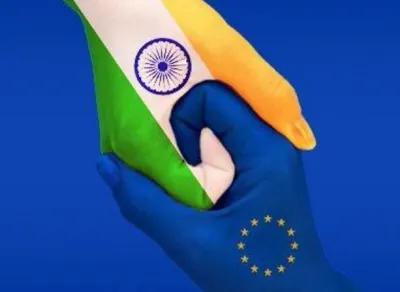
The IIIPS report, published 15 July , concludes India remains indispensable to Washington's Indo-Pacific strategy .
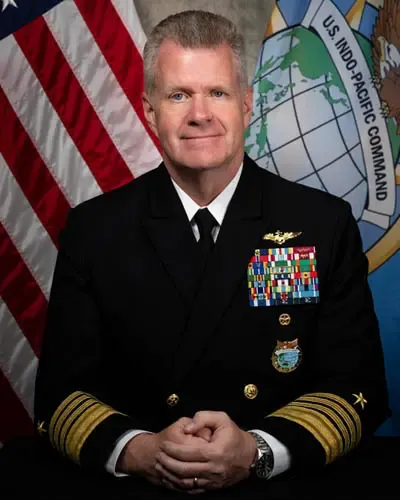
Recent friction — renewed tariffs, removal of 'Indo' from the US Indo-Pacific Command , and outreach to Islamabad — reflects President Trump's transactional style, not structural divergence.
The Indian Ocean carries nearly 95% of India's trade by volume, making maritime security an economic necessity, not just a strategic preference.
China's assertiveness reinforces the India-US convergence but is not its primary driver, according to the report.
The report describes current strains as a 'temporary political detour' and calls on Washington to recognise the enduring strategic reality.
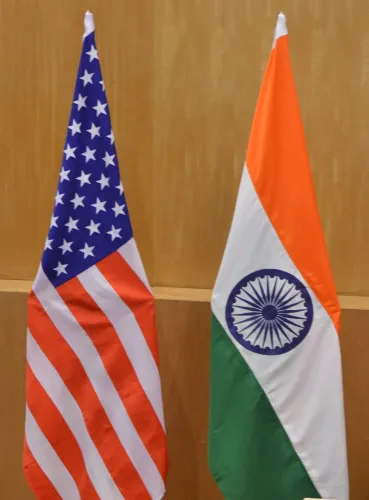
A new report by the Italian Institute for International Political Studies (IIIPS) has concluded that India remains indispensable to Washington's Indo-Pacific strategy, arguing that recent strains in the India-US relationship reflect a personality-driven diplomatic style rather than any fundamental shift in strategic alignment. The report, published on 15 July, underscores the Indian Ocean as the enduring bedrock of bilateral ties.
Current Strains and Their Causes
The IIIPS report catalogues a series of recent US decisions that have generated unease in New Delhi: renewed tariffs on India, the symbolic removal of 'Indo' from references to the US Indo-Pacific Command, an official map depicting Pakistan-occupied Kashmir as part of Pakistan, and renewed outreach to Islamabad. Together, these moves have prompted questions about whether one of the world's most consequential strategic partnerships is losing momentum.
However, the report cautions against overstating the significance of these signals. 'Such an assessment risks confusing political disruption with strategic reality,' it notes, adding that 'the current strains are less the product of structural divergence than of a personality-driven and transactional approach to foreign policy.'
Trump's Transactional Style vs. Long-Term Interests
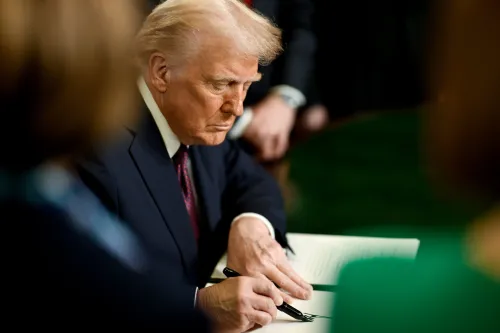
The report attributes the friction to US President Donald Trump's preference for 'short-term bargaining, symbolic signalling, and bilateral leverage' — a style it distinguishes sharply from any genuine revaluation of America's long-term strategic interests in the region. 'Personal leadership styles can alter diplomatic atmospherics, but they cannot erase geopolitical realities,' the report states.
Notably, the IIIPS analysis points to the durability of institutional foundations: from the civil nuclear agreement to India's designation as a Major Defence Partner and the conclusion of foundational defence agreements, successive US administrations have consistently recognised India's unique strategic role — regardless of who occupied the White House.
The Indian Ocean: Strategic Bedrock
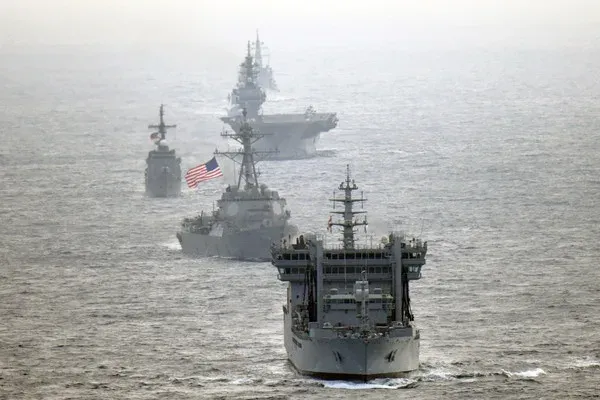
Central to the report's argument is the primacy of the Indian Ocean in shaping both countries' interests. For the United States, the ocean remains critical to maintaining military presence, safeguarding energy supplies, and securing global trade routes — from Diego Garcia to the Strait of Hormuz.
For India, the stakes are even more immediate: the Indian Ocean carries nearly 95 per cent of the country's trade by volume and the bulk of its energy imports. 'Ensuring secure Sea Lines of Communication is therefore not simply a maritime priority but an economic necessity,' the report observes. Both Washington and New Delhi, it argues, seek an open, stable, and rules-based Indian Ocean where no single power can dominate the maritime commons.
China's Role: Reinforcing, Not Driving
The report is careful to frame China's growing assertiveness as a factor that reinforces the India-US convergence rather than the primary driver of it. The partnership, it argues, is anchored in shared interests spanning maritime security, economic resilience, and technological advancement — interests that predate and transcend the current geopolitical competition with Beijing.
Outlook: A Temporary Detour
The IIIPS report concludes on a forward-looking note, describing the current tensions as 'a temporary political detour' rather than the beginning of strategic separation. 'The sooner Washington recognises that reality, the stronger and more enduring the partnership will become,' it states. Analysts will be watching whether the two sides move to recalibrate ties ahead of upcoming multilateral engagements in the Indo-Pacific.
Point of View
Regardless of intent. The deeper question the report sidesteps is whether India can afford to bank on structural logic while Washington's short-term bargaining actively empowers Islamabad. The Indian Ocean may be the bedrock, but bedrock can be undermined if the political superstructure shifts long enough.
NationPress
14 Oct 2026
Frequently Asked Questions
What does the IIIPS report say about India-US relations?
The Italian Institute for International Political Studies (IIIPS) report, published on 15 July, concludes that India remains indispensable to Washington's Indo-Pacific strategy. It argues that current tensions stem from President Trump's transactional foreign policy style rather than any fundamental strategic divergence between the two countries.
Why has the India-US relationship faced recent turbulence?
The report cites several US decisions that have unsettled New Delhi: renewed tariffs on India, the removal of 'Indo' from references to the US Indo-Pacific Command, an official map showing Pakistan-occupied Kashmir as part of Pakistan, and renewed US outreach to Islamabad. The IIIPS frames these as symptoms of a personality-driven approach to diplomacy rather than a strategic reorientation.
Why is the Indian Ocean central to India-US ties?
The Indian Ocean carries nearly 95% of India's trade by volume and the bulk of its energy imports, making secure Sea Lines of Communication an economic necessity for New Delhi. For Washington, the ocean is critical to military presence and global trade route security. The report argues this shared maritime interest is the real strategic glue of the partnership.
Does China drive the India-US partnership?
According to the IIIPS report, China's assertiveness reinforces the India-US convergence but is not its primary driver. The partnership is grounded in broader shared interests — maritime security, economic resilience, and technological advancement — that exist independently of competition with Beijing.
What is the outlook for India-US relations, according to the report?
The report describes the current strains as a 'temporary political detour' rather than the start of strategic separation. It urges Washington to recognise the enduring geopolitical logic of the partnership, suggesting ties will strengthen once the transactional phase of US foreign policy subsides.