Uttar Pradesh's Commitment to Weavers: Yogi Adityanath's Vision for Sustainability
Synopsis
On April 9, Uttar Pradesh CM Yogi Adityanath reiterated the government's commitment to enhancing the income and dignity of weavers, stressing the need for a holistic strategy to tackle sector challenges. This approach aims to foster sustainability and empower traditional artisans.
Key Takeaways
Income and dignity of weavers are top priorities for the government.
A coordinated approach is essential to tackle sector challenges.
Uttar Pradesh ranks sixth nationally in the number of weavers.
The state is a major producer of various handloom products.
Cluster development will enhance production and market access.
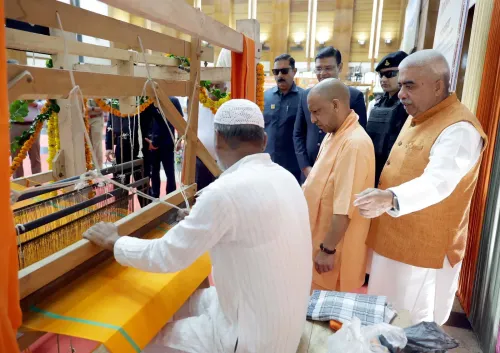
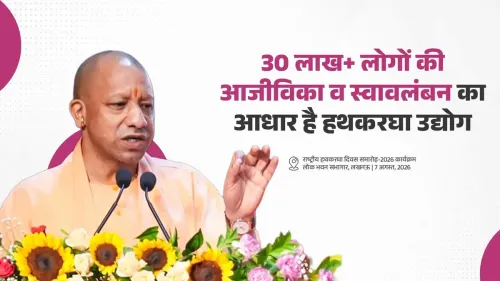
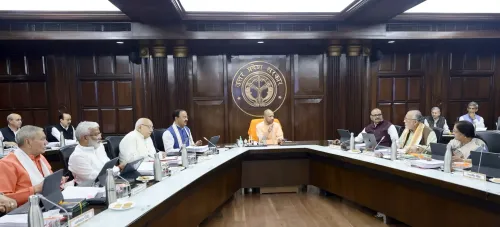
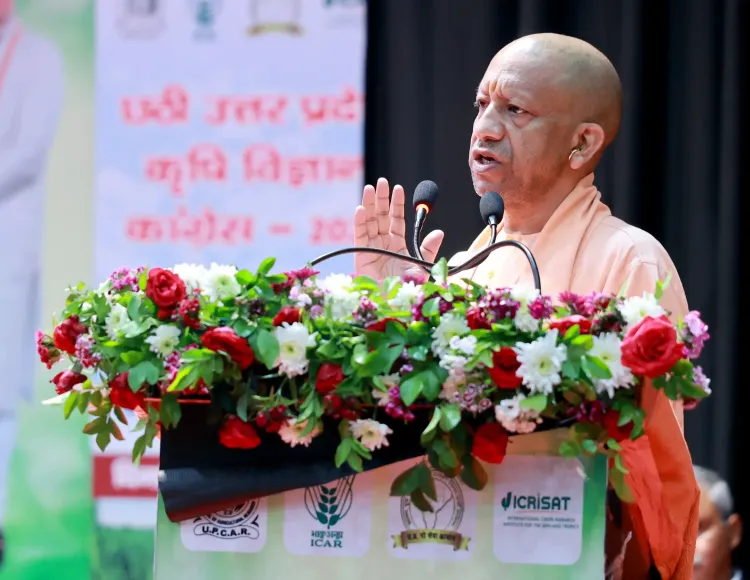
Lucknow, April 9 (NationPress) The Chief Minister of Uttar Pradesh, Yogi Adityanath, emphasized on Thursday that the income, dignity, and long-term sustainability of weavers are critical priorities for the state government, highlighting the necessity for a coordinated strategy to tackle the challenges faced by this vital sector.
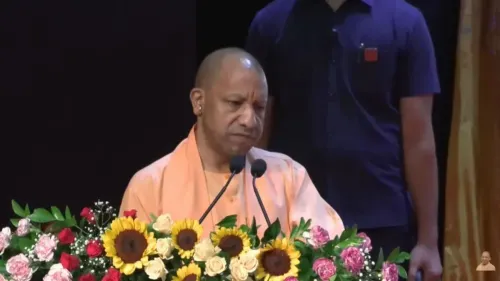
While leading a review session for the Handloom Department, Adityanath remarked, "Weavers are not merely transmitters of heritage but also a fundamental component of the state’s economy. Hence, ensuring their income, dignity, and stability in their livelihoods is a paramount concern for the government."
He acknowledged the various difficulties currently being encountered by weavers, including the escalating costs of raw materials, a deficiency in modern design and technology, and restricted market access.
"These issues cannot be addressed solely through existing schemes. A strong, results-driven, and cluster-oriented framework must be established," he asserted, instructing officials to devise a practical action plan centered on cluster development.
During the session, it was revealed that approximately 1.99 lakh weavers are active in the sector within Uttar Pradesh, which ranks sixth in the country.
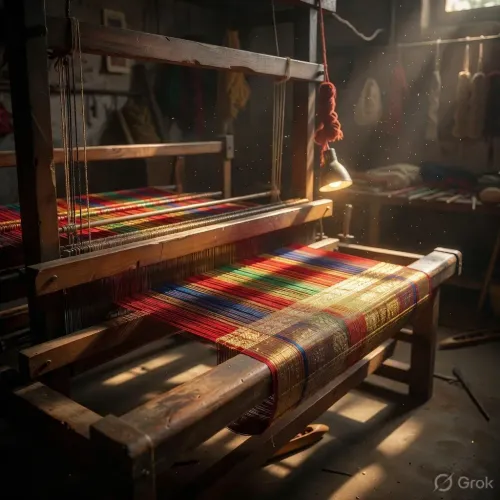
The state excels in producing carpets, durries, and mats, and also maintains a robust presence in bedsheets, furnishings, and blankets.
In the fiscal year 2024-25, India’s overall handloom exports reached Rs 1,178.93 crore, with Uttar Pradesh contributing Rs 109.40 crore, which represents around 9.27 percent.
Adityanath stressed the importance of pinpointing regions dominated by weavers and developing clusters that encompass production, quality assurance, and marketing. He proposed that these clusters adopt a value chain model, extending beyond mere production to include design, branding, packaging, and market accessibility.
The meeting also focused on the selection of clusters, conducting baseline surveys, and preparing Detailed Project Reports (DPRs) along with implementation and monitoring strategies. The Chief Minister proposed organizing a limited number of weavers into registered units within each cluster to promote collective production and marketing, while also integrating them with modern technology, advanced tools, and skill enhancement programs.
By underscoring the significance of design and market alignment, Yogi Adityanath called for the effective execution of mechanisms like designer-cum-marketing executives and design houses or export agencies to improve product quality and broaden market outreach.
He also advocated for increased utilization of digital platforms, e-commerce, and branding initiatives to directly connect weavers with consumers.
In addressing the concerns of powerloom weavers, the Chief Minister directed the Handloom Department and Power Corporation to collaboratively formulate an action plan to lower electricity costs. He further highlighted the promotion of solar energy as a sustainable approach to minimize power expenses and deliver long-term relief.
Reiterating the significance of the weaving community, he stated that a balanced, transparent, and practical policy is essential to provide genuine relief, rejuvenate the sector, and reinforce the foundation of traditional weaving in Uttar Pradesh.
The meeting was attended by the Minister of MSME, Khadi and Village Industries, Silk Industry, Handloom and Textile, Rakesh Sachan.
Frequently Asked Questions
What initiatives are being proposed for weavers in Uttar Pradesh?
The Uttar Pradesh government is focusing on developing cluster-based systems to enhance production, quality control, and marketing for weavers, along with integrating modern technology and skill development.
How many weavers are currently engaged in this sector in Uttar Pradesh?
Approximately 1.99 lakh weavers are actively engaged in the handloom sector in Uttar Pradesh.
What is the significance of the handloom exports from Uttar Pradesh?
In the fiscal year 2024-25, Uttar Pradesh contributed Rs 109.40 crore to India's total handloom exports, accounting for about 9.27 percent.
How will the government support the weavers with electricity costs?
The Chief Minister has directed the Handloom Department and Power Corporation to create a joint action plan aimed at reducing electricity costs for weavers.
What role will digital platforms play for weavers?
The government encourages greater use of digital platforms and e-commerce to connect weavers directly with consumers, enhancing market access.