Uttarakhand CM Office Pushes Kiwi Farming in Champawat

Synopsis
Uttarakhand's Chief Minister's Office is actively promoting kiwi cultivation in Champawat district, leveraging the Kumaon region's mid-altitude climate to shift hill farmers toward a high-value horticultural crop and strengthen rural livelihoods.
Key Takeaways
The Chief Minister's Office of Uttarakhand announced encouragement of kiwi production in the state on 4 November 2026 .
Champawat district in the Kumaon region is a focal area, with its mid-altitude climate suited to kiwi cultivation.
Kiwi promotion is part of a broader state strategy to diversify hill agriculture toward higher-value produce.
Hill farmers stand to benefit from kiwi's significantly higher per-kilogram market value compared to conventional crops.
Key follow-up steps to watch include sapling distribution, farmer training, and market-linkage support in Champawat and neighbouring districts.
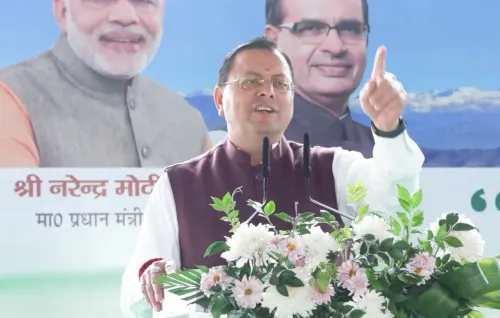
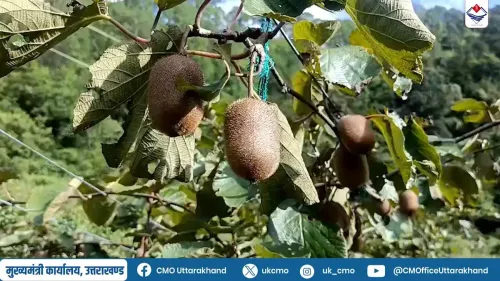
High in the Kumaon hills, a fruit more associated with New Zealand than the Himalayas is quietly taking root. The Chief Minister's Office of Uttarakhand posted on Wednesday, 4 November 2026, signalling active state support for kiwi cultivation in Champawat district — a move aimed at pulling hill farmers toward higher-value horticulture.
Champawat's climate: an unlikely kiwi country
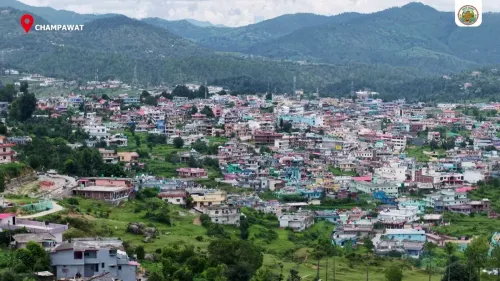
Champawat, tucked into the mid-altitude zone of the Kumaon region, offers cool winters and moderate summers — conditions that suit kiwi vines far better than the plains. The district's hilly terrain, long a challenge for conventional grain farming, becomes an asset when the crop demands sharp cold snaps to set fruit. It is precisely this micro-climate logic that the state government is leaning on.
Diversification as a rural-income strategy
Uttarakhand has periodically pushed non-traditional horticultural crops as a way to lift rural incomes in regions where flat arable land is scarce. Kiwi fits that template neatly: its per-kilogram market value dwarfs most cereal crops, and domestic demand across Indian urban centres has grown steadily as the fruit has entered mainstream retail. For a state government trying to slow out-migration from hill villages, persuading a family to plant kiwi vines — which begin yielding in three to five years but then produce for decades — is a long-bet investment in keeping people on the land.
What farmers and planners are watching next
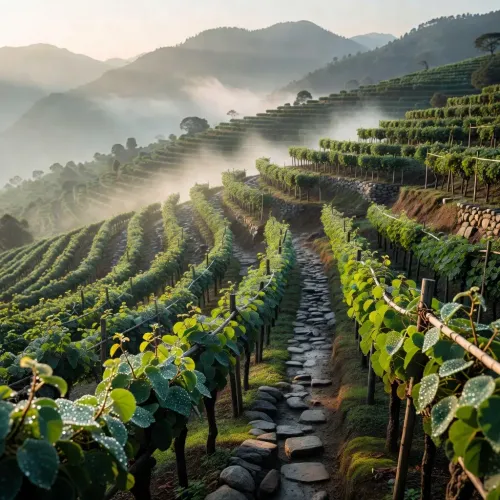
The immediate question is what follows the official signal. District-level interventions that have worked elsewhere in Himalayan horticulture include sapling distribution at subsidised rates, training on trellis construction and pruning, and critically, market-linkage guarantees so farmers are not left with a harvest and no buyer. Whether Champawat and neighbouring districts see those follow-through steps will determine whether this promotion translates into real orchard expansion or remains a headline.
Kiwi vines planted today in Champawat's slopes could be feeding urban India's fruit aisles for a generation. The government has made the pitch — now the orchard work begins.
Point of View
Making sustained institutional follow-through, not just announcements, the credibility marker. If Champawat produces a replicable kiwi model, it could strengthen the government's rural retention narrative ahead of future electoral cycles in hill constituencies. The post is thin on specifics, however, and the absence of scheme names or rollout timelines means the signal, for now, remains aspirational.
NationPress
4 Nov 2026
Frequently Asked Questions
Is kiwi grown in Uttarakhand?
Yes, kiwi cultivation is being actively promoted in Uttarakhand, particularly in mid-altitude districts like Champawat in the Kumaon region, where the cool climate suits the crop.
Why is the Uttarakhand government promoting kiwi farming in Champawat?
Champawat's hilly terrain and cool micro-climate make it suitable for kiwi vines. The state government is encouraging the crop to raise hill farmers' incomes by shifting them toward higher-value horticulture.
What support do kiwi farmers get from the Uttarakhand government?
The government has signalled active promotion of kiwi production. Typical support in such programmes includes subsidised saplings, technical training, and market-linkage assistance, though specific scheme details for 2026 have not yet been announced.
How long does a kiwi plant take to produce fruit?
Kiwi vines generally begin bearing fruit three to five years after planting, but once established, they can produce commercially for several decades.
Which districts in Uttarakhand are suitable for kiwi cultivation?
Champawat district has been highlighted by the state government, and broader Kumaon region districts with similar mid-altitude, cool-climate conditions are also considered suitable for kiwi farming.