Uttarakhand Becomes India's 6th Fully Literate State Under CM Dhami
Synopsis
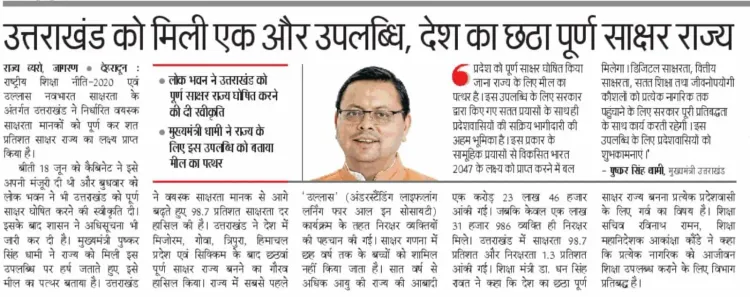
Uttarakhand has become India's sixth fully literate state under Chief Minister Pushkar Singh Dhami, the state's CMO announced on 9 July 2026. The milestone follows years of grassroots literacy drives aligned with central schemes including ULLAS, targeting adult learners across the hill state's remote and rural communities.
Key Takeaways
Uttarakhand has been declared India's sixth fully literate state as of 9 July 2026 .
The announcement was made by the Chief Minister's Office of Uttarakhand , attributing the achievement to CM Pushkar Singh Dhami's leadership.
The state leveraged central schemes including ULLAS (2022) and the legacy of Saakshar Bharat (2009) to drive adult literacy in remote areas.
Primary beneficiaries include adult learners and rural households , especially women in hilly and dispersed communities.
Formal confirmation of the literacy threshold by the Ministry of Education is the expected next procedural step.
The achievement positions Uttarakhand as a potential model for other hill and northeastern states pursuing full literacy status.
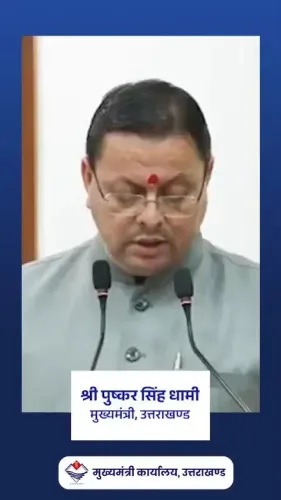
The Chief Minister's Office of Uttarakhand announced on Thursday, 9 July 2026 that the state has become the sixth fully literate state in India, crediting the achievement to the leadership of Chief Minister Pushkar Singh Dhami. The announcement marks a significant milestone in the hill state's education journey, coming after years of sustained grassroots literacy mobilisation.
The CMO's post stated: 'मुख्यमंत्री श्री पुष्कर सिंह धामी के नेतृत्व में प्रदेश को मिली एक और उपलब्धि, देश का छठा पूर्ण साक्षर राज्य बना उत्तराखण्ड' — translated: 'Under the leadership of Chief Minister Shri Pushkar Singh Dhami, the state has achieved another milestone — Uttarakhand has become the sixth fully literate state in the country.'
Context
Indian states are declared fully literate after crossing defined literacy thresholds assessed through surveys conducted under the Ministry of Education. The designation reflects broad-based adult literacy gains, not merely school enrolment figures. Uttarakhand's mountainous terrain and dispersed rural population have historically posed challenges for last-mile education delivery.
The state joins a small group of fully literate states, a category that has grown incrementally as successive governments combined central schemes with local volunteer networks to reach remote communities.
Policy Backdrop
The achievement draws on a long policy lineage. The National Literacy Mission (1988) established the foundational framework for mass adult literacy campaigns across India. This was followed by Saakshar Bharat (2009), which targeted low-female-literacy districts through panchayat-level implementation — directly relevant to Uttarakhand's rural pockets.
More recently, the Centre's ULLAS (New India Literacy Programme), launched in 2022, has provided a renewed push through volunteer-based community classes aimed at adult learners who missed formal schooling. Uttarakhand aligned its state-level mobilisation with ULLAS, deploying volunteers and local bodies to reach households in hilly and remote regions.
Stakeholders and Impact
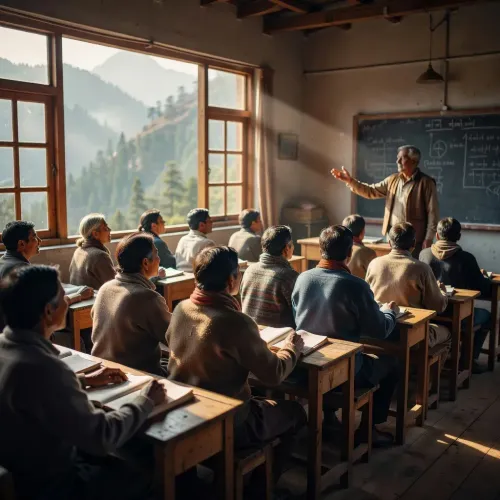
The primary beneficiaries are adult learners and rural households, particularly women in remote villages who were historically underserved by formal education infrastructure. Full literacy status signals that functional reading and writing skills have reached a critical mass across these communities.
CM Pushkar Singh Dhami, who has held office since March 2021, has consistently cited education and governance reform as pillars of his administration. This declaration adds a concrete, nationally benchmarked credential to that agenda ahead of future electoral cycles.
What's Next
Formal notification by the Ministry of Education confirming the literacy threshold and the precise survey findings will be the next procedural step. Observers will watch whether Uttarakhand moves swiftly to integrate newly literate adults — often called neo-literates — into skill-development and vocational training programmes to sustain the gains.
The state's experience could also serve as a model for other hill and northeastern states still working toward the fully literate designation, reinforcing the Centre's push to achieve nationwide literacy through the ULLAS framework.
Point of View
Providing a nationally benchmarked governance credential that transcends routine administrative announcements. The timing — mid-term in a five-year tenure — allows the BJP government to anchor its education narrative in a verifiable, Ministry-certified outcome rather than aspirational targets. It also reflects a broader national pattern in which state governments have increasingly competed to attain the fully literate tag by aligning with ULLAS and predecessor schemes, turning a social development metric into a political asset. The real test, however, will be whether Uttarakhand can convert neo-literate adults into economically active participants through skill-linkage programmes, which would determine whether the literacy gain is durable.
NationPress
9 Jul 2026
Frequently Asked Questions
Which are the fully literate states in India?
Uttarakhand became India's sixth fully literate state in July 2026, joining a small group of states that have crossed the Ministry of Education's defined literacy threshold. Earlier fully literate states include Kerala, Lakshadweep (union territory), Mizoram, Goa, and Tripura, among others recognised progressively over the years.
What does 'fully literate state' mean in India?
A fully literate state in India is one that has crossed a defined literacy threshold as assessed through surveys conducted under the Ministry of Education, reflecting broad-based functional reading and writing ability across the adult population, not just school enrolment rates.
What is the ULLAS scheme and how did it help Uttarakhand?
ULLAS, or the New India Literacy Programme, is a central government scheme launched in 2022 to promote adult education through volunteer-based community classes. Uttarakhand aligned its state-level literacy mobilisation with ULLAS, using local volunteers and panchayat bodies to reach adult learners in remote hill areas.
Who is Pushkar Singh Dhami?
Pushkar Singh Dhami is the Chief Minister of Uttarakhand, in office since March 2021. His administration has cited education and governance reform as key priorities, and the state's fully literate status is being credited to drives undertaken under his leadership.
What happens after a state is declared fully literate in India?
After a state is declared fully literate, the Ministry of Education formally notifies the achievement based on survey data. The focus then typically shifts to integrating newly literate adults, known as neo-literates, into skill-development and vocational training programmes to sustain and build on the gains.