CM Uttarakhand: Forest Fire Controlled in Pithoragarh
Synopsis
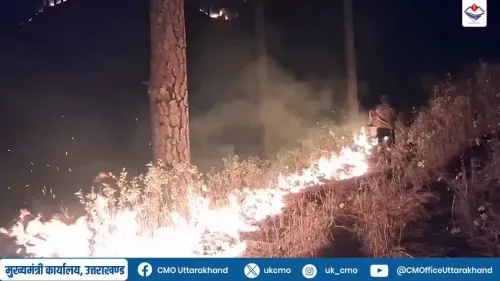
The Uttarakhand CMO reports that community participation and public awareness campaigns are delivering effective control over forest fires in Pithoragarh, a Himalayan district prone to seasonal wildfires, as the 2026 fire season progresses.
Key Takeaways
The Chief Minister's Office of Uttarakhand announced on June 1, 2026 that forest fires in Pithoragarh district are being effectively controlled.
The CMO attributed the success to collective efforts and public awareness , not departmental action alone.
Pithoragarh borders Nepal and has dense pine forests that are historically vulnerable to seasonal wildfires between March and June .
Uttarakhand expanded joint forest management committees and village-level awareness drives after a severe fire crisis in 2016 .
The Forest Fire Prevention and Management programme provides national-level framework support for states like Uttarakhand.
Performance for the remainder of the 2026 fire season and any new budget allocations will be key indicators of sustained progress.
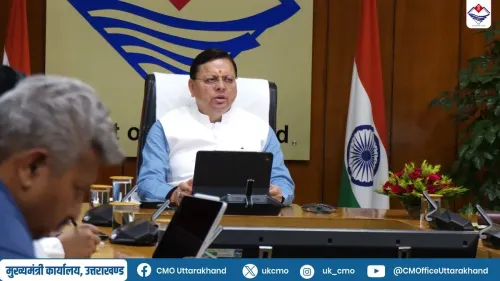
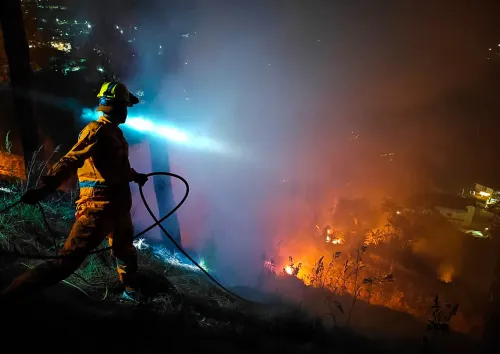
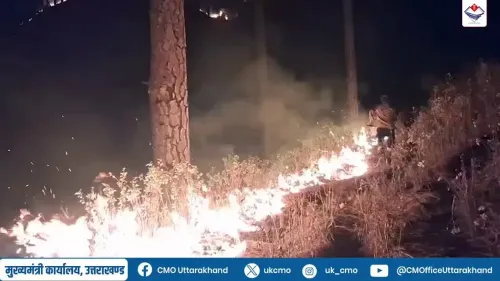
The Chief Minister's Office of Uttarakhand announced on Monday, June 1, 2026, that collective efforts and public awareness campaigns have helped the Uttarakhand Forest Department achieve effective control over forest fires in Pithoragarh district.
Context
The post, shared from the official CMO handle, stated: 'Samuhik prayason aur jan jagrukta se Pithoragarh janpad mein van vibhag ko vanaagni par prabhavi niyantran karne mein mil rahi safalta' — meaning, 'Through collective efforts and public awareness, the forest department is achieving effective control over forest fires in Pithoragarh district.' The announcement highlights a community-driven approach rather than exclusive reliance on departmental firefighting capacity.
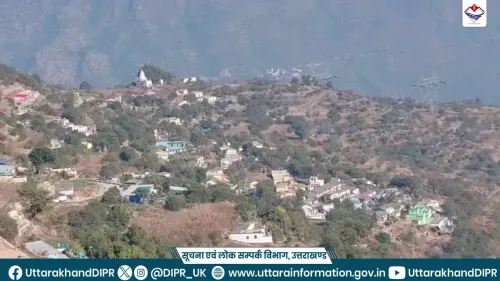
Pithoragarh is a Himalayan district bordering Nepal, characterised by dense pine forests and a historically high incidence of seasonal wildfires. The district's terrain and forest composition make it particularly vulnerable during the dry summer months.
Policy Backdrop
Uttarakhand records hundreds of forest fire incidents annually, concentrated between March and June, largely driven by dry chir pine leaf litter, low humidity, and occasional human activity. The fire season places sustained pressure on the state's forest administration every year.
Following a severe fire crisis across the state in 2016, the Uttarakhand government expanded joint forest management committees and village-level awareness programmes to strengthen early detection and community response. This approach drew on models of participatory forest governance that have been tested across other Himalayan states facing similar ecological pressures.
At the national level, the Forest Fire Prevention and Management programme provides a framework and funding support for states to build firefighting infrastructure and community engagement mechanisms. Uttarakhand has been among the states actively integrating this support into its seasonal response plans.
Stakeholders and Impact
The primary beneficiaries of effective fire control are local communities in Pithoragarh, whose livelihoods, homes, and access to forest resources are directly threatened during fire season. Uncontrolled wildfires in the Himalayas also carry downstream consequences for water sources, biodiversity, and soil stability.
Forest department personnel on the ground bear the operational burden of fire suppression, and community participation — through early reporting and local fire lines — significantly reduces the scale of incidents they must manage. The CMO's acknowledgement of 'collective efforts' signals that local residents and village-level bodies have played an active role in the current season's response.
Ecologically, containing fires in a district like Pithoragarh helps protect high-altitude forests that serve as critical carbon sinks and wildlife corridors along the Nepal border.
What's Next
The 2026 fire season is ongoing, and performance across the remaining weeks of June will determine whether this year marks a measurable improvement over previous seasons. Observers will watch for any state budget allocations or central releases under the Forest Fire Prevention and Management programme that could consolidate the gains reported from Pithoragarh.
Sustained community awareness and the continuation of joint forest management committees will be critical to maintaining the momentum signalled by the CMO's announcement. Similar community-driven models in other Himalayan states offer a template for scaling these efforts across Uttarakhand's other fire-prone districts.
Point of View
' the government positions local communities as partners rather than passive recipients of state intervention, aligning with a broader national push under participatory forest governance frameworks. The announcement also pre-empts potential criticism about departmental capacity by sharing credit with citizens. Whether the claim translates into verifiable season-end data on fire incidents and hectares burned will determine its long-term credibility.
NationPress
15 Oct 2026
Frequently Asked Questions
Why does Pithoragarh have so many forest fires?
Pithoragarh has dense chir pine forests whose dry leaf litter is highly flammable, combined with low humidity and occasional human activity between March and June, making it one of Uttarakhand's most fire-prone Himalayan districts.
What is the Uttarakhand Forest Department doing to control wildfires?
The Forest Department is working alongside local communities through joint forest management committees and public awareness campaigns to enable early detection and rapid response, reducing dependence on departmental resources alone.
What did the Uttarakhand CMO say about Pithoragarh forest fires?
The Chief Minister's Office of Uttarakhand posted on June 1, 2026, that collective efforts and public awareness are helping the Forest Department achieve effective control over forest fires in Pithoragarh district.
What is the Forest Fire Prevention and Management programme?
It is a national-level programme that provides states with a framework and funding support to build firefighting infrastructure, early warning systems, and community engagement mechanisms for managing seasonal forest fires.
How did Uttarakhand change its forest fire policy after 2016?
After a severe fire season in 2016, Uttarakhand expanded joint forest management committees and village-level awareness campaigns to improve early detection and community-level response across its fire-prone districts.