Uttarakhand CMO Highlights Welfare Push for Vulnerable Sections
Synopsis
The Uttarakhand Chief Minister's Office on 23 July 2026 highlighted the state government's continuous efforts to improve the lives of society's most vulnerable sections, with a specific focus on Udham Singh Nagar district, underscoring the state's welfare policy priorities.
Key Takeaways
The Chief Minister's Office of Uttarakhand posted on 23 July 2026 reaffirming the state's welfare commitment.
The post specifically tagged Udham Singh Nagar , a Terai district with significant rural and marginalised populations.
The government described its efforts as 'continuous' and aimed at the 'most sensitive sections of society'.
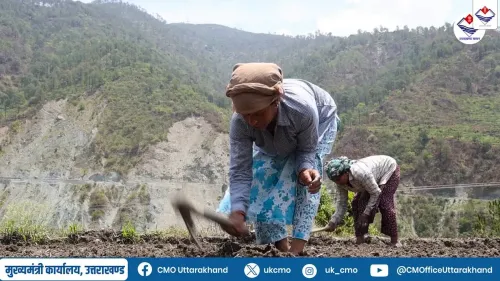
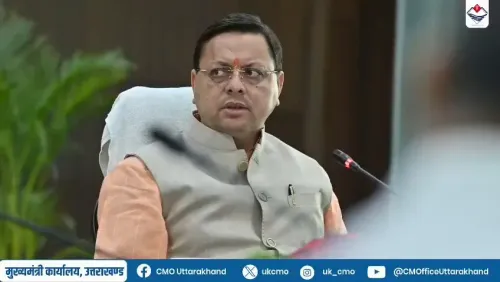
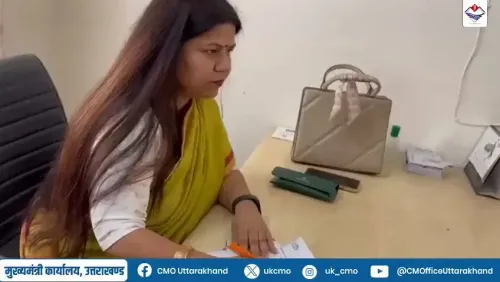
The post was accompanied by a video , suggesting on-ground programme documentation or beneficiary outreach.
Uttarakhand's welfare focus builds on the state's policy lineage since its formation in 2000 , targeting backward and tribal areas.
District-level rollout details and scheme-specific data are expected to follow as the government's welfare push in the region advances.
The Chief Minister's Office of Uttarakhand on Thursday, 23 July 2026, reaffirmed the state government's commitment to improving the lives of the most sensitive and marginalised sections of society, with a specific focus on Udham Singh Nagar district.
The post, shared in Hindi, stated: 'Uttarakhand sarkar samaj ke sabse sanvedansheel vargon ke jeevan ko behtar banane ke liye nirantar prayasrat hai' — ('The Uttarakhand government is continuously working to improve the lives of the most sensitive sections of society'). The message was accompanied by a video and tagged to Udham Singh Nagar and Uttarakhand.
Context
Udham Singh Nagar is one of Uttarakhand's more densely populated districts, home to a large rural and agricultural population as well as pockets of economically weaker and tribal communities. The district, situated in the Terai belt at the foothills of the Himalayas, has historically been a focal point for state welfare outreach given its demographic diversity and development challenges.
The government's emphasis on the 'most sensitive sections' signals attention to groups such as scheduled castes, scheduled tribes, daily-wage workers, and other economically vulnerable populations who often fall at the margins of mainstream development programmes.
Policy Backdrop
Since its formation as a separate state in 2000, Uttarakhand has maintained a policy emphasis on uplifting backward and tribal areas, particularly through targeted social security and welfare schemes aligned with national frameworks for poverty alleviation and inclusion. Hill states like Uttarakhand face distinctive challenges — including out-migration of working-age populations, limited agricultural land, and constrained local revenue — that make welfare delivery both more urgent and more logistically complex.
The state government has periodically highlighted district-level welfare initiatives as part of broader efforts to demonstrate accountability and on-ground delivery, particularly in districts such as Udham Singh Nagar that combine rural poverty with industrial and agricultural activity.
Stakeholders and Impact
The primary beneficiaries of the state's welfare focus in Udham Singh Nagar include marginalised rural communities, agricultural labourers, tribal groups, and economically weaker sections who depend on government support for health, housing, and livelihood security. Civil society organisations and local panchayati raj institutions are key implementation partners in reaching the last mile in such districts.
For the broader Uttarakhand population, consistent welfare messaging from the Chief Minister's Office signals a political and administrative priority that shapes budget allocations and departmental planning. Welfare delivery in Terai districts also carries significance given the region's proximity to the Uttar Pradesh border and its diverse, multi-community demographic profile.
What's Next
Observers will watch for district-level rollout updates, scheme-specific beneficiary data, and any announcements tied to the Udham Singh Nagar welfare push that may follow this communication. State assembly discussions and upcoming budget sessions will be key moments to assess whether the government's stated commitment translates into enhanced allocations for social protection in the region. The accompanying video referenced in the post may carry additional operational details about specific programmes or beneficiaries.
Point of View
Particularly toward districts with visible poverty or demographic complexity. Tagging Udham Singh Nagar specifically suggests a deliberate effort to demonstrate geographic equity in welfare delivery, not just hill-region focus. In the broader arc of Uttarakhand's governance narrative, such communications serve dual purposes — administrative accountability and political messaging ahead of potential policy or budget cycles. The accompanying video could be the more substantive element; its content will determine whether this is a programme announcement or a routine visibility exercise.
NationPress
22 Oct 2026
Frequently Asked Questions
What did the Uttarakhand government announce on 23 July 2026?
The Chief Minister's Office of Uttarakhand reaffirmed the state government's continuous commitment to improving the lives of the most vulnerable and sensitive sections of society, with a specific mention of Udham Singh Nagar district.
Which district is the Uttarakhand welfare initiative focused on?
The post specifically tagged Udham Singh Nagar, a Terai-belt district in Uttarakhand with a large rural, agricultural, and marginalised population.
What sections of society is the Uttarakhand government targeting with its welfare programmes?
The government has indicated a focus on the most 'sensitive' or marginalised sections, which typically includes scheduled castes, scheduled tribes, agricultural labourers, and economically weaker sections.
What is the significance of Udham Singh Nagar in Uttarakhand's welfare context?
Udham Singh Nagar is one of the state's more populous districts in the Terai region, home to diverse communities and pockets of poverty, making it a key target for social welfare outreach and government schemes.
How long has Uttarakhand been focused on welfare for backward and tribal areas?
Since its formation as a separate state in 2000, Uttarakhand has maintained a policy emphasis on uplifting backward, tribal, and economically weaker sections, aligned with national poverty alleviation frameworks.