CM Uttarakhand Office Marks 12 Years of Garib Kalyan
Synopsis
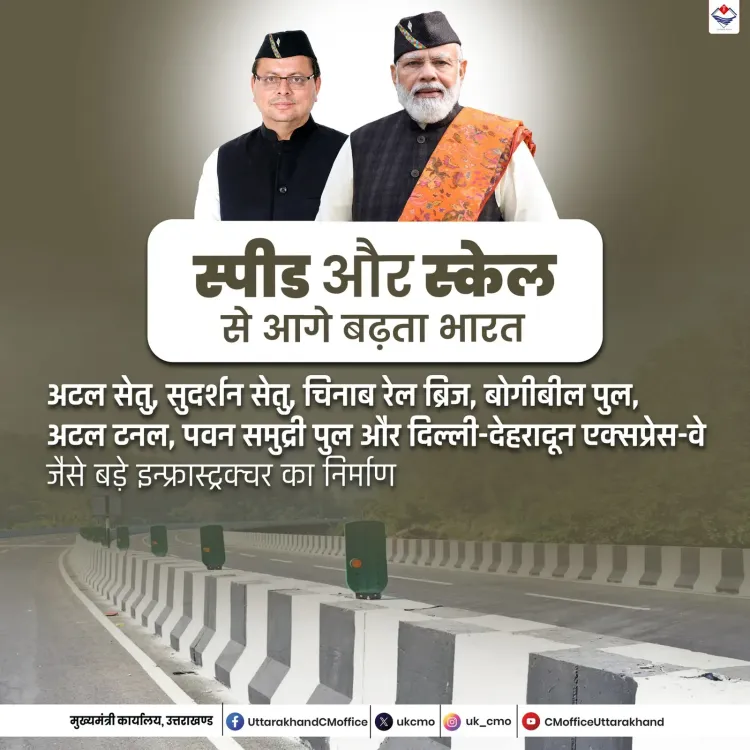
The Chief Minister's Office of Uttarakhand marked 12 years of the Garib Kalyan welfare initiative on 10 June 2026, echoing the national theme of 'speed and scale' in anti-poverty delivery under PM Modi's decade-plus tenure.
Key Takeaways
The Uttarakhand CMO posted on 10 June 2026 to mark #12YearsOfGaribKalyan , amplifying the national welfare anniversary.
The post carries the message: 'India moving ahead with speed and scale' — the central government's framing for its welfare delivery record.
PM Garib Kalyan Anna Yojana , a flagship free-ration scheme, was first launched in March 2020 and extended through 2024 for hundreds of millions of NFSA beneficiaries.
The Direct Benefit Transfer architecture, expanded since 2014 , routes subsidies into Aadhaar-linked accounts to reduce leakages.
BJP-ruled states like Uttarakhand consistently align local messaging with the central Garib Kalyan narrative as part of coordinated political communication.
Next Union Budget allocations for food subsidy and housing will be a key indicator of the programme's trajectory beyond the 12-year mark.
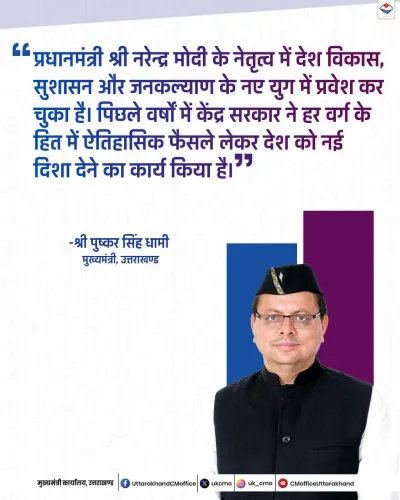
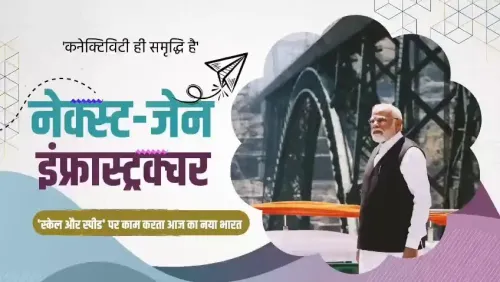
The Chief Minister's Office of Uttarakhand on Wednesday, 10 June 2026, amplified the national milestone of 12 years of Garib Kalyan, sharing a message that encapsulates the central government's welfare narrative: 'Speed aur scale se aage badhta Bharat' — 'India moving ahead with speed and scale.'
Context
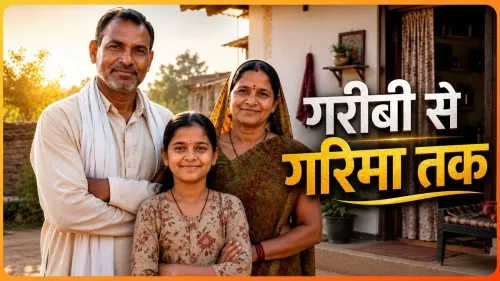
The post, tagged #12YearsOfGaribKalyan and #Uttarakhand, marks the completion of 12 years since the National Democratic Alliance government took office in May 2014 under Prime Minister Narendra Modi. The phrase 'Garib Kalyan' — literally 'welfare of the poor' — became the collective branding for a suite of anti-poverty programmes including food security, housing, and direct-benefit transfers that were rolled out and expanded over this period. The Uttarakhand CMO's post is part of a coordinated national communication effort marking the anniversary.
Policy Backdrop
The Garib Kalyan umbrella covers several flagship central schemes. The PM Garib Kalyan Anna Yojana (PMGKAY), first announced in March 2020 as an emergency food-relief measure, provided free rations to hundreds of millions of National Food Security Act (NFSA) beneficiaries and was extended in multiple phases through 2024. Alongside food security, the architecture of Direct Benefit Transfer (DBT) — which routes subsidies directly into Aadhaar-linked bank accounts — was substantially expanded from 2014 onward, reducing leakages and broadening financial inclusion for poor households. The governing philosophy has been summarised in the slogan 'Sabka Saath, Sabka Vikas' — 'Together with all, development for all.'
Stakeholders and Impact
Uttarakhand, a BJP-ruled Himalayan state, has been an active participant in amplifying national welfare messaging, routinely linking state-level communication to the central government's Garib Kalyan narrative. The primary beneficiaries of the broader scheme ecosystem are poor households and NFSA beneficiaries — a population running into hundreds of millions across India. State governments such as Uttarakhand play a critical last-mile role in scheme delivery, particularly in geographically challenging terrain where outreach requires additional administrative effort.
What's Next
Observers will watch for the next Union Budget allocations for food subsidy and housing programmes, which will indicate whether the pace of Garib Kalyan spending is maintained or recalibrated at the 12-year mark. Uttarakhand-specific progress reports on scheme saturation — measuring how many eligible households have been enrolled across housing, ration, and DBT programmes — are also expected to follow such milestone communications. The framing of 'speed and scale' signals that the political messaging around welfare delivery will remain central to the ruling party's public communication going forward.
Point of View
Particularly around milestone anniversaries. The '12 years of Garib Kalyan' framing is a deliberate effort to consolidate a welfare-delivery narrative ahead of electoral cycles, positioning the NDA's record on poverty alleviation as both deep and durable. The 'speed and scale' slogan signals a shift from merely listing schemes to asserting systemic, high-velocity transformation — a more assertive rhetorical register. Whether this narrative holds up to scrutiny will depend on independent assessments of scheme saturation and household-level outcomes in states like Uttarakhand.
NationPress
21 Sept 2026
Frequently Asked Questions
What is Garib Kalyan and why is 12 years being celebrated?
'Garib Kalyan' is the collective branding for the central government's anti-poverty welfare programmes launched after the NDA came to power in May 2014. The 12-year milestone in June 2026 marks a decade-plus of these initiatives, including food security, housing, and direct-benefit transfers.
What is PM Garib Kalyan Anna Yojana?
PM Garib Kalyan Anna Yojana (PMGKAY) is a free-ration scheme first announced in March 2020 to provide food relief to hundreds of millions of National Food Security Act beneficiaries. It was extended in multiple phases and remained active through 2024.
Why is the Uttarakhand CMO posting about a central government scheme?
Uttarakhand is a BJP-ruled state, and its Chief Minister's Office routinely amplifies national welfare messaging as part of coordinated political communication that links state governance to central government achievements.
What is Direct Benefit Transfer and how does it relate to Garib Kalyan?
Direct Benefit Transfer (DBT) is a system that routes government subsidies directly into Aadhaar-linked bank accounts of beneficiaries, reducing leakages. It was significantly expanded from 2014 onward and is a core delivery mechanism for Garib Kalyan schemes.
What does 'speed aur scale se aage badhta Bharat' mean?
The Hindi phrase translates to 'India moving ahead with speed and scale.' It is the central government's slogan for the 12-year Garib Kalyan anniversary, emphasising the pace and breadth of welfare delivery under PM Narendra Modi.