Uttarakhand CMO reaffirms commitment to service and good governance

Synopsis
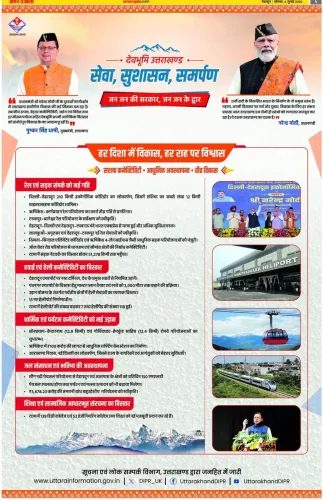
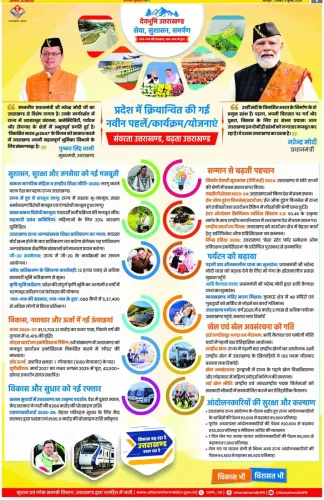
The Chief Minister's Office of Uttarakhand declared on 18 July 2026 that the state advances on the path of development every day, guided by the principles of service, good governance, and dedication — reinforcing the administration's public commitment to sustained progress across its Himalayan districts.
Key Takeaways
The Chief Minister's Office of Uttarakhand posted on X on 18 July 2026 reaffirming the state's development resolve.
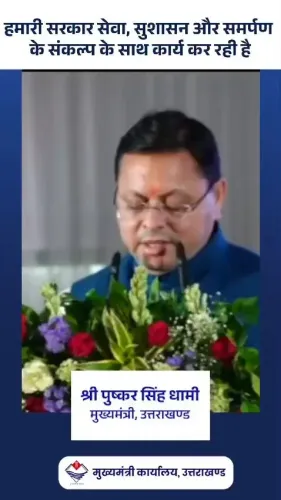
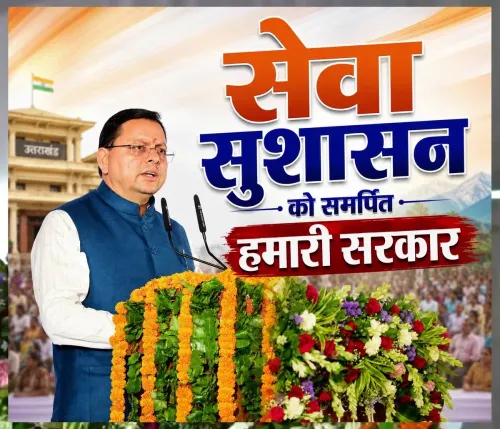
The post, in Hindi, centred on three principles: seva (service), sushasan (good governance), and samarpan (dedication).
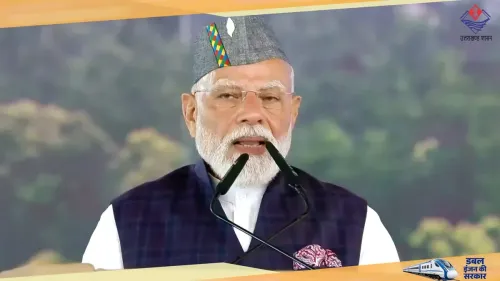
The communication was accompanied by a video , underscoring the state government's emphasis on visible progress.
Uttarakhand was formed on 9 November 2000 to provide dedicated governance to remote Himalayan districts.
The state's geography — spanning 13 districts including high-altitude border areas — makes consistent administrative outreach both a challenge and a priority.
Subsequent budget allocations or scheme progress reports are expected to give operational substance to the stated governance commitment.
The Chief Minister's Office of Uttarakhand posted on X (formerly Twitter) on Saturday, 18 July 2026, reaffirming the state's daily march toward development under the guiding principles of service, good governance, and dedication.
The post, in Hindi, declared: 'Seva, sushasan aur samarpan ke sankalp ke saath har din vikas ki raah par aage badh raha hai Uttarakhand' — meaning, 'With the resolve of service, good governance and dedication, Uttarakhand is moving forward on the path of development every day.' The message was accompanied by a video, reinforcing the state government's emphasis on visible, consistent progress.
Context
The post reflects a recurring theme in Uttarakhand's official communications: that governance in the hill state is not an episodic exercise but a continuous, day-by-day commitment. The three Hindi words foregrounded in the post — seva (service), sushasan (good governance), and samarpan (dedication) — have functioned as a central rhetorical framework for the state administration's public outreach in recent years. The state's geography makes routine governance a logistical challenge. Uttarakhand, carved out of Uttar Pradesh on 9 November 2000, was formed precisely to give the remote Himalayan districts a dedicated administrative apparatus capable of addressing their distinct developmental needs, from connectivity and disaster resilience to tourism infrastructure and welfare delivery.Policy Backdrop
Since its formation, Uttarakhand has pursued development across several fronts: road and highway expansion into border districts, promotion of religious and adventure tourism, improvement of health and education infrastructure in hill blocks, and disaster management frameworks necessitated by the region's seismic and flood vulnerability. Official social media messaging from Indian state governments — particularly in states with geographically dispersed populations — has increasingly served as a tool to project administrative continuity and accountability. Posts of this nature typically accompany ground-level scheme rollouts, budget announcements, or periodic governance reviews, signalling to citizens and stakeholders that the administration remains active and focused.Stakeholders and Impact
The primary audience for this communication is Uttarakhand's residents — spread across 13 districts, including remote hill talukas where administrative reach has historically been uneven. For these communities, signals of governance intent from the Chief Minister's Office carry practical weight: they often precede or accompany announcements on infrastructure projects, welfare schemes, or administrative reforms. The state's tourism-dependent economy and its large diaspora of migrants working in other states also track such communications closely. Consistent governance messaging can influence investor sentiment and reinforce confidence among residents who have relocated but retain ties to their home districts.What's Next
The broader pattern suggests that posts of this nature from the Chief Minister's Office of Uttarakhand tend to be followed by concrete scheme updates, budget allocation announcements, or progress reports on flagship development programmes. Observers will watch for subsequent disclosures on infrastructure timelines, welfare delivery metrics, or administrative reforms that give operational substance to the stated resolve of seva, sushasan aur samarpan. For a state that must govern across high-altitude terrain with limited connectivity, translating governance rhetoric into measurable outcomes on the ground remains both the central challenge and the defining test of the administration's credibility.Point of View
Values-laden Hindi message to project administrative continuity rather than announce a specific policy action. In the context of Indian state politics, such messaging often functions as a precursor to scheme launches or budget disclosures, setting a normative frame before hard announcements follow. For Uttarakhand, a state where governance credibility is closely tied to visible delivery in remote hill districts, repeated affirmations of sushasan carry both symbolic and electoral weight. The use of video alongside the text suggests the administration is investing in multi-format outreach to reach citizens beyond the typical social media demographic.
NationPress
18 Jul 2026
Frequently Asked Questions
What did the Uttarakhand Chief Minister's Office post on X on 18 July 2026?
The Chief Minister's Office of Uttarakhand posted a Hindi message on 18 July 2026 stating that Uttarakhand is moving forward on the path of development every day, guided by the resolve of service, good governance, and dedication.
What does 'seva, sushasan aur samarpan' mean in the Uttarakhand CMO post?
'Seva, sushasan aur samarpan' translates from Hindi as 'service, good governance, and dedication' — the three principles cited by the Uttarakhand CMO as guiding the state's daily development efforts.
When was Uttarakhand formed and why?
Uttarakhand was carved out of Uttar Pradesh on 9 November 2000 to provide a dedicated administrative framework for the remote Himalayan districts, which had distinct developmental and governance needs.
What are the key development challenges for Uttarakhand's administration?
Uttarakhand's mountainous terrain, seismic vulnerability, flood risk, and dispersed population across 13 districts make routine governance and infrastructure delivery significantly more complex than in plains states.
What should citizens watch for after this Uttarakhand CMO post?
Citizens and observers should watch for follow-up announcements on state budget allocations, infrastructure project timelines, or progress reports on welfare schemes that give concrete substance to the governance commitments stated in the post.