Uttarakhand CM Office Holds High-Level Garhwal Review Meet
Synopsis
The Uttarakhand Chief Minister's Office convened a broad high-level review for Garhwal division on 2 June 2026, assembling cabinet ministers, senior bureaucrats, the IG Garhwal, the Badri-Kedar Mandir Samiti chairman, and district-level officials to address disaster management and pilgrimage administration ahead of the monsoon season.
Key Takeaways
The Chief Minister's Office of Uttarakhand held a high-level review meeting on 2 June 2026 focused on Garhwal division .
Cabinet ministers Satpal Maharaj and Bharat Chaudhary attended alongside Chief Secretary Anand Bardhan and multiple senior secretaries.
Badri-Kedar Mandir Samiti Chairman Hemant Dwivedi joined virtually, confirming Char Dham temple management was on the agenda.
The State Disaster Management Advisory Committee Vice-Chairman Vinay Kumar Rohila was present, highlighting monsoon and disaster preparedness as a key theme.
District magistrates and superintendents of police from concerned districts participated virtually, signalling ground-level follow-through is expected.
The meeting reflects Uttarakhand's post- 2013 Kedarnath floods model of integrated governance combining disaster, infrastructure, and pilgrimage oversight.
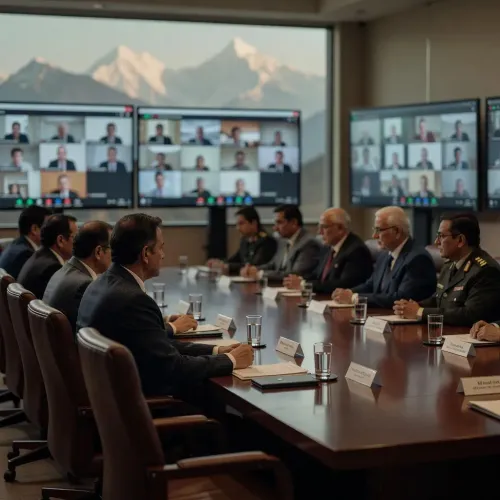
The Chief Minister's Office of Uttarakhand convened a high-level coordination meeting on 2 June 2026, bringing together senior cabinet ministers, legislators, top bureaucrats, and domain advisors to review matters pertaining to Garhwal division, including disaster management and temple administration. The meeting was attended both in person and via virtual mode by a wide cross-section of officials, signalling the breadth of issues on the agenda.
Who Was in the Room
Cabinet ministers Satpal Maharaj and Bharat Chaudhary were present alongside MLA Anil Nautiyal. Senior advisory figures included Vinay Kumar Rohila, Vice-Chairman of the State Disaster Management Advisory Committee, and Vishwas Dabar, Vice-Chairman of the Uttarakhand Infrastructure Monitoring Council.
On the administrative side, Chief Secretary Anand Bardhan led the bureaucratic contingent, joined by Principal Secretary R.K. Sudhanshu and secretaries Shailesh Bagauli, Dr. Pankaj Kumar Pandey, Vinay Shankar Pandey, Ranveer Singh Chauhan, and Vinod Kumar Suman. IG Garhwal Rajeev Swaroop and Additional Secretary Banshidhar Tiwari were also in attendance.
Joining virtually were MLAs Suresh Chauhan and Asha Nautiyal, Badri-Kedar Mandir Samiti Chairman Hemant Dwivedi, Garhwal Commissioner Anand Swaroop, and the respective district magistrates and superintendents of police from the concerned districts.
Context
Uttarakhand's Garhwal division hosts the Char Dham pilgrimage circuit — Badrinath, Kedarnath, Gangotri, and Yamunotri — which draws millions of devotees annually and places acute pressure on mountain roads, emergency services, and administrative capacity. The inclusion of the Badri-Kedar Mandir Samiti chairman in the meeting underscores that temple management formed part of the review.
The presence of the State Disaster Management Advisory Committee vice-chairman points to a concurrent focus on monsoon preparedness. Garhwal is highly vulnerable to cloudbursts, flash floods, and landslides, risks that intensify each year between June and September.
Policy Backdrop
Uttarakhand's practice of holding combined ministerial-bureaucratic-police reviews for Garhwal took on greater urgency after the 2013 Kedarnath floods, which killed thousands and devastated pilgrimage infrastructure. Since then, the state has institutionalised periodic high-level coordination sessions that merge disaster oversight with infrastructure monitoring and shrine management.
The Uttarakhand Infrastructure Monitoring Council and the State Disaster Management Advisory Committee were both strengthened in the years following that disaster, and their vice-chairmen being present together at a single review reflects the integrated governance model the state has pursued since.
Stakeholders and Impact
Residents of Garhwal's hill districts — particularly those in landslide-prone corridors — stand to be the most directly affected by any decisions on disaster preparedness or road infrastructure emerging from the meeting. Equally, the lakhs of Char Dham pilgrims who travel to Badrinath and Kedarnath each season depend on coordinated state action for safe access and emergency response.
The virtual participation of district magistrates and superintendents of police from the concerned districts indicates that any directives issued will flow down to the ground level relatively quickly.
What's Next
The state government is expected to issue follow-up administrative orders on monsoon preparedness, pilgrimage-route safety, and infrastructure monitoring in Garhwal in the coming days. With the Char Dham Yatra season underway and the monsoon approaching, the pace of implementation will be closely watched by both pilgrims and hill communities.
Point of View
Infrastructure monitoring, temple administration, and police coordination — signals that the Uttarakhand government is treating the pre-monsoon window as a critical governance deadline rather than a routine calendar event. The virtual inclusion of district magistrates and police superintendents is notable: it compresses the chain of command and suggests directives are meant to reach the field without delay. Politically, convening such a visible cross-departmental review allows the ruling establishment to demonstrate administrative seriousness on Char Dham safety, a subject with both electoral and reputational stakes in a state whose identity is closely tied to pilgrimage. The broader pattern fits Uttarakhand's post-2013 institutional evolution, where the trauma of the Kedarnath disaster permanently raised the bar for pre-season preparedness signalling.
NationPress
16 Oct 2026
Frequently Asked Questions
Why did Uttarakhand CMO hold a Garhwal review meeting in June 2026?
The meeting was convened ahead of the monsoon season to coordinate disaster management, pilgrimage safety, and infrastructure oversight across Garhwal division, which hosts the Char Dham circuit and faces high flood and landslide risk every year.
Who attended the Uttarakhand Garhwal coordination meeting on 2 June 2026?
Attendees included Cabinet ministers Satpal Maharaj and Bharat Chaudhary, Chief Secretary Anand Bardhan, IG Garhwal Rajeev Swaroop, Badri-Kedar Mandir Samiti Chairman Hemant Dwivedi, and several MLAs, secretaries, and district-level officials joining virtually.
What is the Badri-Kedar Mandir Samiti and why was it included?
The Badri-Kedar Mandir Samiti is the statutory body managing the Badrinath and Kedarnath temples. Its inclusion confirms that Char Dham temple administration and pilgrim safety were part of the meeting's agenda.
What role does the State Disaster Management Advisory Committee play in Uttarakhand?
It is an advisory body that supports the state's disaster preparedness and inter-departmental coordination, particularly important given Uttarakhand's vulnerability to Himalayan floods and landslides during the monsoon.
What follow-up action is expected after the Uttarakhand Garhwal review meeting?
The state is expected to issue administrative orders on monsoon preparedness, pilgrimage-route safety, and infrastructure monitoring in Garhwal, with district magistrates and police superintendents already briefed to implement directives on the ground.