CM Dhami Credits PM Modi for Uttarakhand Tourism Surge
Synopsis
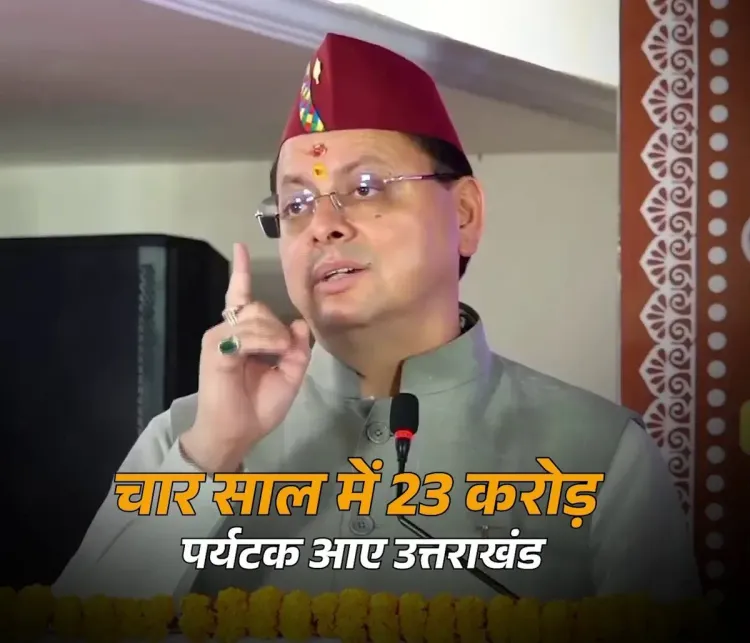
Uttarakhand Chief Minister Pushkar Singh Dhami credited Prime Minister Narendra Modi for the state's tourism boom, saying stronger infrastructure, connectivity and world-class facilities had drawn more than 23 crore tourists and pilgrims to Devbhoomi in the past four years, boosting the economy and local jobs.
Key Takeaways
CM Pushkar Singh Dhami posted on X on 3 June 2026 crediting PM Narendra Modi for Uttarakhand's tourism surge.
He said over 23 crore tourists and pilgrims visited the state in the past four years.
Dhami cited infrastructure, connectivity and world-class facilities as key drivers.
The Char Dham Pariyojana, launched in 2016, anchors central infrastructure spending in the state.
The chief minister linked the visitor surge to gains for the state economy and local employment.
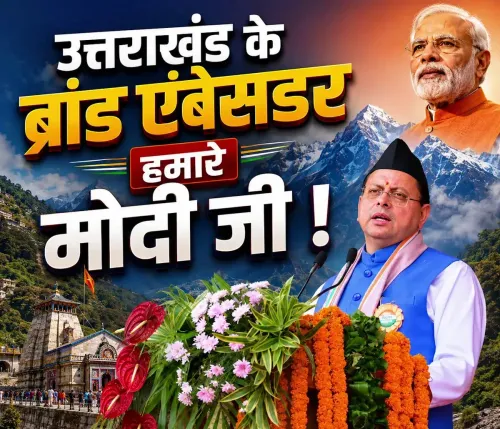
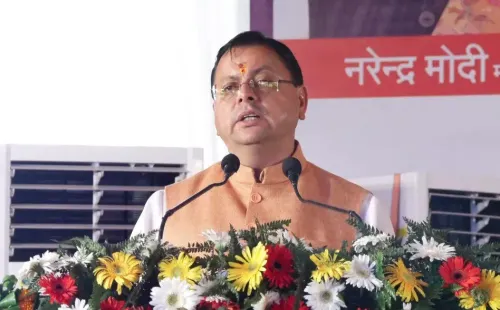
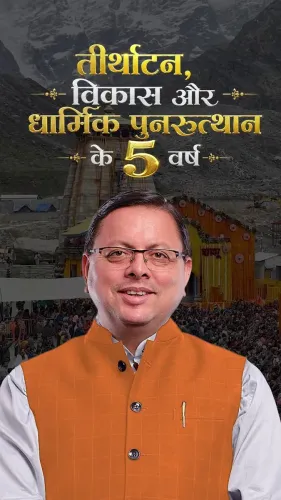
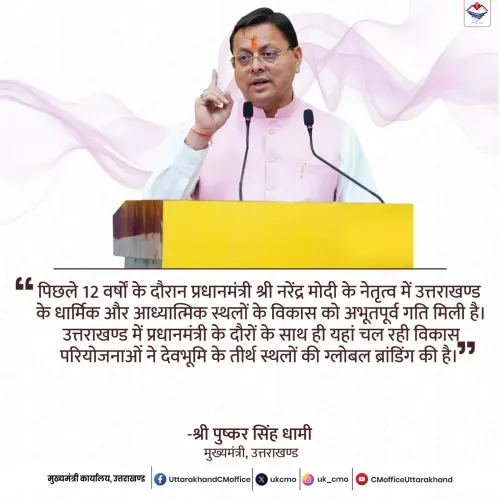
Uttarakhand Chief Minister Pushkar Singh Dhami on 3 June 2026 credited Prime Minister Narendra Modi for transforming the Himalayan state into a leading tourism destination, attributing the shift to upgraded infrastructure, improved connectivity and what he described as world-class facilities at pilgrimage and tourist sites. In a post on X, the chief minister said more than 23 crore tourists and pilgrims have visited Devbhoomi (the Land of Gods) over the past four years, giving the state economy and local employment fresh momentum.
Translating the post, Dhami wrote that 'the arrival of respected Prime Minister Shri Narendra Modi ji at the tourist destinations of Devbhoomi, along with the development of strong infrastructure, better connectivity and world-class facilities, has made Uttarakhand a major centre of tourism.' He added that this was the reason cited for the visitor figures he shared and the resulting push to the state economy and jobs.
Context
Dhami, who has led the BJP government in Dehradun since 2021, has consistently framed tourism growth as a joint outcome of central capital spending and state-level execution. His post follows a pattern of state leaders in Himalayan regions tying visitor numbers to highway and amenity upgrades that have rolled out over the last decade.
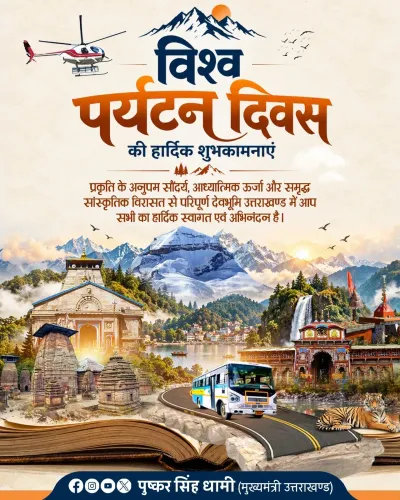
Uttarakhand is home to the Char Dham circuit — Badrinath, Kedarnath, Gangotri and Yamunotri — which draws pilgrims from across India each summer. The state also markets adventure, wellness and wildlife tourism around destinations such as Rishikesh, Mussoorie, Nainital and Jim Corbett National Park.
Policy backdrop
The Char Dham Pariyojana, announced in 2016, is the most visible central infrastructure intervention in the state, aimed at delivering all-weather road connectivity to the four shrines. Parallel programmes such as Swadesh Darshan, launched in 2014-15, have funded themed tourism circuits, while broader connectivity efforts under Bharatmala have targeted difficult Himalayan terrain.
Helicopter services to Kedarnath, ropeway proposals for Hemkund Sahib and Kedarnath, and the under-construction Rishikesh-Karnaprayag rail line form part of the wider infrastructure stack that state officials cite when discussing tourist inflows.
Stakeholders and impact
The hill economy's reliance on seasonal tourism makes the sector central to small businesses ranging from homestays and hotels to porters, pony operators, taxi unions and local guides. Pilgrim seasons typically peak between April and November, with revenue concentrated in districts such as Rudraprayag, Chamoli, Uttarkashi and Tehri.
Officials have argued that higher footfall translates into expanded demand for local produce, transport and hospitality services. Industry bodies have separately flagged carrying-capacity concerns at fragile high-altitude sites, particularly after heavy rainfall events and landslides in recent seasons.
What's next
Attention now turns to the official Uttarakhand tourism statistics for 2025-26, which will offer a granular break-up of pilgrim and leisure visitor numbers by district and season. New phases of the Char Dham road project, expansion of heli-services and progress on the Rishikesh-Karnaprayag rail link are likely to shape the next leg of the tourism narrative.
For Dhami, the framing of infrastructure-led tourism growth is also a political message ahead of forthcoming electoral cycles, positioning the BJP's 'double-engine' pitch as the driver behind the state's headline numbers. How the state balances visitor growth with ecological limits in the Himalayas will remain the defining policy question for the sector.
Point of View
Where chief ministers explicitly tie visitor numbers to central infrastructure spending to reinforce the 'double-engine' political pitch. The 23 crore figure, whether read as cumulative footfall or aggregate pilgrim count, signals a deliberate effort to position Uttarakhand as a post-pandemic tourism success story. The harder policy question — how to reconcile that growth with Himalayan carrying capacity and disaster risk — sits just beneath the headline. Expect tourism data and new connectivity projects to remain central to the state's political messaging through the next election cycle.
NationPress
18 Oct 2026
Frequently Asked Questions
How many tourists visited Uttarakhand in the last four years?
According to Chief Minister Pushkar Singh Dhami's post on 3 June 2026, more than 23 crore tourists and pilgrims have visited Uttarakhand in the past four years. The figure was shared on X and attributed to improved infrastructure and connectivity.
What is the Char Dham Pariyojana?
The Char Dham Pariyojana is a central highway project announced in 2016 to upgrade road connectivity to the four major Uttarakhand shrines — Badrinath, Kedarnath, Gangotri and Yamunotri. It is the flagship infrastructure intervention behind the state's pilgrimage tourism push.
Why is Uttarakhand called Devbhoomi?
Uttarakhand is called Devbhoomi, meaning 'Land of Gods', because of its concentration of Hindu pilgrimage sites including the Char Dham shrines, Hemkund Sahib and several revered temples along the Ganga and Yamuna river systems.
Who is the Chief Minister of Uttarakhand in 2026?
Pushkar Singh Dhami is the Chief Minister of Uttarakhand in 2026. The BJP leader has held the post since 2021 and frequently highlights tourism and infrastructure projects in the state.
What infrastructure projects support Uttarakhand tourism?
Key projects include the Char Dham all-weather highway, the under-construction Rishikesh-Karnaprayag rail line, expanded helicopter services to Kedarnath, and themed circuits funded under the Swadesh Darshan scheme launched in 2014-15.