Uttarakhand: Private Specialists Linked to Govt Hospitals in USN
Synopsis
The Chief Minister's Office of Uttarakhand has announced that Udham Singh Nagar's district administration and health department have developed a formal system to link experienced private specialist doctors with government hospitals, aiming to bridge chronic specialist shortages in public healthcare.
Key Takeaways
The district administration and health department of Udham Singh Nagar have developed a system to link experienced specialist doctors from private hospitals to government facilities.
The announcement was made by the Chief Minister's Office of Uttarakhand on 12 July 2026 .
The initiative aligns with the National Health Mission (2005) and Ayushman Bharat (2018) frameworks that promote public-private engagement in healthcare.
Similar models have been piloted in Tamil Nadu and Maharashtra over the past fifteen years.
The arrangement is intended to improve specialist access for patients who depend on government hospitals in Udham Singh Nagar .
Whether the model will be extended to other Uttarakhand districts remains to be seen.
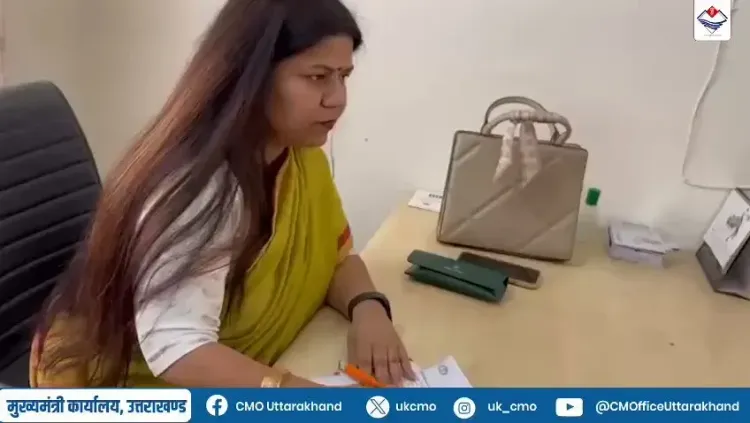
The Chief Minister's Office of Uttarakhand announced on Sunday, 12 July 2026 that the district administration and health department of Udham Singh Nagar have developed an arrangement to connect experienced specialist doctors from private hospitals with government hospitals in the district.
Context
The post, shared on the official CMO Uttarakhand X account, states: 'Udham Singh Nagar mein jila prashasan aur swasthya vibhag ne niji aspataalon ke anubhavi visheshagya chikitsakon ko sarkari aspataalon se jodne ki vyavastha viksit ki hai' — meaning the district administration and health department have developed a system to link experienced specialist doctors from private hospitals to government hospitals. The move is aimed at strengthening specialist care delivery in the district's public health infrastructure.
Udham Singh Nagar is a predominantly industrial and agricultural district in the Terai region of Uttarakhand, home to a large working-class and semi-urban population that depends heavily on government health facilities.
Policy Backdrop
This initiative aligns with a long-standing national push to bridge specialist shortages in public hospitals through public-private engagement. The National Health Mission (NHM), launched in 2005, explicitly encouraged states to rope in private providers to fill gaps in specialist availability at district-level facilities.
The Ayushman Bharat programme, launched in 2018, further institutionalised public-private linkages by enabling empanelled private facilities to deliver specialist care to beneficiaries. Uttarakhand's latest move in Udham Singh Nagar fits within this broader national framework, extending it to a direct, on-ground arrangement at the district level.
Several Indian states, including Tamil Nadu and Maharashtra, have piloted similar models over the past fifteen years. Such arrangements typically involve contractual or honorary linkages rather than any form of privatisation of government hospital services.
Stakeholders and Impact
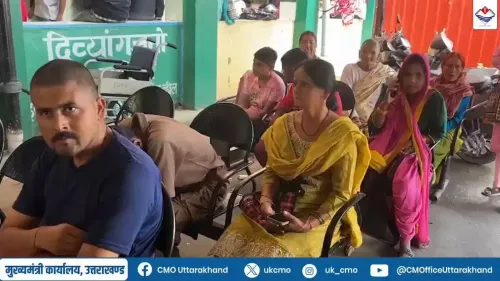
The primary beneficiaries are patients in Udham Singh Nagar who rely on government hospitals but previously lacked access to specialist consultation within the public system. Rural and semi-urban residents, who often cannot afford private specialist fees, stand to gain the most from this arrangement.
Private specialist doctors benefit from a structured channel to contribute to public health, while government hospitals gain access to expertise that chronic recruitment shortfalls have made difficult to retain in-house. The arrangement is described as a linkage 'vyavastha' — a system or mechanism — suggesting a formalised rather than ad hoc structure.
What's Next
The key question is whether this model will be extended to other districts across Uttarakhand, particularly in the more remote hill districts where specialist shortages are even more acute. Observers will also watch for any accompanying state budget allocations, monitoring guidelines, or performance frameworks that would give the arrangement long-term sustainability and accountability.
If the Udham Singh Nagar pilot demonstrates measurable improvement in specialist access and patient outcomes, it could serve as a template for replication across the state's health administration.
Point of View
The state is borrowing from a playbook that has shown mixed but broadly positive results elsewhere in India. The real test will be whether this arrangement comes with enforceable accountability — fixed hours, patient load commitments, and outcome tracking — or remains a largely symbolic gesture. If structured well, it could become a replicable model for Uttarakhand's many under-served hill districts.
NationPress
11 Oct 2026
Frequently Asked Questions
What is the Udham Singh Nagar private doctor government hospital scheme?
The district administration and health department of Udham Singh Nagar in Uttarakhand have developed a system to link experienced specialist doctors from private hospitals to government hospitals, improving specialist access for public patients.
Why are private doctors being linked to government hospitals in Uttarakhand?
Government hospitals in Uttarakhand face a chronic shortage of specialist doctors due to recruitment challenges. Linking private specialists allows patients to access expert care without the government needing to fill permanent posts immediately.
Is this a privatisation of government hospitals in Uttarakhand?
No. The arrangement is a linkage or coordination mechanism, not privatisation. Government hospitals remain public facilities; private specialists are brought in to supplement existing capacity on a contractual or honorary basis.
Which national schemes support public-private health linkages in India?
The National Health Mission, launched in 2005, and Ayushman Bharat, launched in 2018, both encourage states to engage private providers to fill specialist gaps in government health facilities.
Will this model be extended to other districts in Uttarakhand?
That has not been confirmed yet. Whether the Udham Singh Nagar arrangement is expanded to other districts will depend on its outcomes and any accompanying state policy or budget decisions.